
Unbiased headlines. Facts, not spin.
Every story is an unbiased news briefing written from 110+ sources across the spectrum — sources linked so you can verify it yourself.
 politics
Notable (5/10)
September 20, 2026 at 05:20 PM
politics
Notable (5/10)
September 20, 2026 at 05:20 PM
Gary Cohn Says Record Fuel Prices and AI Anxiety Are Souring Consumers Even as Headline Economic Data Holds Up
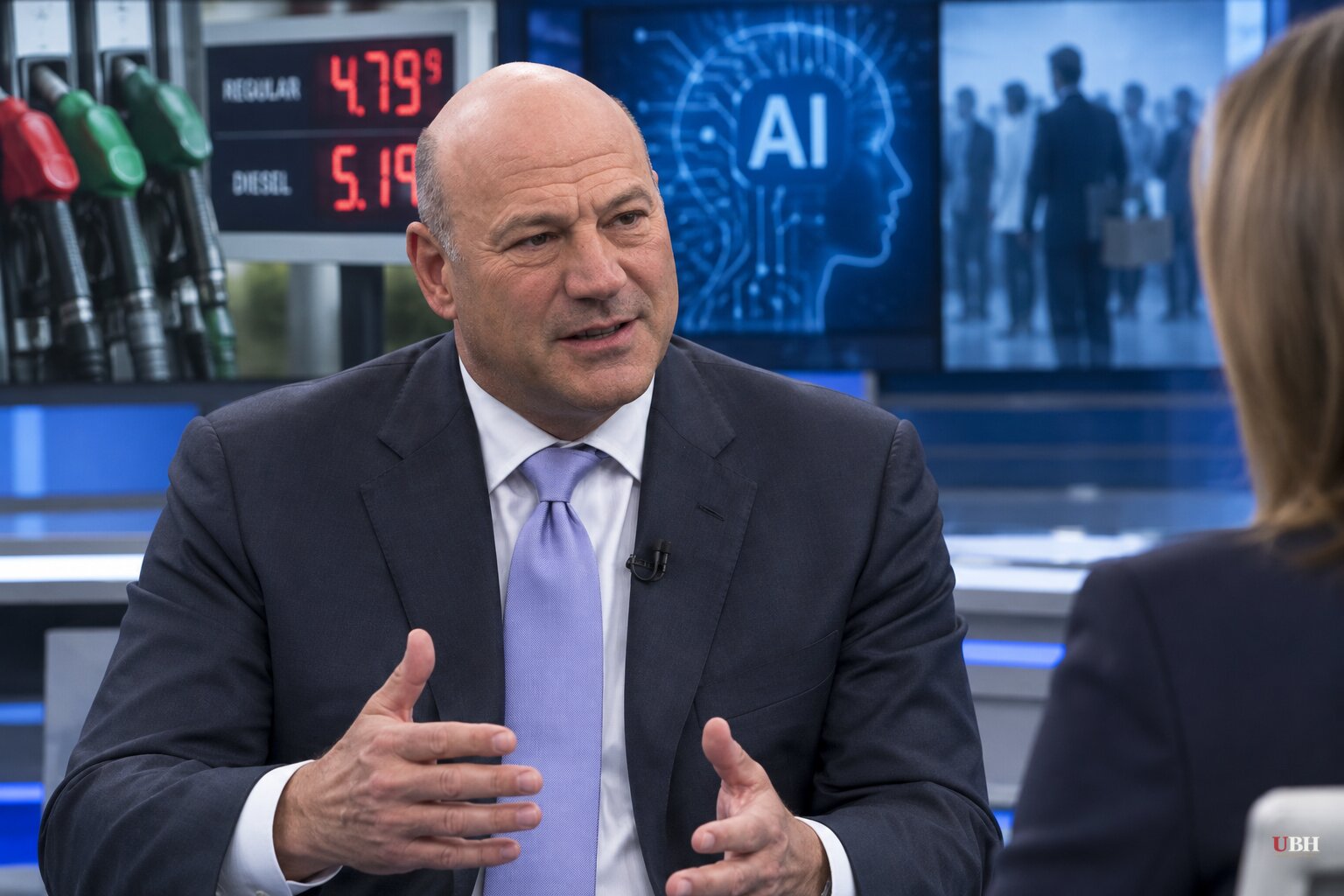
IBM vice chairman Gary Cohn told CBS News' Margaret Brennan on "Face the Nation" that American consumers are souring on the economy, even though the headline numbers look fine.
Cohn, who ran the National Economic Council for President Trump during his first term, pointed straight at the gas pump. "They sit there and they hold the nozzle down and they watch the numbers tick, and they see these numbers are higher than they were last week, and they're higher than the week before," Cohn said. "Is this ever going to stop?"
Brennan framed the question around diesel, jet fuel and motor oil prices she described as hitting record highs, and noted gas-price protests already underway in Syria, the Philippines and Guatemala. Cohn said diesel hits Americans twice: once at the pump, and again indirectly because diesel is what he called the real "feedstock for food" in the United States. Farmers burn it to plant, harvest and deliver crops, he said, and the entire trucking network runs on it. "They see the second-hand effects of diesel in the economy as well," Cohn said.
On top of energy costs, Cohn said anxiety over artificial intelligence is compounding the mood. "They're unsure about AI, they're unsure about the job market," he said, adding that consumer sentiment "has become quite negative recently."
The Bessent Counterpoint
Cohn's warning runs up against a more optimistic message from Treasury Secretary Scott Bessent, who Brennan noted was posting on social media the same morning about the poverty rate hitting a historic low, ahead of a scheduled meeting with Chinese officials. Bessent has also argued there is strong foreign demand for U.S. assets and has pushed back on the idea that investors are pulling away from Treasuries.
Cohn didn't dispute those figures. Asked directly about the tension between Bessent's upbeat framing and the gloom he was describing, Cohn said flatly: "He's right." Cohn agreed the headline indicators, GDP, employment and consumer spending, are "pretty good to very good."
This isn't two people arguing over whose numbers are correct. An IBM executive and former Trump adviser is saying the top-line data and the lived experience of filling up a truck or a tractor are telling two different stories right now. Bessent's defenders would say a historic-low poverty rate and steady foreign appetite for U.S. debt are hard facts that argue against a fiscal-health scare. Cohn isn't rebutting that. He's saying it doesn't change what someone feels at the pump or hears about AI wiping out their job.
What's Actually Driving Diesel and Gas Prices
Neither the interview nor the reporting around it lays out a single cause for the run-up in fuel costs. Cohn didn't attribute the increase to any specific policy, refinery outage, OPEC decision or geopolitical event during the aired portion of the conversation. He described the effect on consumers and the farm economy, not the cause.
It would be easy to read a segment like this and assume the fuel spike is tied to whatever policy fight is dominating the news cycle. Nothing in the interview supports pinning the price increase on a specific decision. Cohn is describing a symptom, elevated diesel and gasoline prices, without diagnosing the disease.
The overseas protests Brennan referenced in Syria, the Philippines and Guatemala are also worth treating carefully. She cited them as examples of gas-price unrest abroad, but the interview didn't connect those foreign protests to U.S. pump prices as a shared cause. They're parallel data points about global fuel costs, not evidence of one driving the other.
What's Unresolved
Cohn's larger argument, that AI uncertainty is now sitting alongside energy costs as a drag on how Americans feel about the economy, is an assertion from someone who runs a major technology company, not a measured statistic. No specific job-loss numbers, AI-linked layoffs, or survey data were cited in the segment to back that claim.
What comes next is Bessent's meeting with Chinese officials, which Brennan noted was already on his schedule as of Sunday's broadcast. Whether that meeting produces anything that eases fears about Treasury demand, or whether diesel and gas prices keep climbing into the fall, will do more to settle the argument between Cohn's read on consumer mood and Bessent's read on the underlying data than either man's talking points did on air.
Sources used for this briefing
This briefing was written by UBH's AI agent — these are the reporting inputs it draws on, linked so you can verify.


