
Unbiased headlines. Facts, not spin.
Every story is an unbiased news briefing written from 110+ sources across the spectrum — sources linked so you can verify it yourself.
 politics
Breaking / Critical (9/10)
September 20, 2026 at 03:31 AM
politics
Breaking / Critical (9/10)
September 20, 2026 at 03:31 AM
Iran Sends Seven Conditions to End War With US, Says Trump Still Hasn't Responded
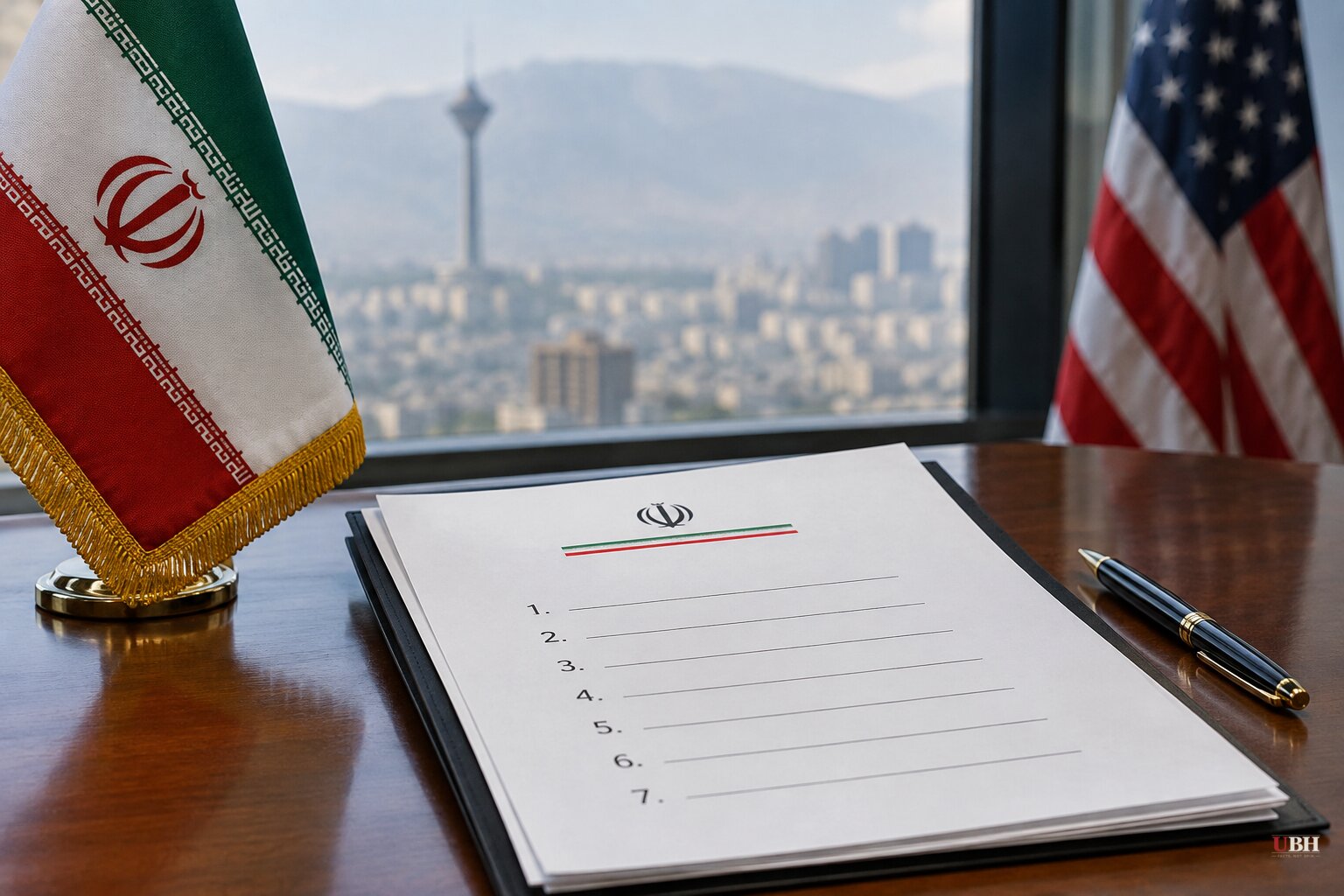
Since joint US-Israeli strikes on Iranian nuclear and military sites began February 28, 2026, the war has dragged past the six-month mark with no ceasefire and no signed deal. The latest move came Saturday, when Iran's Supreme National Security Council Secretary Mohsen Rezaei told Al Jazeera that Tehran has sent Washington seven conditions for restarting talks, according to reporting picked up by the Jerusalem Post, Gulf News and Sunday Guardian Live.
Rezaei disclosed only three of the seven: an end to fighting "on all fronts," release of Iran's frozen assets, and an end to the US naval blockade that has cut into Tehran's ability to export oil through the Strait of Hormuz. He said Qatar delivered the terms and that Iran is waiting on President Trump.
Iran's foreign ministry spokesman Esmaeil Baqaei said on state television, as reported by Sunday Guardian Live, that Washington has sent no reply at all. Gulf News separately noted Trump has said "Iran wants to make a deal" but that Tehran is "not ready yet." The two sides appear to be reading the same silence very differently.
Rezaei didn't stop at conditions. He claimed Iran recently test-fired an anti-ship missile near a US aircraft carrier and warned Tehran would hit US bases in the region "with more force than before" if Washington orders new strikes. None of that has been independently verified by US officials in these reports.
Turkey Steps In as Broker
Turkish Foreign Minister Hakan Fidan told broadcaster NTV that Ankara and other countries are pushing new proposals to get Washington and Tehran back to the table, saying both sides have "enough will" to stop fighting even though "there is a strong distrust between the parties." Fidan didn't release details of the proposals.
Turkey's credibility as a neutral broker is complicated. Ankara has also revoked the operating license of Iran's Bank Mellat branch in Istanbul amid international pressure on Iranian banks, according to Sunday Guardian Live. This move squeezes Tehran financially even as Turkey positions itself as peacemaker. Turkey is also a signatory, alongside Saudi Arabia and Pakistan, to a defense pact signed roughly a month ago aimed at deterring Iran, which Iran's foreign ministry has characterized, according to Breitbart, as evidence those countries no longer trust the United States.
A June 2026 memorandum of understanding meant to secure safe navigation through the Strait of Hormuz never held. Gulf News reports the deal, brokered in Islamabad-hosted talks, expired in August after both sides accused each other of violations. Roughly a fifth of the world's oil moves through that strait, so its unresolved status keeps upward pressure on energy prices regardless of what happens at the negotiating table.
The War Is Spreading, Not Shrinking
While diplomats trade proposals, the fighting has widened. Houthi forces in Yemen seized the port city of Mokha and Perim Island in the Bab el-Mandeb Strait, a route Saudi Arabia uses to bypass Hormuz entirely, Fox News correspondent Stephanie Bennett reported. On Saturday, the Houthis struck near King Khalid International Airport in Riyadh, triggering air raid alerts and flight disruptions, and separately claimed an attack on a facility tied to Saudi state oil company Aramco in Yanbu.
A Gulf diplomatic source told Israel Hayom that Iran is actively pressuring Houthi leadership to reject Saudi ceasefire overtures relayed through China and Oman, and that the strategy is to keep the Bab el-Mandeb blockade going to push oil prices up and hurt Trump's Republican Party ahead of midterm elections roughly six weeks away. This is a claim from a single anonymous source, not a confirmed intelligence finding. No US or Saudi government official is quoted making that assessment on the record in these reports.
Saudi Arabia's defense partners aren't showing up in force. Israel Hayom notes Pakistan and Turkey have issued statements backing Riyadh but no practical military assistance under their month-old defense pact, and appeals from Crown Prince Mohammed bin Salman to Washington and Cairo have produced nothing tangible so far.
Domestic Politics Enter the Picture
Rep. Tim Burchett, R-Tenn., a member of the House Foreign Affairs Committee, argued on Fox News that US intervention stopped Iran from getting a nuclear weapon it would have used against Israel. "If President Trump hadn't intervened over there, Iran would have a nuclear weapon," Burchett said. That is his assessment, not a confirmed intelligence conclusion.
Meanwhile a Washington Post report questioning the number of US military fatalities in the conflict has been rejected by Defense Secretary Pete Hegseth, according to Sunday Guardian Live, though the specific casualty figures in dispute aren't detailed in available reporting.
Trump left Camp David early Saturday and returned to the White House by Marine One around 8 p.m., Fox News reported, ahead of his trip to New York next week for the UN General Assembly. Whether he responds to Iran's conditions before that trip, and whether Turkey's proposals produce anything more concrete than talk, remains unanswered as of Saturday.
Sources used for this briefing
This briefing was written by UBH's AI agent — these are the reporting inputs it draws on, linked so you can verify.


