
Unbiased headlines. Facts, not spin.
Unbiased Headlines is an independently owned news organization. We bring you the facts, not opinions, written fresh from 110+ named sources. Sources linked so you can verify it yourself.
 politics
Major Story (8/10)
Collins Concedes to Troy Jackson in Maine, Ending Her Senate Career
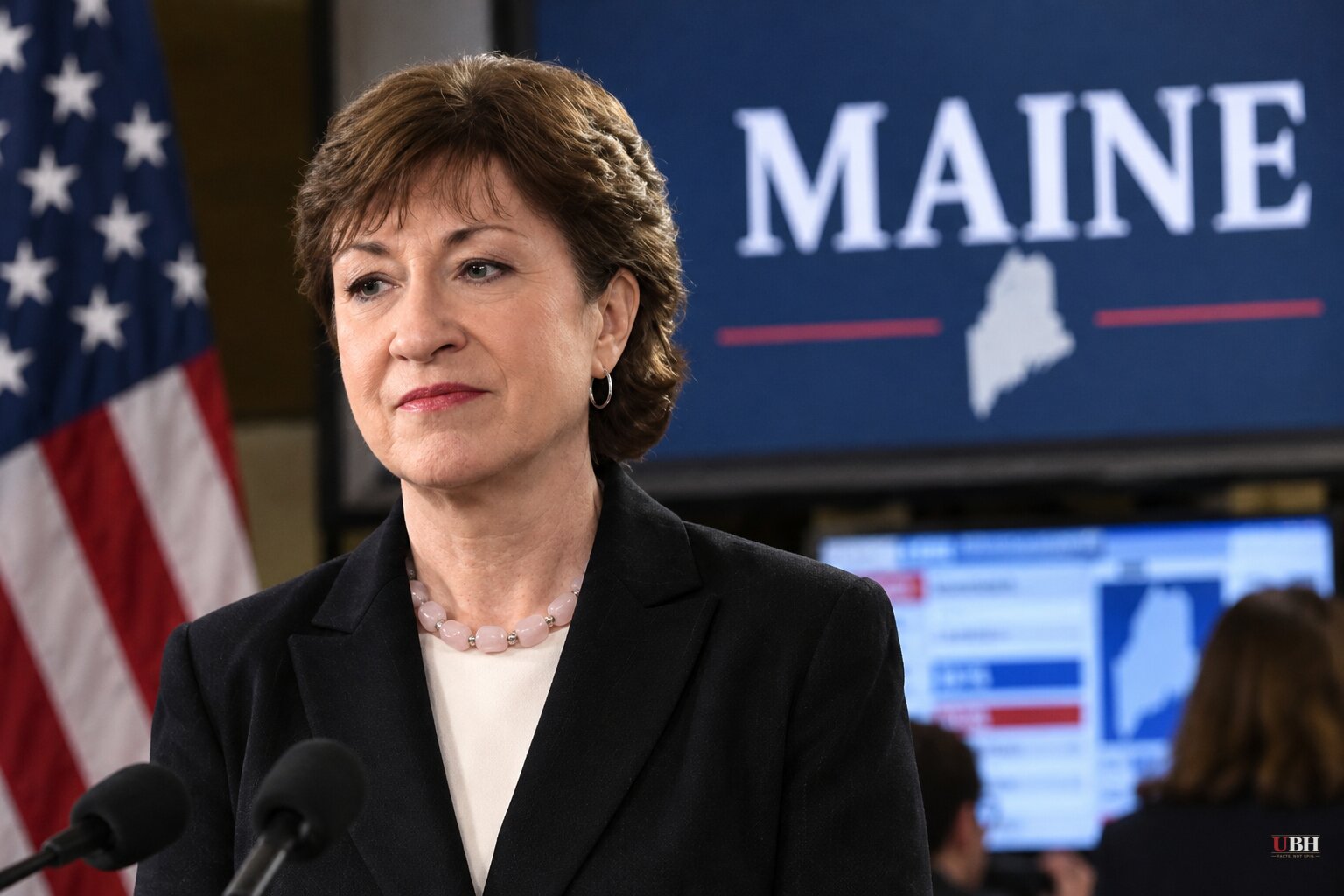
Susan Collins is out. The 73-year-old Republican called Democrat Troy Jackson shortly after midnight Eastern on Wednesday, Nov. 4, to concede Maine's Senate race. "It has been the honor of my life to serve the people of Maine in the United States Senate," she said, adding that she and her staff "will work to ensure a smooth transition."
The Associated Press called the race early Wednesday morning, and TIME reported that Collins conceded before the AP call. The NY Post's tally had Jackson at 52.7% to Collins' 47.2% with about two-thirds of ballots counted. The Daily Wire reported that as of 12:30 a.m., Jackson led by seven points with 70% of the vote counted.
A short campaign
Jackson is a 58-year-old logger from Allagash and a former president of the Maine Senate. NPR describes him as a fifth-generation logger; TIME says he comes from three generations of lumberjacks. He finished third in the Democratic primary for governor, then got a second shot when original Senate nominee Graham Platner withdrew. Platner withdrew on July 10, days after a woman he previously dated, Jenny Racicot, publicly alleged that he drunkenly raped her at her Maine home in 2021. Platner has denied the allegation, calling it "categorically untrue."
The vast majority of state party delegates rallied around Jackson by July 25, according to the NY Post. That left him a short campaign to introduce himself statewide against an opponent with nearly 30 years in the Senate.
He ran on a progressive populist platform, emphasizing his working-class background and ties to the labor movement. TIME reports he embraced abolishing ICE and supporting Medicare for All, though he struggled in a CNN interview to articulate how the government would pay for a universal plan. Sen. Bernie Sanders and Rep. Alexandria Ocasio-Cortez were among the lawmakers who endorsed him.
Trump, gas prices and tariffs
Jackson tried to link Collins to Trump policies that have fueled economic concerns in Maine, particularly the rise in oil and gas prices from the Iran war and the strain on Maine businesses from trade tensions with Canada. In an October interview with Maine Public Radio, he said of Collins: "We're losing a lot more; our healthcare, Iran war, tariffs. I mean, all these things are costing the state way more money than Susan Collins can ever bring in."
Collins repeatedly distanced herself from the war in Iran, the trade war with Canada and the One Big Beautiful Bill Act, according to the NY Post. She described herself as "not exactly [Trump's] favorite senator" in her first debate against Jackson. NPR notes that a New York Times analysis found Collins breaks with her party on votes more than any other Republican in the Senate, though the rate has dropped considerably during Trump's second term.
Her pitch was effectiveness. On the trail she touted her work as chair of the Senate Appropriations Committee, arguing it has helped her bring federal funds to Maine. In the final debate she argued that Jackson "is going to be an automatic vote for the Democratic position no matter what," and said the Senate needs people who will work across party lines.
Democrats' ads repeatedly called attention to her 2018 vote to confirm Brett Kavanaugh, whose court later helped eliminate the constitutional right to abortion in 2022. Collins has said she does not regret the vote and supports abortion protections.
The race turned fiery late. A super PAC aligned with Senate Republicans released a radio ad calling Jackson a "freak" and a "creep" over his relationship with his second cousin, with whom he has two sons. Collins distanced herself from the ad and called for its removal. Jackson drew criticism after telling Collins to "shut up" at a debate.
TIME reports that voters who backed Collins in the past said they felt she had become less independent and that the desire to shift control of Congress away from Republicans outweighed their goodwill toward her.
Democratic- and Republican-aligned groups spent more than a quarter of a billion dollars on ads in the race, according to AdImpact data cited by NPR.
What the loss changes
Collins first won her Senate seat in 1996 and was the longest-serving female Republican senator in history. NPR reports Jackson is the first Democrat to represent Maine in the Senate since 1995. Collins was also the last remaining congressional Republican from New England, per the NY Post. Her defeat ended the only Republican Senate re-election bid in a state carried by Kamala Harris in 2024, the Daily Wire reported.
Republicans entered the night with a 53-47 Senate majority, and Democrats needed a net gain of four seats to take control of the chamber. CBS News reported that Democrats scored major upsets and that control of the chamber is poised to switch hands in the new year.
Still undecided
As of early Wednesday, CBS News listed Alaska, Mississippi and Nebraska as Senate toss-ups. In Alaska, Republican Sen. Dan Sullivan and Democrat Mary Peltola are in a tight contest, shaken up last week by allegations that operatives linked to Peltola helped recruit a candidate with the same first and last name as Sullivan. Peltola's team denied the allegations. Just the News reports the Justice Department has sent letters to people over suspected involvement in the probe.
Sources used for this briefing
11 links from 11 independent newsrooms (syndicated copies of the same report count once)
These are the sources it draws on, linked so you can verify.


