
Unbiased headlines. Facts, not spin.
Every story is an unbiased news briefing written from 110+ sources across the spectrum — sources linked so you can verify it yourself.
 politics
Notable (6/10)
September 20, 2026 at 09:39 AM
politics
Notable (6/10)
September 20, 2026 at 09:39 AM
UK Home Secretary Moves to Shrink £144 Million Spycops Inquiry, Victims Call It a Cover-Up
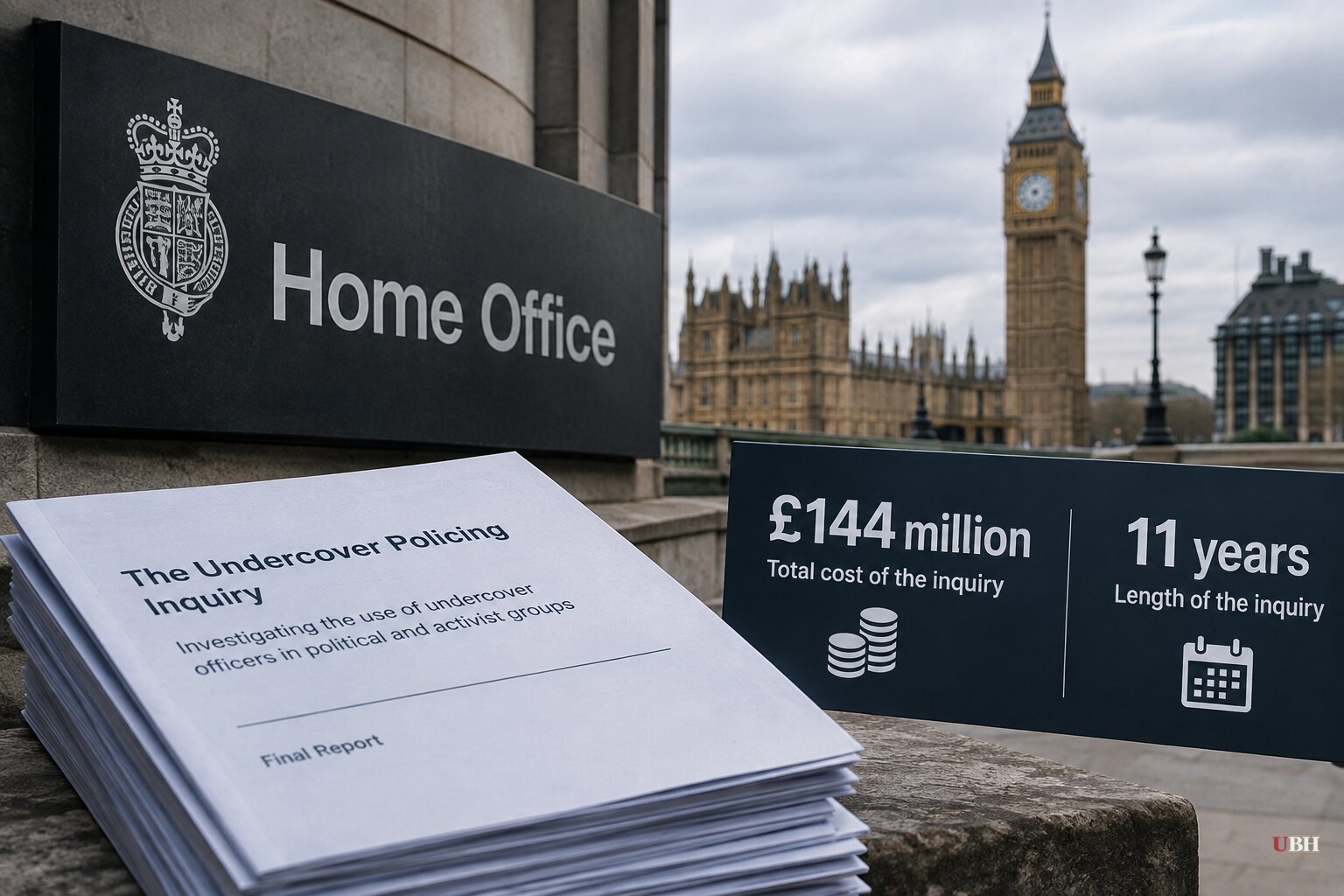
An 11-year inquiry, a £144 million bill, and a deadline that lands today
A public consultation that could gut Britain's spycops inquiry closes today, Sunday, September 20, 2026. Home Secretary Shabana Mahmood launched the review after raising concerns about how long the inquiry has run and what it has cost taxpayers, according to The Guardian. Latest figures put the total at £144 million.
The Undercover Policing Inquiry was set up in 2015 and was originally supposed to wrap up within three years. Eleven years later, led by retired judge Sir John Mitting, it's still going, and officials expect it to run at least two more years before finishing.
Eleven years and £144 million for a single inquiry is substantial public money. Mahmood has raised questions about whether the process can be run more efficiently. Fiscal accountability doesn't stop mattering just because the subject is politically uncomfortable.
What the inquiry has found so far
The inquiry has spent its first phase examining the Special Demonstration Squad, a Metropolitan Police unit that infiltrated political groups from 1968 to 2008. According to The Guardian, it uncovered officers who formed long-term intimate relationships with women without ever disclosing their real identities, officers who spied on the grieving parents of murdered teenager Stephen Lawrence, officers who stole the identities of dead children to build fake personas, and officers who lied under oath in court proceedings.
The inquiry was scheduled to move next to the National Public Order Intelligence Unit, which infiltrated political groups from 1999 to 2011. One of that unit's officers, Mark Kennedy, spent six years undercover in environmental and left-wing groups and deceived an unknown number of women into relationships. Evidence Kennedy gathered was withheld from criminal trials, and environmental campaigners later had their convictions overturned as a result, The Guardian reported.
Still on the docket: the case of an undercover officer who used a fake identity while infiltrating a serious crime network to sustain a 19-year relationship with a woman, with whom he had a child, without ever telling her who he really was.
The dispute over the consultation itself
Victims and campaigners say Mahmood's consultation is rigged because it only offers three options: narrow the inquiry's scope, strip it of legal power to compel reluctant witnesses to testify, or scrap the formal inquiry altogether in favor of police voluntarily handing over documents to victims. More than 2,000 people have submitted formal objections, according to The Guardian, arguing that all three options would leave the worst conduct by the second and third undercover units permanently hidden.
If the later phases are narrowed or stripped of subpoena power, the police units accused of the most invasive abuses, including fathering children under false identities, may never be forced to produce documents or put officers on the stand. Victims call that outcome a cover-up.
The Home Office's position, as represented by Mahmood, is that an inquiry running four times longer than planned and costing £144 million and counting needs to be reconsidered. The disagreement is over whether unfinished business, the NPOIU infiltration and the officers who fathered children under assumed names, gets the same scrutiny.
Where this sits historically
For context, the spycops inquiry isn't even Britain's longest-running. The House of Commons notes that an inquiry into a sectarian murder in Northern Ireland, commissioned 22 years ago, only reported its findings last week. That inquiry's endurance suggests long timelines aren't unheard of for cases involving state misconduct, but it doesn't resolve whether £144 million and 11 years is proportionate for this one.
What happens next
The consultation closes today. Mahmood has not announced a decision date, and the Home Office has not detailed what standard it will use to weigh the 2,000-plus objections against its own cost and timeline concerns. Whether the second and third phases of the inquiry proceed with full legal power to compel testimony, or get scaled back to voluntary document disclosure, will determine whether the National Public Order Intelligence Unit's conduct, and the case of the officer who fathered a child during a 19-year deception, ever gets the same public scrutiny the Special Demonstration Squad already received.
Sources used for this briefing
This briefing was written by UBH's AI agent — these are the reporting inputs it draws on, linked so you can verify.


