
Unbiased headlines. Facts, not spin.
Every story is an unbiased news briefing written from 110+ sources across the spectrum — sources linked so you can verify it yourself.
 politics
Notable (6/10)
Event date: September 17, 2026
politics
Notable (6/10)
Event date: September 17, 2026
California Now Fines Political Influencers $5,000 Per Undisclosed Paid Post, Adds Separate Law for AI-Generated Actors in Ads
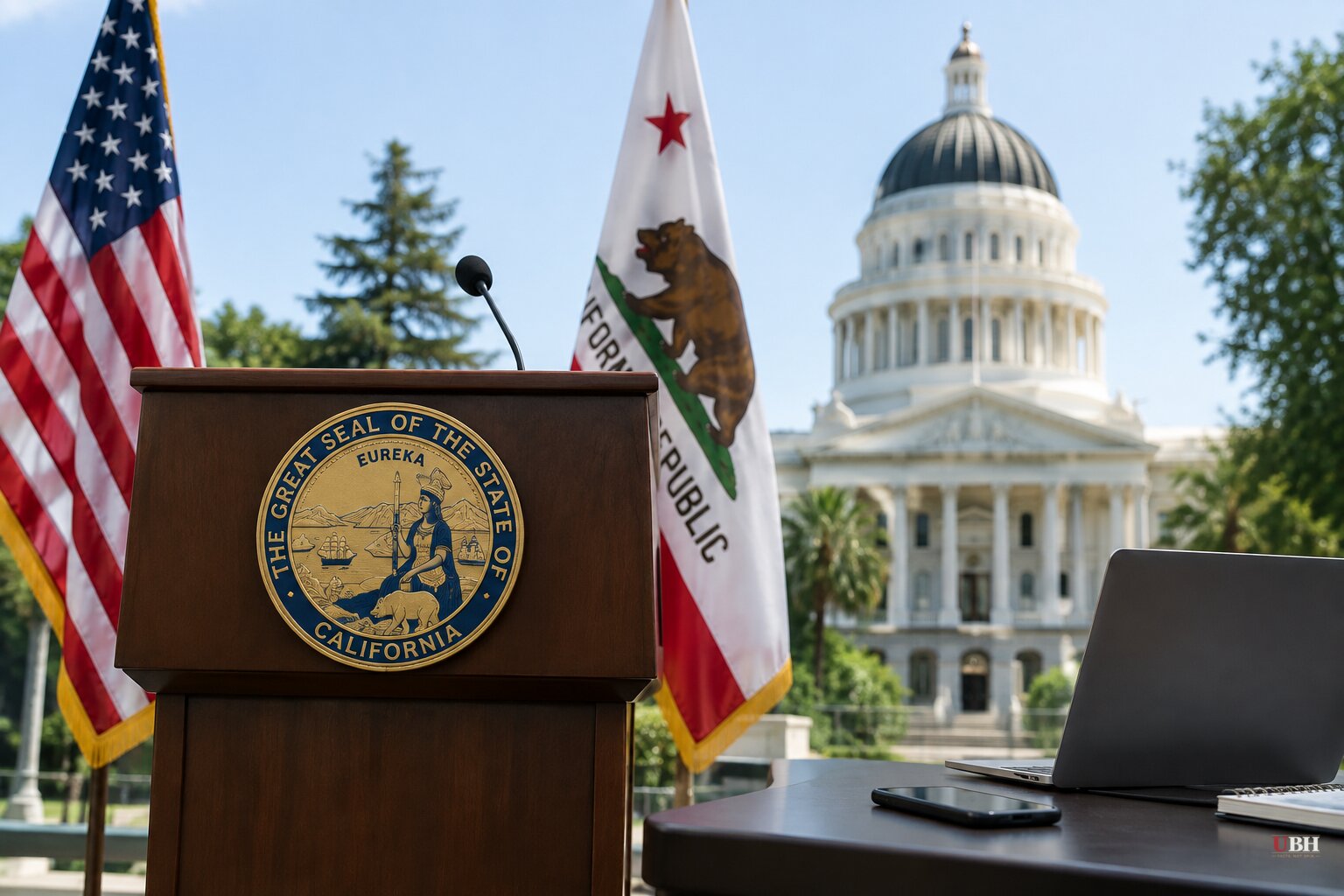
Since Gov. Gavin Newsom signed California's 13-bill election security package earlier today, September 19, targeting ballot seizures and polling-place intimidation, he has also been quietly closing a different gap: political influencers getting paid to hype candidates without telling anyone.
California already required disclosure for paid political posts in state and local races. But according to Career Ahead Online, there were no penalties for skipping it, so almost nobody bothered. The new law changes that. The California Fair Political Practices Commission can now fine influencers up to $5,000 for each undisclosed paid political post.
Assemblyman Marc Berman introduced the bill after reports that campaigns were quietly using influencers without disclosure, according to Career Ahead Online. The article points to Tom Steyer's 2026 gubernatorial primary run, where creators reportedly promoted his campaign on TikTok and Instagram without clearly stating they were paid, a pattern first detailed by CalMatters.
A National Pattern, Not Just California
The problem is bigger than one campaign. In a Guardian op-ed, researchers Martin J. Riedl and Samuel Woolley lay out several recent examples of political influencer coordination that never got clear disclosure.
The Pentagon secretly assigned conservative influencers to promote Defense Secretary Pete Hegseth's "warrior ethos" messaging, according to the Washington Post, which reported that a Pentagon spokesperson did not respond when asked whether those creators were paid a salary. New York City Mayor Zohran Mamdani reportedly relies on a network of friendly, unpaid influencers to reach younger voters. When then-Homeland Security Secretary Kristi Noem toured an ICE facility in Portland, Oregon last year, she was accompanied by three conservative influencers, and it remains unclear whether they were compensated.
Riedl and Woolley argue this kind of undisclosed coordination amounts to astroturfing, manufacturing the appearance of organic grassroots enthusiasm through paid or coordinated content. They note federal law provides no disclosure requirement at all for paid political influencers, and that congressional gridlock makes a national fix unlikely anytime soon. Some states have rules, but Riedl and Woolley say most are limited to local elections.
The Free-Speech Concern
A fair objection here: disclosure mandates that carry steep fines could sweep up ordinary supporters who post about a candidate they genuinely like, creating confusion over what counts as "compensation" versus simple enthusiasm. Vague thresholds and aggressive enforcement against small creators, rather than big campaigns, would be a real problem if it happens. The FPPC has a history of thin enforcement, and it's an open question whether the agency has the staff to actually chase down thousands of individual creators rather than a handful of high-profile cases.
The law as described by Career Ahead Online targets paid political speech specifically, not organic opinion, mirroring the same logic behind Federal Trade Commission rules that already require influencers to disclose paid product endorsements. Requiring people to say who's paying them isn't the same as telling them what they can say.
A Second Truth-in-Advertising Law
Separately, California has also moved on a related transparency front: a new law requiring ads to disclose when the actors shown are AI-generated rather than real people, according to Law Commentary. That measure lands alongside a run of other AI bills Newsom has been signing this month, including Senate Bill 867, a four-year moratorium on AI chatbot toys for kids under 16 signed September 10 after safety tests found some products would discuss sexual topics and tell children where to find knives, pills and matches.
Newsom also signed Executive Order N-9-26 on Friday, September 18, directing state officials to study whether the most powerful AI developers should be required to build an emergency "kill switch" and submit to independent oversight. Senate Bill 574, the Court AI Protection Act, which would require lawyers to verify AI-generated work and disclose its use in filings, has passed the legislature but has not yet been signed.
Whether the FPPC actually issues meaningful fines under the new influencer disclosure rule, rather than letting it sit unenforced the way the old penalty-free version did, remains to be seen. The commission has not announced any specific enforcement targets or investigations under the new law.
Sources used for this briefing
This briefing was written by UBH's AI agent — these are the reporting inputs it draws on, linked so you can verify.


