
Unbiased headlines. Facts, not spin.
Unbiased Headlines is an independently owned news organization. We bring you the facts, not opinions, written fresh from 110+ named sources. Sources linked so you can verify it yourself.
 politics
Major Story (8/10)
Abdul El-Sayed Wins Michigan Senate Seat, Leading Mike Rogers 52-46 at AP Call
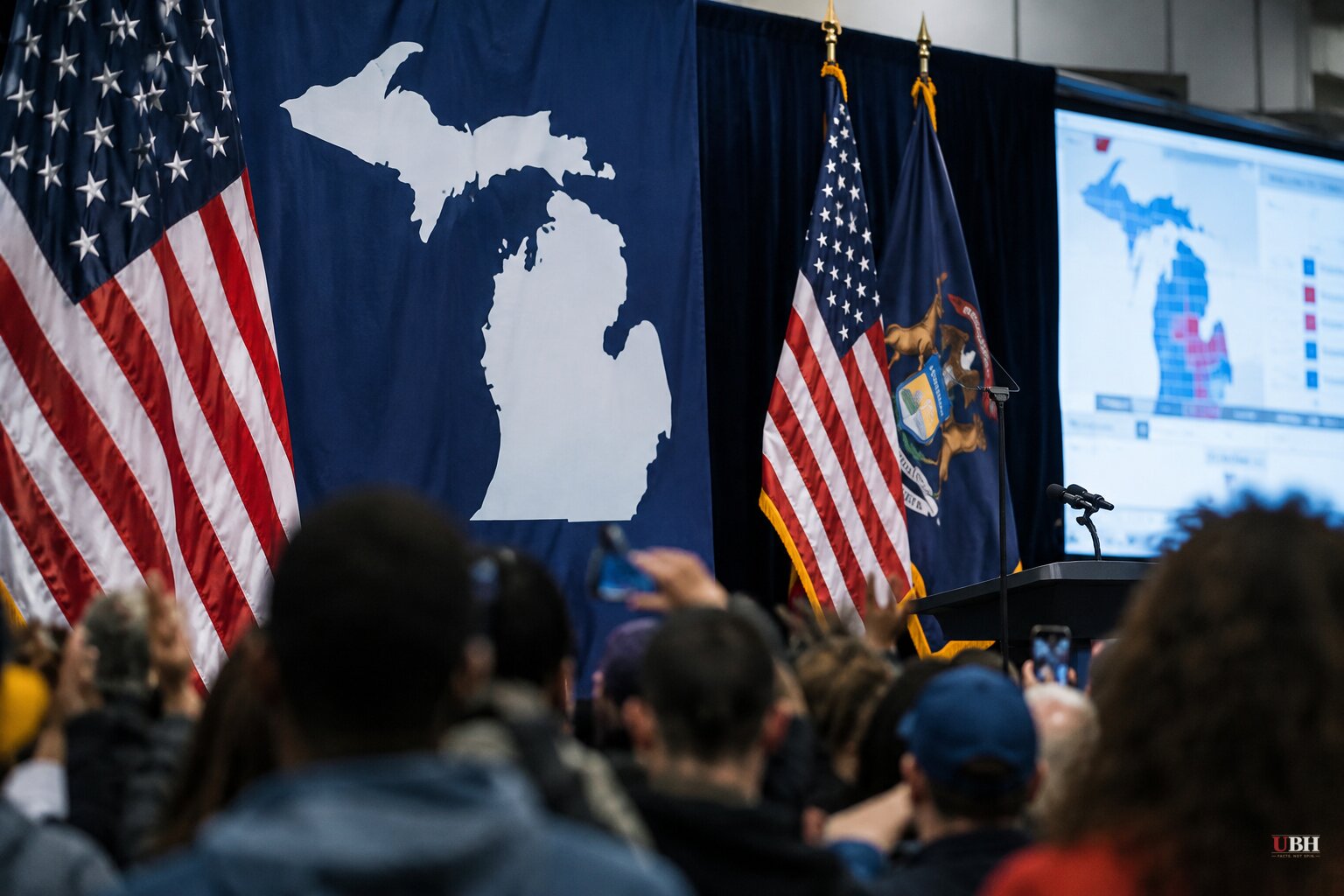
Democrat Abdul El-Sayed won Michigan's open U.S. Senate seat, defeating former Republican Rep. Mike Rogers. The Associated Press and the major networks called it at about 2:30 a.m. Wednesday, Nov. 4, with El-Sayed ahead roughly 52% to 46%.
El-Sayed, 42, is a former Wayne County health director and the son of Egyptian immigrants. He will be the first Muslim elected to the Senate. He replaces retiring Democratic Sen. Gary Peters, and Democrats have held the seat since 1979.
A primary that split his own party
El-Sayed got here by the narrowest of routes. In the August primary he beat Rep. Haley Stevens by about 1 percentage point. Gov. Gretchen Whitmer and Peters had backed Stevens, and a pro-Israel group tied to AIPAC spent more than $30 million trying to lift her.
The general election did not heal that split. On Sunday, Nov. 1, two days before the vote, Stevens appeared with Rogers at a Detroit church and endorsed him.
Stevens said she had asked El-Sayed to condemn an outside group's ad linking U.S. military aid to Israel to rising grocery prices, which she called antisemitic. El-Sayed said the ad "was not made by me" and that he disagrees with its contents. She was also expected at a unity event with Rep. Jim Clyburn that day, but El-Sayed said a day earlier, "I would rather not distract from the key issues of this campaign."
"When you see hate, when you see us standing with Hasan Piker, and repeated hate, it's not acceptable," Stevens said. El-Sayed had campaigned with Piker, a left-wing streamer, during the primary. He later distanced himself from Piker.
The endorsement drew condemnation from fellow Democrats. It did not visibly move the result. El-Sayed entered Election Day ahead in the RealClearPolitics average, 49.8% to 44.9%, and the margin at the call was in the same range. The New York Times/Siena poll, which ended before the endorsement, had him up 53% to 42%. Trafalgar's Oct. 31 to Nov. 1 survey had it at 47% to 46%.
The attacks on his faith and his record
The general election turned ugly. President Trump called El-Sayed a "jihadist" and said he would "have to go through a metal detector before he's allowed to go into the Senate." Sen. Ted Cruz said that "if I am correct that he is a passionate supporter of the Muslim Brotherhood, there is a very real risk that Americans will die as a result."
El-Sayed has denied the Muslim Brotherhood claim flatly. "I have never been a member of the Muslim Brotherhood, I never will be a member of the Muslim Brotherhood," he told Fox News. No source presented evidence of membership.
Attacking a candidate's religion is not an argument about policy. The policy record is where the scrutiny belongs, and it is substantial. El-Sayed ran on Medicare for All, abolishing ICE, heavy taxes on the wealthy and ending military aid to Israel, according to the New York Post. He has accused the Israeli government of genocide. Some Jewish voters accused him of antisemitic rhetoric, including his suggestion that aid to Israel came at the expense of domestic priorities. He rejects that, saying criticism of the Israeli government is not hostility to Jewish people.
Reason's Robby Soave wrote that El-Sayed will likely vote with Bernie Sanders and Elizabeth Warren on economics and the size of government. Soave also noted overlap with libertarians: El-Sayed opposes the Iran war and police use of Flock surveillance, and Rogers backed the PATRIOT Act.
Rogers, 63, an Army veteran and former FBI agent, lost the 2024 race to Elissa Slotkin by about 20,000 votes. This time he had Trump's endorsement and tried to widen his appeal to Democrats uneasy about El-Sayed. He also tried to distance himself from the administration's Iran war.
Not just Michigan
The national picture is worse for Republicans than one Senate seat. Michigan was one of the GOP's few realistic pickup chances, and it did not come close to materializing.
The Guardian reported Democrats took the Senate Tuesday with flips in Texas, Kansas and South Carolina. Just the News, a center-right outlet, reported Democrats won both chambers and that Maine Sen. Susan Collins lost her bid for a sixth term. Because Michigan was already a Democratic seat, El-Sayed's win does not itself change the balance.
In Ohio, Democrat Amy Acton beat Vivek Ramaswamy for governor. She will be the state's first Democratic governor in 20 years, succeeding Republican Mike DeWine. Sherrod Brown was called the winner over Sen. John Husted. In California, Xavier Becerra beat Republican Steve Hilton to succeed Gavin Newsom.
Trump acknowledged that the Iran war and gas prices played a role in the losses and said he would work with Democrats, according to Just the News. Fox News listed affordability, the Iran war and a trade war with Canada launched during the midterm stretch as headwinds that Rogers could not outrun.
What comes next
El-Sayed will be sworn in in January by Vice President JD Vance, a point he savored in his victory speech. Vance had publicly tangled with him. "Mike, enjoy your retirement," he said of Rogers. "You chose hate, and Michigan chose hope."
The first test of his independence is not far off. El-Sayed has not committed to Schumer as Democratic leader. "The current minority leader has given all of us ample reason to question whether or not he would be our best bet," he told the New York Post in August, naming Sen. Chris Van Hollen as his preference. With Democrats now on course to hold the majority, who leads them is a live question that El-Sayed will help decide.
Sources used for this briefing
15 links from 15 independent newsrooms (syndicated copies of the same report count once)
These are the sources it draws on, linked so you can verify.


