
Unbiased headlines. Facts, not spin.
Every story is an unbiased news briefing written from 110+ sources across the spectrum — sources linked so you can verify it yourself.
 politics
Major Story (7/10)
Event date: September 7, 2026
politics
Major Story (7/10)
Event date: September 7, 2026
White House Drafts NIH Grant Veto Board as Pentagon Quietly Taps NIH Funds for Bioweapons Research
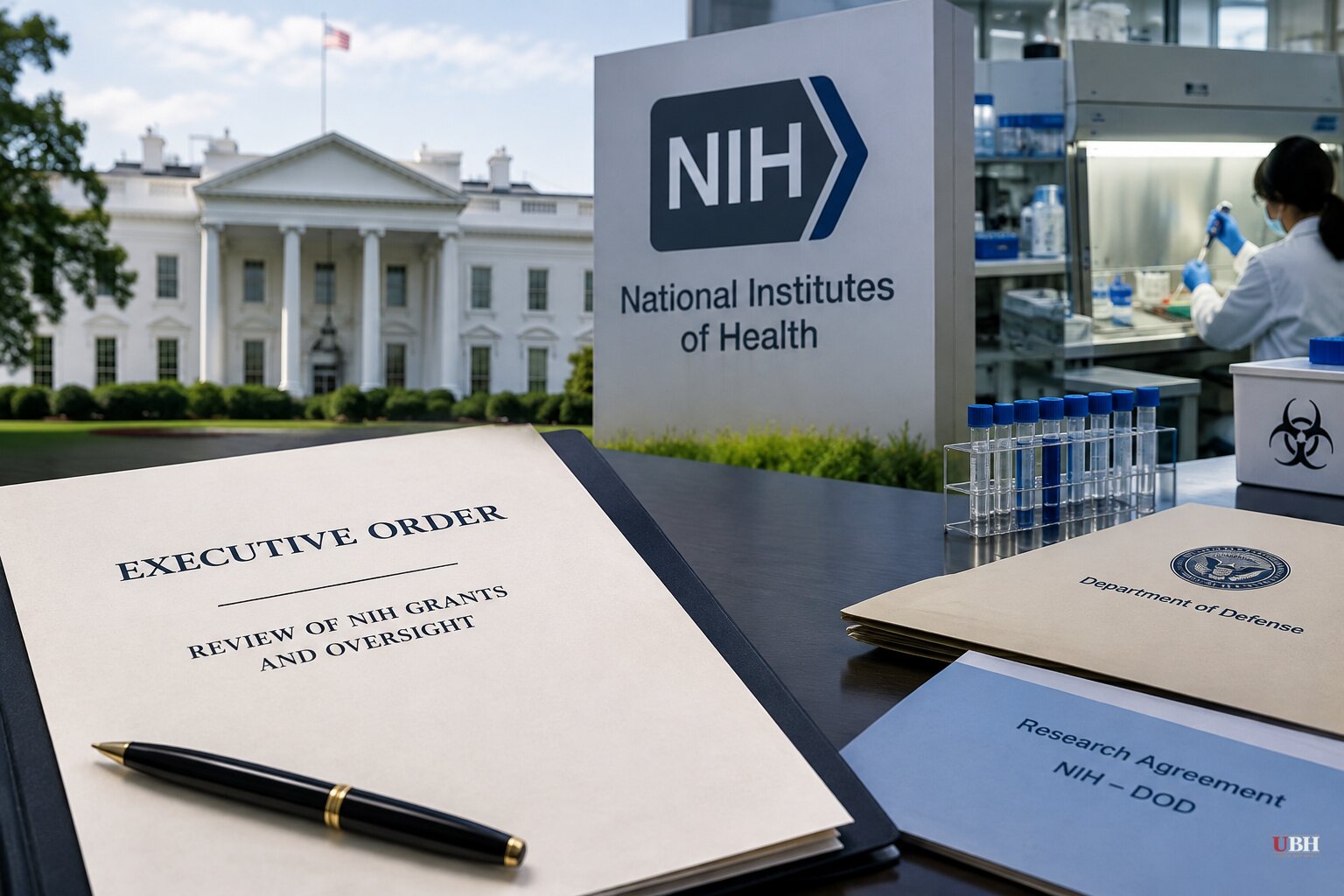
The National Institutes of Health is fighting a two-front battle over who controls its money, and the fight is playing out in real time between the White House, the Pentagon, and Congress.
On Sept. 4, the NIH disclosed an interagency agreement sending funds to the Department of War's Office of the Assistant Secretary of War, according to The Epoch Times. The money will support "advanced development of medical countermeasures against pandemic influenza, chemical, biological, radiological, and nuclear (CBRN) threats, and emerging infectious diseases." No dollar figure was disclosed, and the agency says no specific projects have been identified for this fiscal year.
An NIH spokesperson told The Epoch Times the deal is not a "blanket transfer" but will operate "on a project-by-project basis." A Department of War spokesperson called it "a significant step forward in protecting the American people and our warfighters."
Two senior Democrats weren't buying it. Rep. Rosa DeLauro (D-Conn.), top Democrat on House Appropriations, called it "a secretive attempt to siphon research funds away from NIH" and demanded it be terminated, tying it to what she called Trump's "war of choice with Iran" straining Pentagon finances. Sen. Patty Murray (D-Wash.), her Senate counterpart, said the administration was trying "to rob NIH of billions of dollars that Congress provided for medical research so that it can pad the Pentagon's budget." Neither lawmaker cited a specific dollar figure, since the administration hasn't released one.
Countermeasures for anthrax, radiation exposure, or a new flu strain genuinely serve both civilian hospitals and troops in the field, and past administrations have run similar biodefense partnerships. The dispute here is less about whether that research should happen and more about whether Congress-appropriated NIH dollars should be the ones funding it without a disclosed budget or itemized projects.
A Second Front: The Grant Veto Board
Separately, the White House is drafting an executive order that would create an outside committee with power to veto NIH grants that don't align with President Trump's agenda, according to reporting from The Washington Post that was also covered by The Philadelphia Inquirer and The Daily Beast.
The plan surfaced out of a contentious White House meeting, where OMB Director Russ Vought reportedly accused NIH Director Jay Bhattacharya of funding research tied to diversity and equity priorities, according to the Inquirer, which cited two people close to Bhattacharya. Trump reportedly asked Bhattacharya directly to cut Harvard University's funding. Bhattacharya refused, according to The Daily Beast, which cited Politico's reporting on the administration's ongoing dispute with Harvard.
NIH spokesperson Joshua Pradko told the Inquirer, "There will be no rescissions to NIH grant monies. All NIH grant monies will be spent," pushing back directly on reports that Vought wants to claw back funding. The proposed committee would still include both Bhattacharya and Vought and would reportedly require a unanimous vote to approve grants, meaning either man could block funding on his own.
The administration's underlying complaint, laid out in a related OMB rule proposed in May, targets federal money for diversity, equity and inclusion programs, "anti-American ideologies," and AI-driven censorship tools, according to the Daily Signal. Trump's day-one DEI order has already curtailed NIH studies on "health disparities." This includes the kind of heart-transplant survival research Bhattacharya himself co-authored in 2011 as a Stanford economist, before he ran the agency.
Congress Pushes Back, For Now
Congress already tried to slow both efforts down. The continuing resolution Trump signed into law, per Fox News, funds the government through Dec. 11, 2026, and includes a provision temporarily blocking the administration from handing political appointees control over federal health grants, according to The Daily Beast. It also delays implementation of OMB's proposed grant-cancellation rule through the same date, according to the Daily Signal.
That provision drew fire from Trump's own party. Sen. Susan Collins (R-Maine) wrote to Vought in July asking him to withdraw parts of the rule, warning it would "impose new, burdensome requirements on award recipients that would harm small and rural communities, undermine scientific and biomedical research, and conflict with Congress' control over the federal funding process." House Freedom Caucus Chairman Andy Harris (R-Md.) and Rep. Keith Self (R-Texas) took the opposite view, complaining the Senate "did violence" to the House-passed bill by watering down the administration's grant-oversight push.
None of this settles the underlying fight. The delay provisions in the CR expire Dec. 11, 2026, and nothing in the sourcing indicates the executive order has been finalized or signed. The dollar amount changing hands in the NIH-Pentagon agreement remains undisclosed, and no specific projects have been named. Whether the veto board survives contact with Congress, whether Harvard's funding gets cut, and how much NIH money ends up under the Department of War's control are all open questions the administration hasn't answered yet.
Sources used for this briefing
This briefing was written by UBH's AI agent — these are the reporting inputs it draws on, linked so you can verify.


