
Unbiased headlines. Facts, not spin.
Every story is an unbiased news briefing written from 110+ sources across the spectrum — sources linked so you can verify it yourself.
 politics
Major Story (8/10)
September 20, 2026 at 11:13 PM
politics
Major Story (8/10)
September 20, 2026 at 11:13 PM
State Department Approves Visas for Iran's UN Delegation as Trump Says He's in 'Deciding Mode' on the War
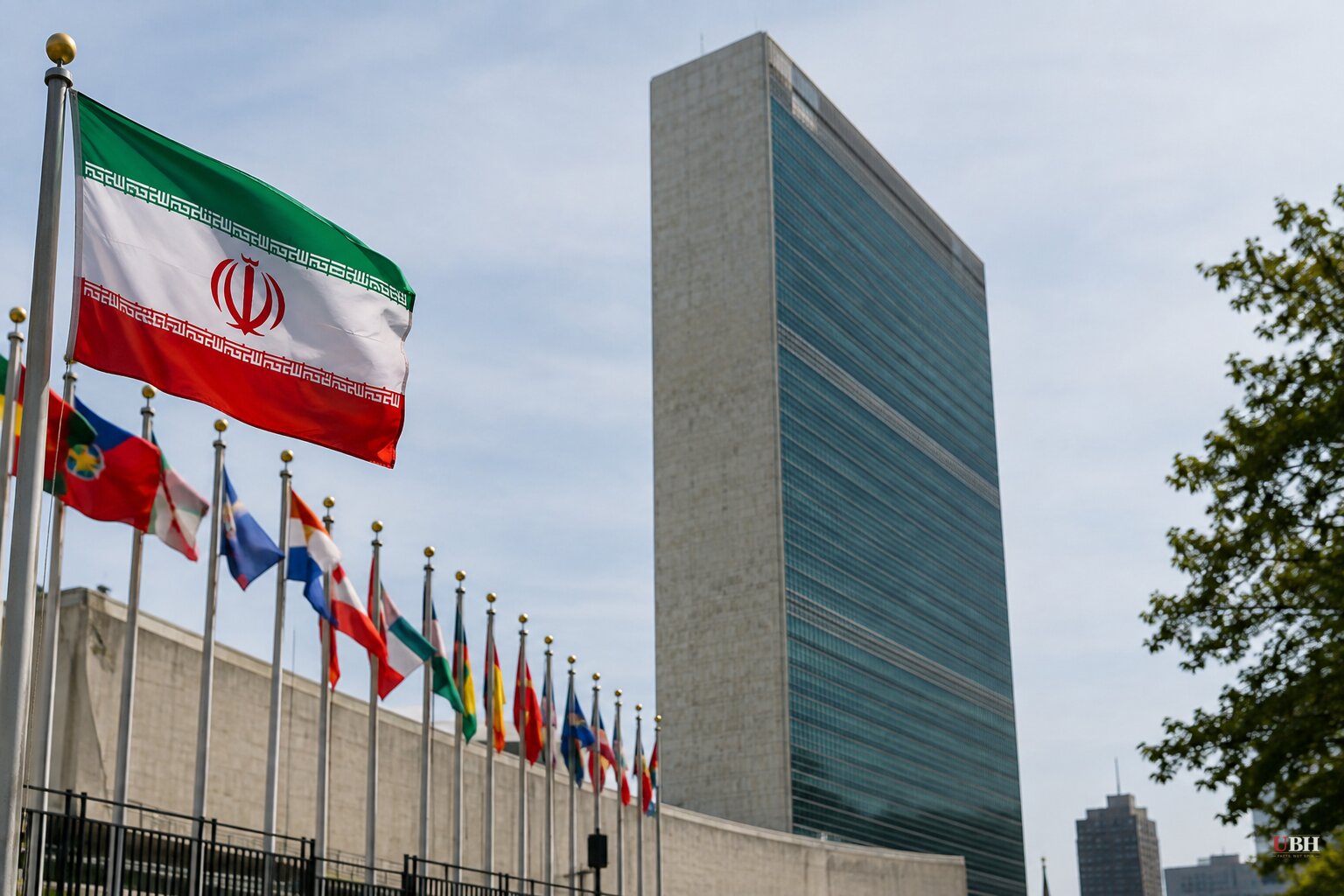
Since the US and Israel opened this war on Iran on February 28, the fighting has ground into its seventh month with no ceasefire and no reopened Strait of Hormuz. This week, both sides' top diplomats are stuck in the same city.
The State Department confirmed on September 17 that it approved visas for Iran's "core delegation" to attend the 81st UN General Assembly in New York, according to the Associated Press, reported by both the South China Morning Post and The Straits Times. That delegation includes Iranian President Masoud Pezeshkian and Foreign Minister Abbas Araghchi.
The access comes with strings attached. A State Department spokesperson told the AP the delegation "will be under travel restrictions and will face prohibitions on the purchase of luxury and other goods per our policy," and confirmed this year's Iranian delegation is smaller than last year's. Movement will be limited to the UN headquarters, the Iranian UN mission, the ambassador's residence, and JFK Airport.
State Department spokesperson Tommy Pigott put it bluntly on X, quoted by Fox News: "While ordinary Iranians endure brutal repression, water and electricity shortages, and soaring inflation, the regime's officials want to go on shopping sprees in New York. Not on our watch."
Former acting assistant attorney general Theo Wold told Fox News the restrictions basically tell Tehran it can talk at the podium but can't "go and buy a bunch of microwaves or a small car at Costco or a dealership in the greater New York area." Wold called the arrangement "pretty sensible" given the US is legally obligated under the 1947 UN headquarters agreement to let adversarial governments show up, but isn't obligated to give them the run of Manhattan.
Trump's Own Language Escalates
Speaking to Fox News in remarks reported by Anadolu Agency on September 20, Trump described himself as having entered "deciding mode" on Iran. "My question is if and when do I blow the entire nation up? They had better behave," he said, laying out three options: wiping Iran out militarily, letting the economy "rot" under pressure, or negotiating a deal. He added that "very big things are going to be happening in the not-so-distant future."
Those are Trump's stated intentions, not an announced military operation. No source in this reporting confirms a strike has been ordered or is underway.
Asked about the UNGA session, Trump told Fox News he'd "probably be open" to meeting Pezeshkian in person, according to Anadolu Agency. Neither Tehran nor Pezeshkian had responded to that as of Sunday, per the same report.
The schedule sets up the possibility of a real-time confrontation. Reuters and Iran's Mehr news agency reported Pezeshkian is set to address the assembly Wednesday, with Trump speaking Tuesday, according to Fox News.
Iran's Conditions and the Counterargument
Iran isn't showing up empty-handed on positions. Parliament Speaker Mohammad Bagher Ghalibaf said Iran's conditions for reopening the Strait of Hormuz include ending hostilities, releasing frozen Iranian funds, and ending the naval blockade, according to reporting aggregated by Ground News citing Tasnim and Tehran Times. Supreme National Security Council Secretary Mohsen Rezaei has laid out seven conditions overall for talks with Washington, per Fox News.
From Tehran's side, those demands reflect a straightforward position: sanctions relief and an end to the blockade before any concession on shipping through the Strait. From Washington's side, officials have signaled they'd consider ending hostilities if Iran reopens the waterway first, per Ground News' reporting. Both governments face a chicken-and-egg standoff neither has broken in six months of intermittent talks.
Iran also said Sunday it has intelligence that a major new US-led strike is being prepared, according to Reuters, and the State Department issued a fresh travel warning the same day citing the risk that Iran or aligned groups could target American interests worldwide, per Anadolu Agency.
The Wider UNGA Backdrop
The Iran drama isn't the only high-wire act at Turtle Bay this week. UK Prime Minister Andy Burnham is set for his first face-to-face meeting with Trump on Tuesday, according to The Guardian, with Downing Street aides hoping to strike a firmer tone than predecessor Keir Starmer without triggering open diplomatic conflict. Trump has previously called Burnham "extremely liberal" and dismissed him as the "mayor of a town."
Separately, the Trump administration is denying entry to Palestinian officials again this year, extending a ban in place since 2025, according to The Straits Times, with Palestinian Authority President Mahmoud Abbas among those denied a visa over what US officials say are efforts to "internationalize" the Israeli-Palestinian conflict at international tribunals.
The open question heading into Tuesday and Wednesday: does a Trump-Pezeshkian meeting actually happen, or does the week end the way past overtures have, with both men talking past each other from a podium ten blocks apart.
Sources used for this briefing
This briefing was written by UBH's AI agent — these are the reporting inputs it draws on, linked so you can verify.


