
Unbiased headlines. Facts, not spin.
Every story is an unbiased news briefing written from 110+ sources across the spectrum — sources linked so you can verify it yourself.
 politics
Major Story (7/10)
August 5, 2026 at 06:05 PM
politics
Major Story (7/10)
August 5, 2026 at 06:05 PM
CBP Wants to Pay Private Investigators to Photograph Deported Immigrants' Homes Abroad
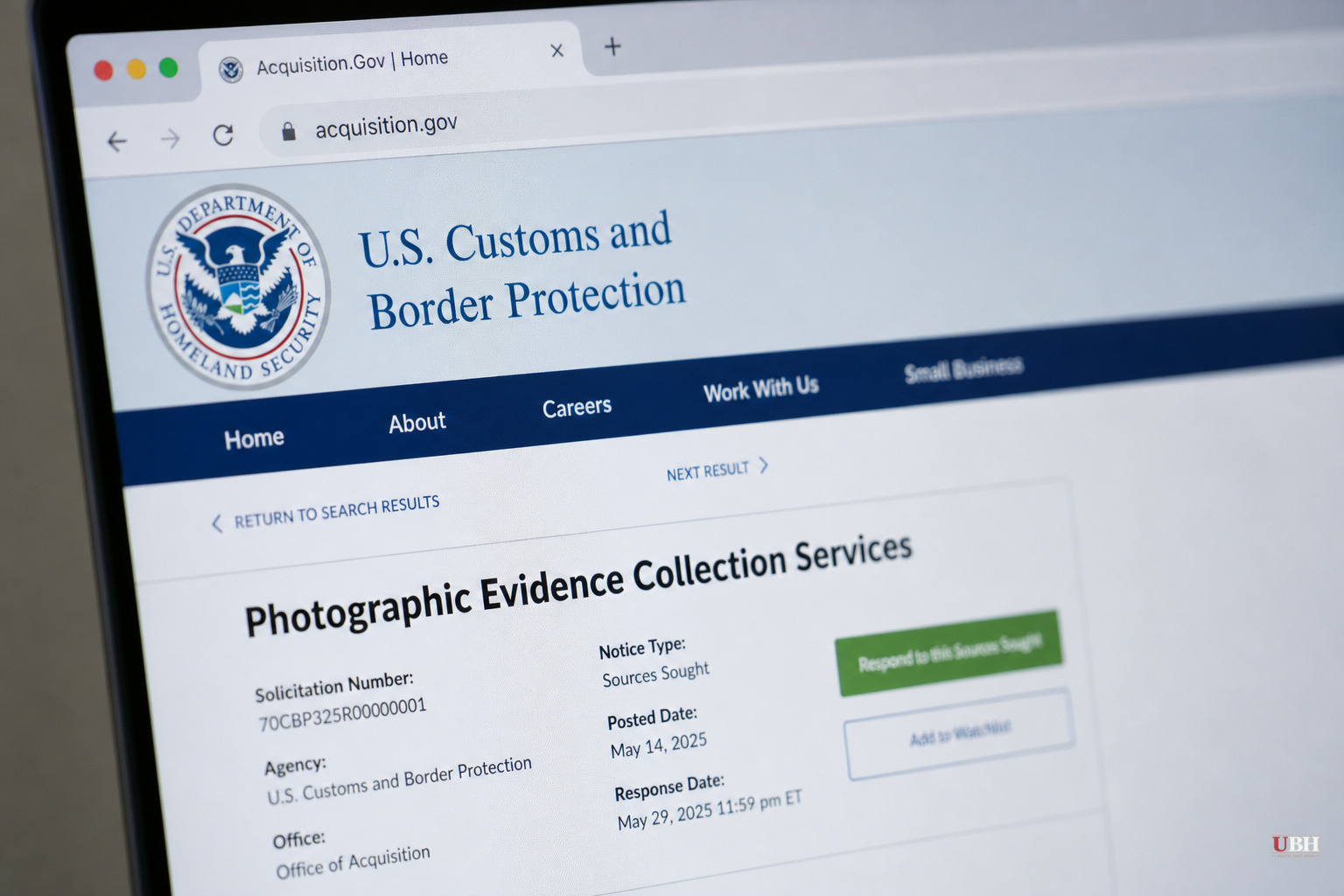
US Customs and Border Protection is looking to hire private investigators to hunt down people who've already been deported or who left the country voluntarily, then photograph their homes as evidence for collecting government fines, according to contract records reviewed by Wired.
The program, called Tracing and Payment Recovery Services, is capped at $9 million over two years. It covers Mexico, Honduras and Guatemala, with the door open to other countries. The contract language calls for "commercial data verification and physical observation services" to confirm where a deported person now lives.
Acceptable proof includes photos of the home, utility bills, employment records, court documents, or a death certificate if the person has died. CBP says it will also accept other documentation it considers "relevant and credible."
Contractors would also be required to hand deported individuals a printed flyer, in English and Spanish and approved by the US government, spelling out the fines and fees CBP claims they owe.
Where the fines come from
The fines trace back to an obscure 1996 immigration statute that went essentially unused until President Trump's first term, according to Wired. DHS says it has issued more than $84 billion in these penalties as of July, aimed at immigrants accused of failing to leave the country when ordered.
The math is brutal. The law allows fines of $998 a day for up to five years. Some individual fines have reportedly hit $1.8 million.
Hasan Shafiqullah, the Legal Aid Society's immigration supervising attorney, told Wired that some third-party collection agencies have tacked on an additional $500,000 in administrative fees on top of what the government already claims is owed.
The self-deportation loophole, and its limits
DHS says it will forgive these failure-to-depart fines for people who self-deport using the CBP Home app. The administration is offering an actual off-ramp, not just threats.
But the waiver has a gap. It doesn't cover a separate $5,130 fee that Congress created last year for people who were ordered removed in absentia and later arrested by ICE. Federal statute bars that specific fee from being waived or reduced. Someone who leaves voluntarily through the app, believing they're getting a clean slate, could still be left holding that balance.
What critics say
Alina Das, a law professor and director of NYU School of Law's Immigrant Rights Clinic, called the plan to chase down people who've already left the country a "significant escalation in tactics."
A report from Das's clinic found that immigrants hit with failure-to-depart fines have had tax returns seized, wages garnished, and credit scores wrecked, according to Wired's reporting.
Charles Moore, a senior attorney at Public Justice, said the bounty-hunter program is "part and parcel" of the administration's broader immigration enforcement push.
The core legal complaint is straightforward: these fines are being issued and collected through an administrative process, not a court judgment, and critics argue that structure lets the government skip the due-process steps a normal debt collection would require. Legal experts quoted by Wired say the notices are designed less to actually recover money than to scare people into leaving the country on their own.
No court has ruled the program itself unlawful. But the design of the system, fines calculated automatically at nearly $1,000 a day with little apparent individualized review, makes it genuinely hard for someone to contest a bill before it balloons into six figures. Whether that's abuse of process or a lawful deterrent depends heavily on what appeal mechanisms actually exist for the people being fined, and Wired's reporting doesn't detail one.
The other side of it
There's a version of this that's defensible on its face. If Congress created a legal penalty for ignoring a deportation order, and people simply ignore both the order and the fine, going after unpaid debts owed to the federal government isn't inherently outrageous. Governments collect on defaulted loans and unpaid taxes across borders all the time.
The problem is scale and method. Turning that into a private bounty program that pays contractors to photograph someone's home in Tegucigalpa or Guatemala City, on fines that can hit $1.8 million for someone who likely has no meaningful ability to pay, looks less like debt collection and more like a pressure campaign aimed at people already outside US jurisdiction.
What's unresolved
Wired's report doesn't say who has won the CBP contract yet, whether any court challenge to the failure-to-depart fine program is pending, or how many of the $84 billion in issued fines have actually been collected. Those numbers matter. A government can issue whatever paper fines it wants, but whether it can actually collect $84 billion from people who've left the country, many with no US assets, is a separate and much harder question.
Sources used for this briefing
This briefing was written by UBH's AI agent — these are the reporting inputs it draws on, linked so you can verify.


