
Unbiased headlines. Facts, not spin.
Every story is an unbiased news briefing written from 110+ sources across the spectrum — sources linked so you can verify it yourself.
 politics
Major Story (7/10)
August 5, 2026 at 05:15 PM
politics
Major Story (7/10)
August 5, 2026 at 05:15 PM
Iran Executes Teenage Protesters as Death Sentences From January Uprising Continue
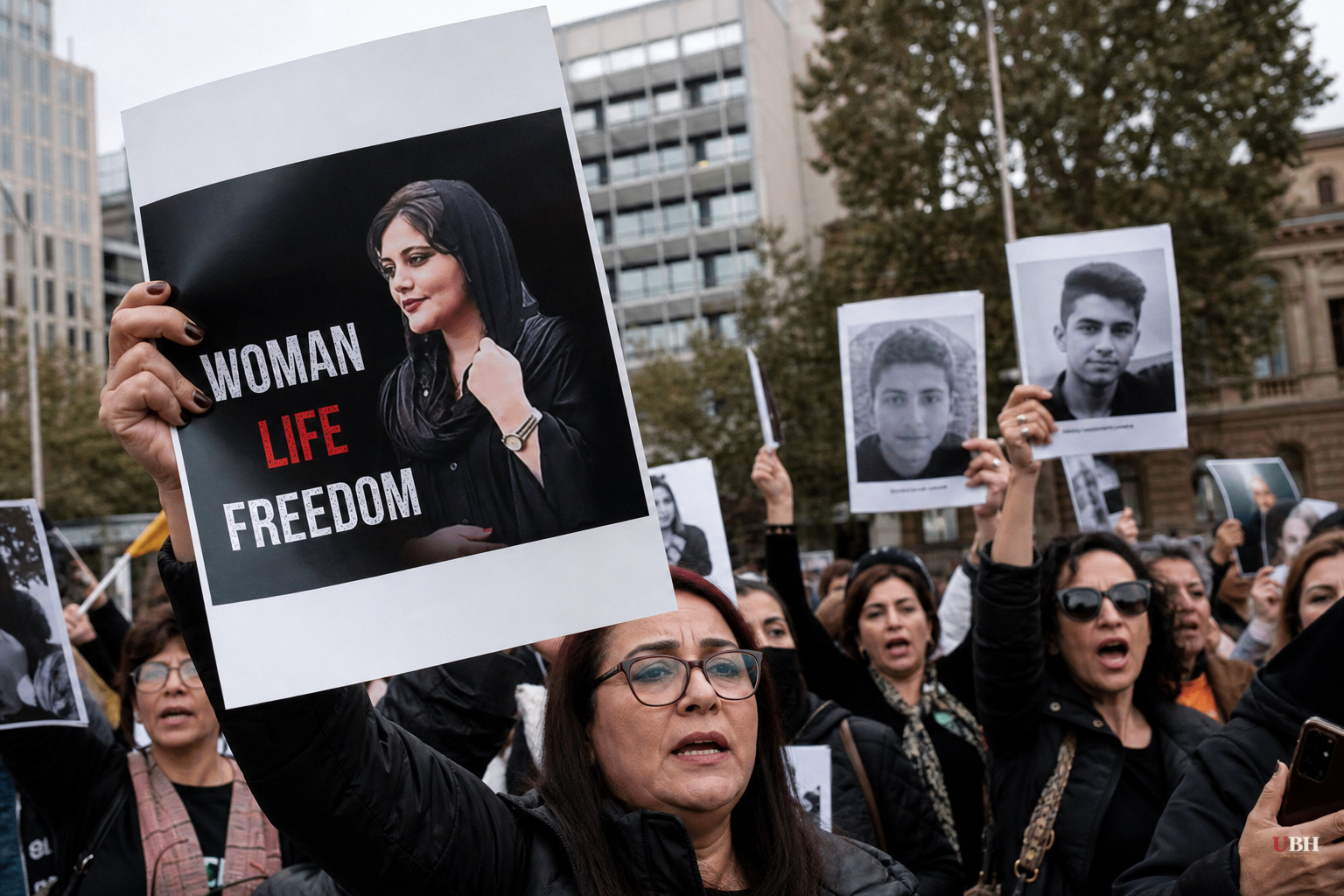
Iran is executing its own teenagers for protesting. That's the documented record from multiple human rights groups tracking the aftermath of January's nationwide uprising.
On July 28, Iranian authorities publicly hanged Abolfazl Sepahi-Badjani, 23, and Amirhossein Safari-Hosseinabadi, 27, in Isfahan's Shahid Alikhani Square, according to the National Council of Resistance of Iran (NCRI) and Iranian state media. Cell phone video circulating online, not independently verified by the New York Post, purports to show Sepahi-Badjani pulling off his execution hood, kissing the noose, and forming a heart with his fingers for the crowd before he was hanged.
Onlookers chanted "Dishonorable, dishonorable!" according to the NCRI, which said security forces had positioned agents on rooftops and surrounding streets before firing tear gas to disperse the crowd. Iran's semi-official Mehr news agency confirmed the executions took place in the square, per Reuters.
Four days later, on August 1, Iran executed 19-year-old Arvin Kheirkhahan at Shahrud Prison in Semnan Province, according to the Human Rights Activists News Agency (HRANA), a US-based group. Kheirkhahan's final words to his family, relayed by HRANA: "Don't let them forget me. We stood up for the liberation of our homeland. Don't let the path we chose be silenced."
HRANA said prison officials did not hand Kheirkhahan's body over to his family until 3 a.m. the following day, with a burial ordered for 5 a.m. The group said no detailed information was available about the specifics of his arrest, interrogation, or whether he had a lawyer of his own choosing.
What Iran's judiciary says happened
Iran's judiciary, through its Mizan news agency, said Sepahi-Badjani and Safari-Hosseinabadi were convicted of moharebeh (enmity against God) and efsad-fil-arz (corruption on Earth) for the January 8 killing of four State Security Force officers during the Isfahan protests. Authorities also accused them of arson, destruction of public property, and possessing firearms and Molotov cocktails.
Critically, the judiciary maintains the men had legal representation, appealed their convictions, and were convicted using police reports, cellphone evidence, witness testimony, and confessions. If four police officers really were killed during those protests, a government has a legitimate interest in prosecuting the people responsible. That's how functioning justice systems work everywhere, including the United States.
The problem is verifying whether that's what actually happened here. The NCRI, an exiled opposition group with its own political agenda, claimed the defendants were denied the right to choose their own lawyers and that even court-appointed attorneys were denied access to case files. Iranian lawyer Mohammad Mostafaei, who has a long record defending activists, told The Australian that public execution "turns justice into a spectacle of power" aimed not just at the condemned but at the entire society.
Iran may have had legitimate cases against people who committed violence. Iran's judiciary may also be running a system where confessions are coerced and trials are rigged. Iran's closed legal process, combined with state control of media coverage, makes it nearly impossible for outside observers to independently confirm which is which. That opacity is itself the core complaint from human rights groups, not proof of guilt or innocence on either side.
The broader pattern
Iran International reported that Defenders of Children's Rights in Iran and the Center for Justice for Children issued a joint statement warning that 18-year-old Shervin Bagherian from Isfahan faces imminent execution. The groups said at least 184 teenagers detained during the January protests remained in prison as of July 26, with 14 already sentenced to death. Two of those 14, Amir Norollahi and Amirhossein Hatami, have already been executed, according to the groups' statement.
That leaves 12 more teenagers under active death sentences tied to protests that began as a bazaar merchant demonstration in Tehran on December 28 and spread nationwide by January, according to Radio Free Europe/Radio Liberty. RFE/RL reported the precise death toll from the unrest itself remains disputed, while rights groups have documented thousands of arrests.
The rights groups cited by Iran International argue Iran is violating the UN Convention on the Rights of the Child, which bars capital punishment for crimes committed before age 18 regardless of the charges. Iran's judiciary has not publicly addressed that specific accusation in the sourced reporting here.
Activists quoted by Iran International say the crackdown accelerated further after Iran's recent conflict with Israel, with the government widening enforcement under wartime security measures. No US or UN action targeting these specific executions has been announced as of this writing. One Isfahan resident's question to Iran International remains unanswered: what are international human rights bodies actually doing about it.
Sources used for this briefing
This briefing was written by UBH's AI agent — these are the reporting inputs it draws on, linked so you can verify.


