
Unbiased headlines. Facts, not spin.
Unbiased Headlines is an independently owned news organization. We bring you the facts, not opinions, written fresh from 110+ named sources. Sources linked so you can verify it yourself.
 politics
Major Story (7/10)
New York's Top Court Rules 4-3 Against Buffalo Shooting Victims in Suit Over Social Media Platforms
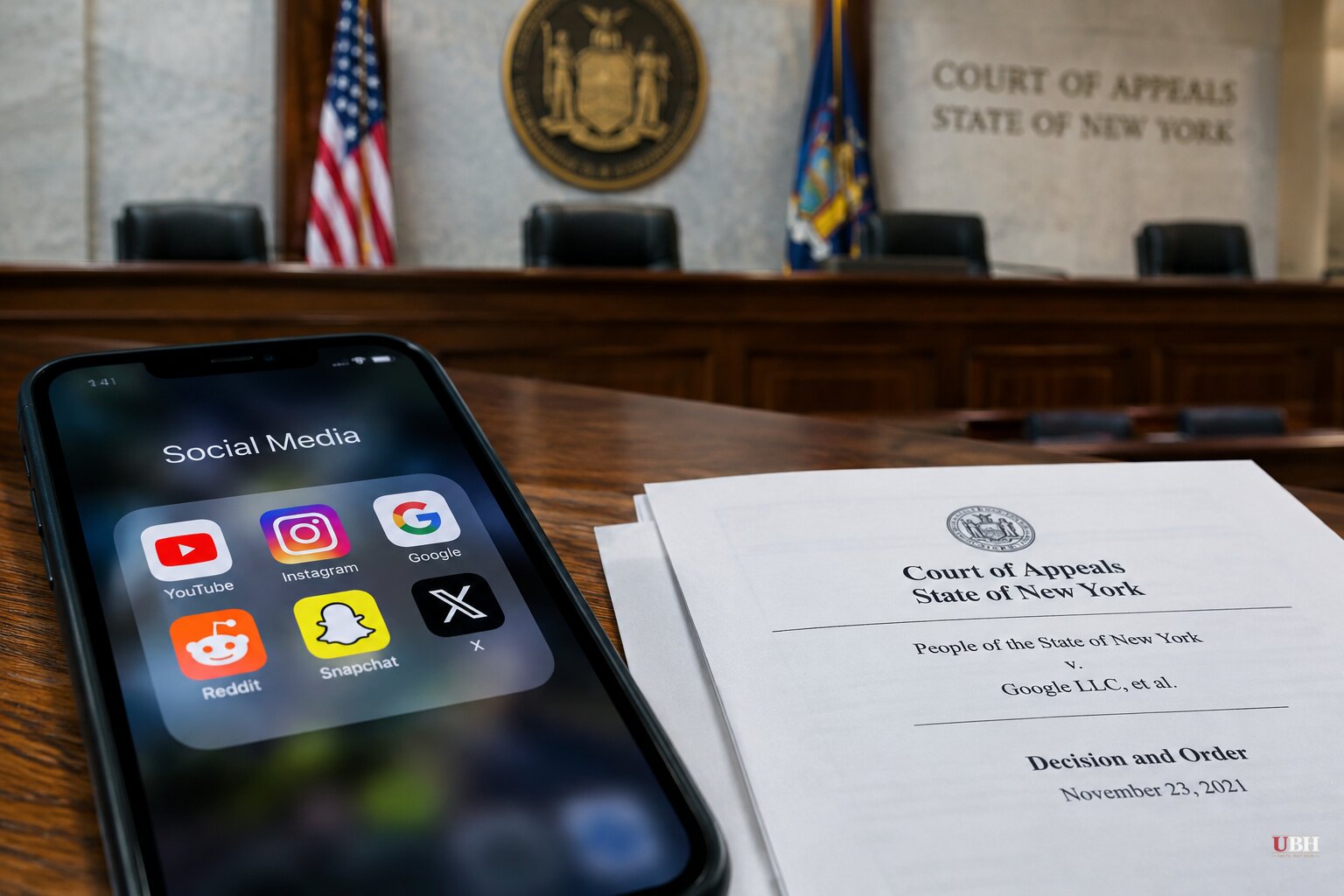
New York's highest court has thrown out the Buffalo victims' product-liability claims against the social media companies the shooter allegedly used.
In a 4-3 decision on Monday, Nov. 23, the Court of Appeals let stand a divided lower-court ruling that found Alphabet's Google and YouTube, Meta Platforms' Instagram, Reddit and Snap's Snapchat were immune under Section 230 of the federal Communications Decency Act. That law shields online platforms from liability over content posted by users.
The court also upheld dismissal of claims against Amazon.com, Discord, 4chan and Twitch Interactive.
The attack and the lawsuits
On May 14, 2022, Payton Gendron, then 18, shot 10 Black people to death at a Tops Friendly Markets in Buffalo and wounded three others. He is an avowed white supremacist.
Victims, relatives, store employees and customers who witnessed the attack sued the shooter's parents, firearms manufacturers and a group of social media companies. Their argument against the platforms: the products were designed to addict and radicalize users like Gendron, and the companies failed to warn of the danger.
Gendron was sentenced in February 2023 to life in prison without parole after pleading guilty to state charges including murder and terrorism motivated by hate. A related federal trial, where he could face the death penalty, saw jury selection begin Oct. 13.
What the majority said
The unsigned majority opinion in Patterson v. Meta Platforms, Inc. turned on causation, not on a sweeping defense of the platforms. The judges wrote that the plaintiffs "failed to adequately plead that features of [the] social media defendants' products proximately caused their injuries."
The majority said the complaints, even taking the allegations as true, did not establish that the shooter's actions were a "natural and foreseeable consequence" of the companies' decisions about how to design and operate their platforms.
Under New York law, the opinion explained, an unforeseeable criminal act by a third party can sever the causal connection between a defendant's conduct and a plaintiff's injury. Foreseeability, the court said, is often the most significant factor.
The majority's conclusion was blunt: "The shooter's actions were so extraordinary as to sever the causal chain as a matter of law."
The opinion also noted that proximate cause is usually a question for a jury, but can be decided by a judge when "only one conclusion may be drawn from the established facts." The majority concluded this was such a case.
The dissent
Judge Jenny Rivera dissented. She argued that a jury, not the court, should decide whether the prevalence of mass shootings put social media companies on notice that their allegedly defective products, and their failure to warn about the dangers, could trigger violence like the Buffalo attack.
"No federal or state law requires that we slam the courthouse door on plaintiffs' claims," Rivera wrote.
Matthew Bergman, a lawyer for the plaintiffs, said in a statement that his clients are evaluating their legal options. "The families affected by the tragic May 2022 Buffalo grocery store attack deserve accountability when dangerous product design choices contribute to real-world harm," he said.
Google, Meta, Reddit and Snap did not immediately respond to requests for comment. Lawyers for Amazon, Discord, 4chan and Twitch declined to comment or were not immediately available.
The legal fault line
The split on the bench mirrors a wider fight in American courts. Many courts have wrestled with how far Section 230 should shield social media companies when their platforms are used by children and teenagers. Plaintiffs' lawyers like Bergman have pushed a theory that treats algorithms and feed design as defective products rather than as protected publishing decisions.
The Buffalo ruling does not settle that question nationally. It is a state high court decision applying New York's proximate-cause rules to the facts pleaded in these complaints. The ruling as reported does not address the plaintiffs' claims against the shooter's parents or the firearms manufacturers.
The common-sense principle at the center of the majority's reasoning is old: the person who pulls the trigger answers for the crime. Gendron has been convicted and sentenced for exactly that. The dissent's counter is that a jury should get to weigh whether the companies bear some separate responsibility for what they built.
The plaintiffs have not said whether they will seek further review. Bergman's statement says only that the families are evaluating their options. The federal trial of Gendron, where prosecutors can seek a death sentence, remains the other open proceeding tied to the May 2022 attack.
Sources used for this briefing
8 links from 8 independent newsrooms (syndicated copies of the same report count once)
These are the sources it draws on, linked so you can verify.


