
Unbiased headlines. Facts, not spin.
Unbiased Headlines is an independently owned news organization. We bring you the facts, not opinions, written fresh from 110+ named sources. Sources linked so you can verify it yourself.
 politics
Major Story (7/10)
Qatar's Prime Minister Meets Rubio and Vance in Washington to Restart Iran Talks as Treasury Adds Sanctions
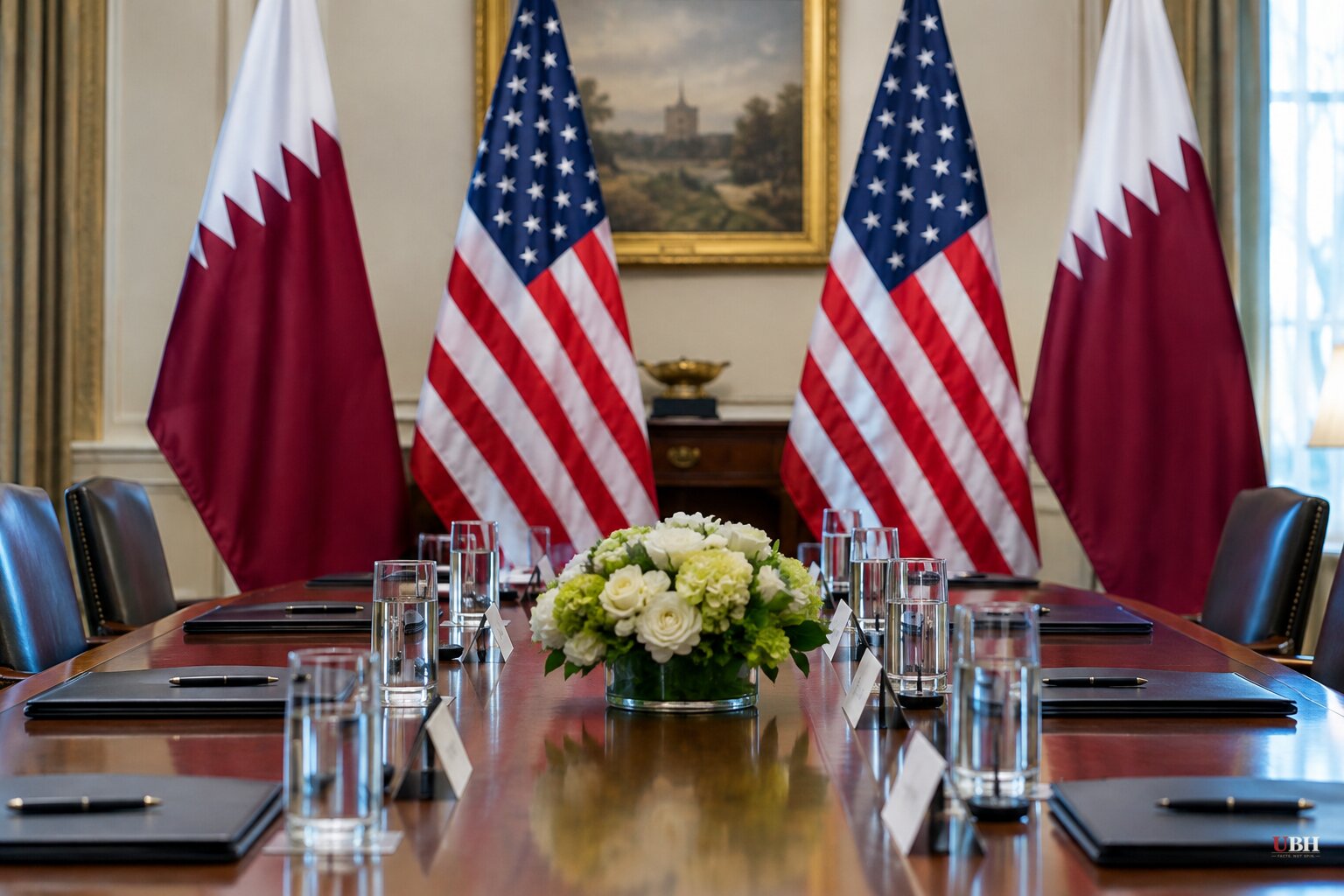
Nearly nine months into the war with Iran, Qatar's prime minister spent Monday, Nov. 23, in Washington trying to get U.S. and Iranian negotiators talking again. The war has no ceasefire holding and no active negotiating track.
Sheikh Mohammed bin Abdulrahman Al Thani, who is also Qatar's foreign minister, met Secretary of State Marco Rubio at the State Department. The State Department said the two opened the eighth round of the U.S.-Qatar Strategic Dialogue, with regional security and economic ties on the agenda. It was Al Thani's second Washington visit in less than a month.
Afterward he told Al Jazeera that Doha is working with both Tehran and Washington to revive the talks. "The situation in the Middle East cannot afford a new escalation between the US and Iran," he said. He also said Qatar wants to deepen defense cooperation with the U.S.
Vance in the room
According to a person familiar with the meeting, Vance also met Al Thani at the White House. The person spoke anonymously and gave no details, and Vance's office did not immediately respond to a request for comment. Axios reporter Barak Ravid said Qatari envoy Ali al-Thawadi attended.
Vance is not a new face in this. He met Al Thani on Nov. 9, and Qatar's Foreign Ministry said the prime minister then met privately with President Trump at the White House. Both conversations covered how to move the Iran negotiations forward, the ministry said. Vance had been the chief negotiator on the brief ceasefire.
Neither the State Department nor Qatar's Foreign Ministry had published a readout of Monday's meetings by evening.
Washington's mixed signals
The Monday meetings land amid uncertainty about how much the White House wants a deal. The AP reported that Trump told Vance the administration did not need a deal with Iran and told him to focus on fraud and crime in Democratic-led cities after the Republican Party's losses in this month's midterms. Vance has blamed voter unhappiness over the Iran war for those losses.
Trump told reporters Friday: "We want to make a real deal, not a fake deal." He also said in a CBS "60 Minutes" interview that he saw no reason to escalate and that the Strait of Hormuz was open. Rubio said Sunday, "I wouldn't say we're on the verge of a breakthrough," and called Iran's demands unrealistic while saying Trump prefers a diplomatic settlement.
Meanwhile, the Treasury on Monday sanctioned eight Iranian citizens and trading entities based in the UAE, Turkey and Hong Kong, all tied to what it called an Iranian "shadow banking" network. Treasury described the network as "the last financial lifeline of a bankrupt regime."
Tehran's terms
Iranian Foreign Minister Abbas Araghchi told the state-owned newspaper Iran that Tehran is still offering a plan to restore the ceasefire, reopen the Strait of Hormuz and resume nuclear talks. In return he wants the U.S. to end its naval blockade, allow Iranian oil sales under sanctions waivers and release frozen Iranian funds.
Mediators have floated a two-day sequence along those lines, according to Axios. The U.S. would lift the blockade and release some frozen funds. Iran would then take steps toward renewed nuclear inspections and reopen Hormuz before broader talks. Washington has not accepted it.
The enriched uranium stockpile is the other wall. Washington wants it eliminated. Araghchi said Tehran will consider mediators' ideas but insists the material stays inside Iran.
Parliament speaker Mohammad Bagher Ghalibaf said Monday that Supreme Leader Mojtaba Khamenei stressed that the "no war, no peace situation cannot continue and should be resolved," according to the Tasnim news agency. "The enemy wants to impose a no-war, no-peace situation to drain us," Ghalibaf said. President Masoud Pezeshkian has likewise said Iran favors negotiation but will not yield to coercion.
Fire on the ground
The diplomacy is running alongside continued strikes. Iran resumed drone and missile attacks this month on Bahrain, home of the U.S. Navy's Fifth Fleet. Bahrain's Interior Ministry said two people were injured Saturday in an Iranian strike on a civilian industrial site. Iran also targeted a U.S. air base in Kuwait last week.
Qatar has its own stake. Iran repeatedly hit the country during the height of the war, causing major infrastructure damage that curtailed its energy output. The continued blockade of Hormuz adds to the strain.
Qatar's shuttle work this past week has been busy. Al Thani and al-Thawadi met Trump envoys Steve Witkoff and Jared Kushner in Berlin on Thursday, according to Axios. A Qatari delegation then held about two hours of talks in Tehran on Friday, Iranian Deputy Foreign Minister Kazem Gharibabadi said. He said Iran is still speaking with mediators to see whether diplomacy can end the conflict.
What comes next
Both governments say they want a settlement. They still disagree on the order of steps, the blockade, the money and the uranium. It is unclear whether Washington will take up the mediators' sequencing proposal, or whether Treasury's new sanctions and Rubio's "no breakthrough" line signal it intends to keep up the pressure first. Neither the State Department nor the Qatari Foreign Ministry has said what, if anything, was agreed on Monday.
Sources used for this briefing
7 links from 7 independent newsrooms (syndicated copies of the same report count once)
These are the sources it draws on, linked so you can verify.


