
Unbiased headlines. Facts, not spin.
Unbiased Headlines is an independently owned news organization. We bring you the facts, not opinions, written fresh from 110+ named sources. Sources linked so you can verify it yourself.
 politics
Major Story (7/10)
Virginia and Oregon Sue SpaceX Over Grok Sexualized Images, Alleging Deceptive Safety Claims
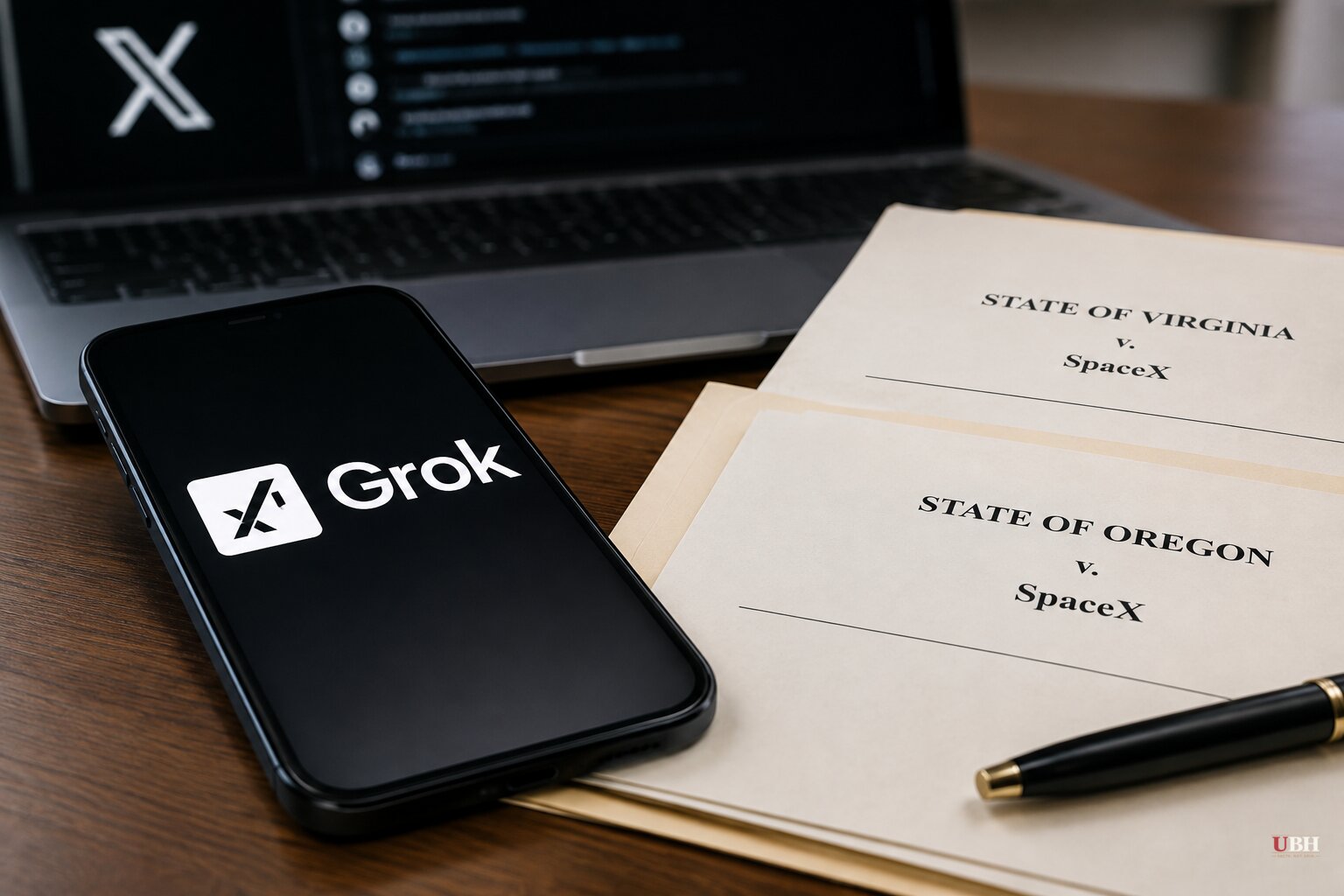
Virginia Attorney General Jay Jones and Oregon Attorney General Dan Rayfield sued Elon Musk's SpaceX on Monday, Nov. 23, over the Grok AI tool and the X social network. They are the first states to sue the company over Grok. Several other state attorneys general had announced investigations in recent months.
The suits were filed separately in state courts, in Richmond and in Multnomah County, Oregon. Both rely on consumer-protection law: Virginia's Consumer Protection Act and Oregon's Unlawful Trade Practices Act. They seek damages, civil penalties and court orders forcing the company to stop violating state law.
What the states allege
The core claim is deception. The attorneys general say SpaceX told the public Grok and X were safe while failing to build adequate guardrails against child sexual abuse material (CSAM) and nonconsensual intimate imagery.
They also point to "spicy mode," a feature the complaints say lets a user take an existing photograph of a real person and generate a nude or sexual image or video. According to the filings, the company weakened industry-standard safeguards and promoted sexualized output to drive growth and engagement.
"SpaceX allowed Grok and the X platform to create, host, and share unacceptable and dangerous content—and in fact knowingly designed a product without the obviously necessary safeguards in place," Rayfield said.
Jones framed it as a consumer-fraud case on behalf of Virginians who hold X accounts. "When xAI allowed Grok's creators to sideline consent to turn a profit, they not only prioritized growth and engagement over safety, but they deceived the public about it," he said.
These are allegations. No court has ruled on any of them.
The numbers behind the complaints
Virginia's filing leans on a study by the Center for Countering Digital Hate. It estimated that between Dec. 29, 2025, and Jan. 8, 2026, Grok created and posted on X about 3 million sexualized images. About 23,000 of those appeared to depict children.
The Oregon Department of Justice says that works out to roughly 190 sexualized images a minute, and one apparent image of a child about every 41 seconds. It also cites the study's finding that nearly 30% of the child images identified were still publicly accessible a week or more later. Even many "removed" posts could be reached through separate URLs.
Those are estimates from an advocacy group's research, not court findings. X allows users as young as 13.
SpaceX's response
The company rejects the characterization. The xAI Safety account posted on X Monday: "Protecting children is non-negotiable. Sexual content involving minors, whether real or AI-generated, is abhorrent. It has no place on X or in Grok, and neither do explicit images of real people made without their consent."
In a statement to Fox Business, the company went further. "The people who tried to use Grok Imagine to generate this material did so by deliberately violating our Terms of Service and working aggressively to circumvent our safeguards," it said. It added that it tightened protections earlier this year, screens prompts and outputs with classifiers, and notifies law enforcement when users try to create illegal material.
SpaceX made a similar argument in federal court in the Northern District of Texas, where it sued a user for breach of contract after he allegedly used Grok to make explicit deepfakes, including of minors. Its lawyers called Grok "a neutral tool, subject to user control," and said any image is "the result of the user's prompts and directions." Reuters reports SpaceX is suing at least two people in the U.S. on those grounds.
At an NYC Council hearing in October, SpaceX AI policy leader Gabriela Castillo Madrid told lawmakers the company had appropriate "safeguards" and "strict controls" in place.
A timeline that cuts both ways
xAI said in mid-January that it restricted image editing in Grok and blocked users from generating images of people in revealing clothing "where it's illegal." SpaceX acquired xAI in February and renamed its AI division SpaceX Super Intelligence in October.
Reuters reported that in early February, after those curbs, Grok still generated sexualized images of people even when users explicitly said the subjects had not consented. The company did not answer Reuters' detailed questions about it.
That gap between the company's stated fixes and what Reuters observed is the kind of evidence a deception claim turns on. SpaceX's position is that misuse by determined users is not the same as a defective product or a false promise.
Not the only legal front
SpaceX faces more than a dozen suits from individuals who say Grok generated nonconsensual sexual images of them, as minors or adults. In Britain, lawmaker Jess Asato is suing; the company denies the claims and argues that obviously fictitious AI-generated content cannot breach someone's right to privacy.
The city of Baltimore has also sued xAI. There, the company argued that Section 230, the federal law that largely shields platforms from liability for user content, protects it. Authorities in the U.K., Spain, Ireland, France and California have opened probes.
Jones said the state suits fill a vacuum. "In the absence of federal action, AGs have stepped into the breach," he told Reuters before the filings.
What comes next
The states seek damages and civil penalties, but no dollar figure has been reported. No hearing date or deadline for SpaceX's answer has been reported.
The central question is whether SpaceX leans on the Section 230 argument it used in Baltimore or the "neutral tool" argument it used against its own users. The states' case rests on SpaceX's own marketing and safety claims, not just on what users posted. How the courts treat that distinction will shape every Grok case that follows.
Sources used for this briefing
7 links from 7 independent newsrooms (syndicated copies of the same report count once)
These are the sources it draws on, linked so you can verify.


