
Unbiased headlines. Facts, not spin.
Unbiased Headlines is an independently owned news organization. We bring you the facts, not opinions, written fresh from 110+ named sources. Sources linked so you can verify it yourself.
 politics
Notable (6/10)
DNC Sets 12 Debates for 2028 Primary, Starting June 2027, With Dark-Money Pledge Required to Qualify
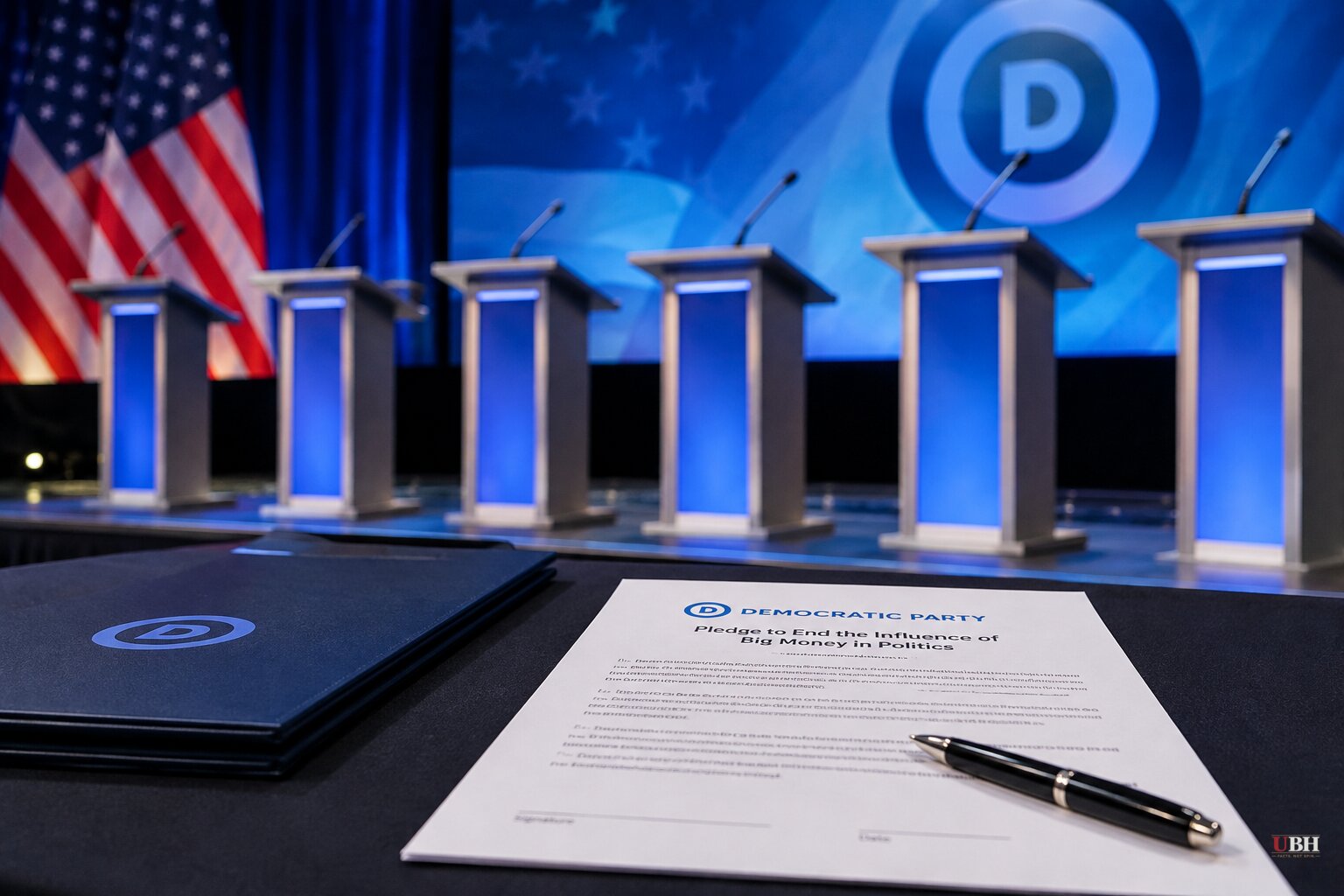
The Democratic National Committee will hold at least 12 presidential primary debates, starting in June 2027, the party announced Monday, Nov. 23. Five will take place in 2027 and seven in 2028, with the last set for March 2028.
It is the earliest the party has ever laid out its debate plans. No major candidate has entered the race to succeed term-limited Republican President Donald Trump.
The format
Each debate can be split across two nights, with no more than 20 qualifying candidates in total. Lineups will be drawn at random, at least in the early debates, according to DNC Chair Ken Martin.
Candidates will have to hit polling and grassroots fundraising benchmarks, as they did in 2020, the last open Democratic primary. That cycle also had a dozen debates and a huge field.
Every debate tied to an early primary state will be held in 2028. Martin said the first debate would likely come in "early June" 2027.
Martin said the timing was deliberate. "Let's just do the rules before any of the candidates have announced so everyone knows that we have no inkling or desire to actually choose the nominee," he said. "That's up to the voters."
Minyon Moore, a longtime DNC senior adviser, will lead the Debate Planning Committee with DNC executive director Roger Lau. The DNC said the committee includes veterans of the Harris, Biden, Sanders, Warren, Klobuchar, Clinton and Obama campaigns.
The dark-money pledge
The one real change from 2020 is a new requirement. To qualify, candidates must sign and follow the DNC's Fair Campaign Practices Pledge, "committing to denounce dark money spending in our primary."
The pledge covers super PACs and 501(c)(4) nonprofits, whether the spending boosts a candidate or attacks a rival. It reaches television, radio, digital, billboard and mail advertising.
The DNC plans to track disavowals on its website, along with complaints that a candidate is not following the rules. The party said the rule does not apply to the 2028 general election, or to groups attacking Republicans without backing a particular Democrat.
Martin has pushed the idea since August 2025, when he brought a proposal to DNC members to examine limits on corporate and dark-money spending in the primary. A DNC official told Axios that Sens. Bernie Sanders and Elizabeth Warren back the change, as do Rep. Jason Crow and former DNC chair Jaime Harrison.
Limits Martin concedes
Outside groups are legally barred from coordinating with campaigns, so neither the party nor the candidates can shut the spending off. Martin said so himself.
"This is not a perfect solution. But I really believe we have to live our values," he said. "It's not going to end super PACs; we don't have the power to do it."
Axios reported it was unclear whether the change would have a substantive effect or be mostly symbolic. The outlet noted that most likely Democratic candidates had been expected to rely on super PACs, and that those groups can still spend to help candidates who disavow them.
A person close to Martin told Axios the party wants to build on its midterm message against dark money and what that person called corruption by Elon Musk and other ultra-wealthy special interests. That person said the message resonated across the ideological spectrum.
The pledge is not the only enforcement tool. Candidates must also follow the DNC's new nominating calendar. Those who compete in states trying to jump ahead of the approved early-primary order risk losing delegates won in every early-nominating state, and the DNC made that penalty harder to reverse than in past years.
A field with no frontrunner
The announcement follows this month's midterms. Democrats took both the House and Senate, and an Associated Press tally has them with at least 258 House seats, their largest House majority since 1992.
The party still has no clear 2028 frontrunner. Allies of former Vice President Kamala Harris formed a committee last week urging her to run, the Los Angeles Times reported. Committees have also formed to encourage Reps. Ro Khanna and Alexandria Ocasio-Cortez and former Transportation Secretary Pete Buttigieg.
Martin said "there's certainly more than 20 people who have had conversations about thinking about it, not necessarily committing to it." He predicted the list will shrink once the first contenders get in and others have to "put up or shut up."
A three-day "What's Next" conference in Denver, organized by the independent group Majority Democrats, is drawing potential contenders including Buttigieg, Pennsylvania Gov. Josh Shapiro, Sens. Cory Booker, Raphael Warnock and Elissa Slotkin, and Khanna. An adviser to the group told Fox News Digital the election results were not "validation of our party" but a "repudiation of Donald Trump." The conference is not an official party event.
What comes next
The DNC says exact dates, locations and media partners for the first two debates will be announced in January. The polling and fundraising thresholds will come then too.
The party also reserves the right to adjust the schedule. It has not said how it will choose who is left off the stage if more than 20 candidates qualify. Martin acknowledged that decision "will be hard for sure." The DNC is also still deciding on a 2028 convention city, with Boston, Denver and Philadelphia the finalists.
Sources used for this briefing
8 links from 8 independent newsrooms (syndicated copies of the same report count once)
These are the sources it draws on, linked so you can verify.


