
Unbiased headlines. Facts, not spin.
Every story is an unbiased news briefing written from 110+ sources across the spectrum — sources linked so you can verify it yourself.
 politics
Notable (6/10)
August 5, 2026 at 04:32 PM
politics
Notable (6/10)
August 5, 2026 at 04:32 PM
China's New 'Ethnic Unity' Law Mandates Mandarin, Tibetans Adapt Under Watch
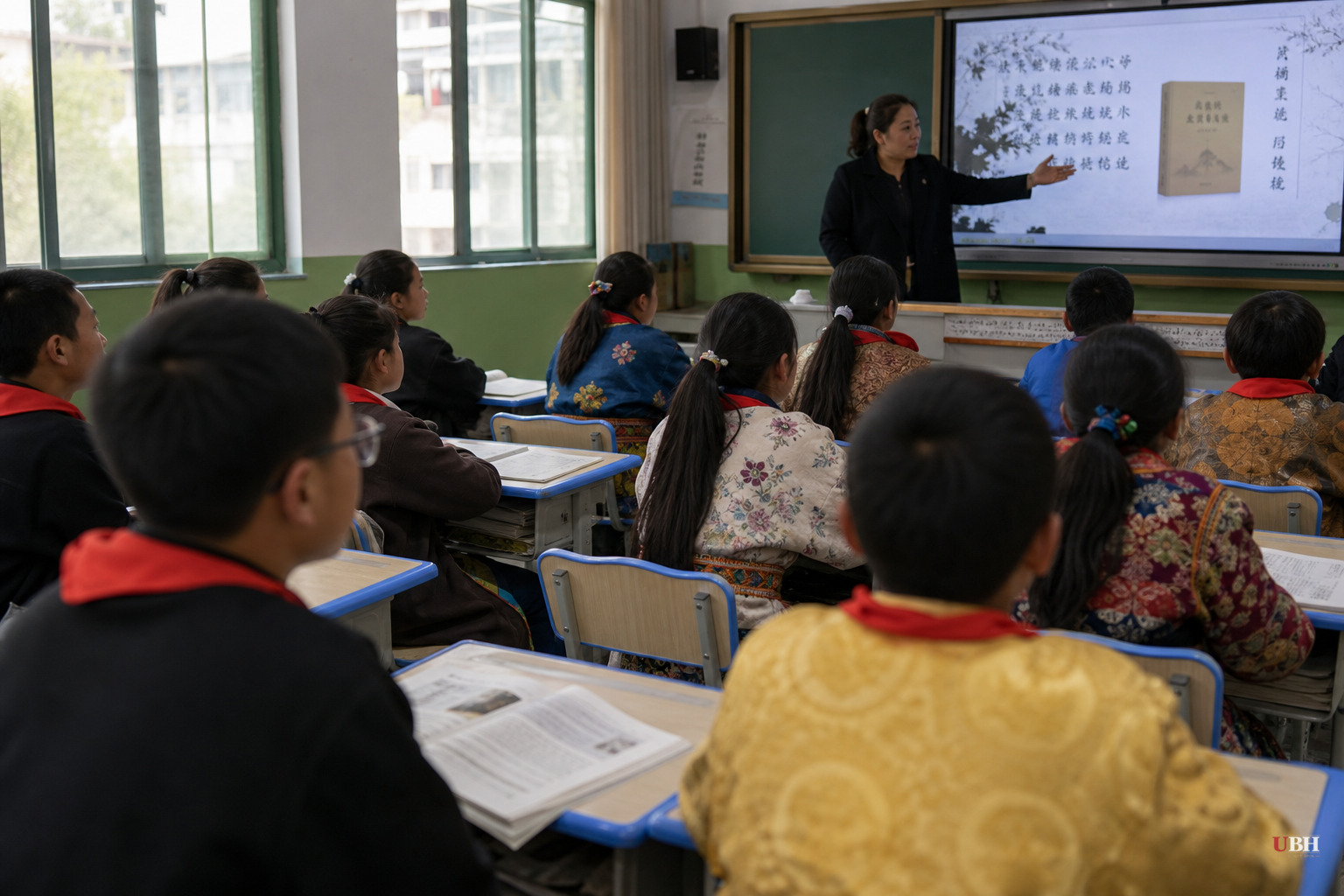
China's government put a new "ethnic unity" law into effect July 1, requiring Mandarin as the primary language in schools and government agencies nationwide and banning speech or activity that Beijing considers a threat to unity among the country's 56 recognized ethnic groups, according to the Associated Press. The law directs schools, families and other institutions to actively promote patriotism and a unified national identity.
Nowhere is that law more loaded than in Tibet, the Himalayan region Beijing has controlled since 1950 and administers as an "autonomous" region while keeping tight political control over it. China is using 2026 to mark the 75th anniversary of what it calls the "peaceful liberation" of Xizang, its official name for Tibet. Tibetans in exile and other critics call that same event an invasion, the AP reported.
The AP visited Tibet last month as part of a government-organized trip for foreign journalists, with stops in Lhasa and the city of Shannan. Chinese officials accompanied the reporters throughout and the journalists were not free to move independently or report without supervision. The AP said it retained full editorial control over what it published, but the access itself was curated by the state.
One scene from that trip: Kalsang Lhamo, a 73-year-old retired nurse in Lhasa, practicing Tibetan calligraphy at a government-run day care center for the elderly. She has spoken Tibetan her whole life but says she never learned to write it. She also speaks and writes Chinese, the AP reported, which is now the mandated primary language for schools and government business under the new law.
That detail cuts two ways. Officials can point to Lhamo's classes as evidence the state isn't erasing Tibetan language, it's funding programs for people to learn to write it. Critics can point to the same scene and ask why a 73-year-old native Tibetan speaker never had the chance to learn written Tibetan in the first place, and why Mandarin, not Tibetan, is the language required in her region's schools and offices today.
Rights groups and Tibetan activists argue the law is the latest step in a longer pattern of cultural assimilation policies Beijing has applied to minority regions. The AP noted similar moves already underway elsewhere: expanded Mandarin-language education for Uyghurs in Xinjiang, and the replacement of Mongolian-language instruction with Mandarin in parts of Inner Mongolia. Those are documented policy shifts, not speculation, and they predate this year's unity law.
James Leibold of La Trobe University and Tenzin Dorjee of the advocacy group Tibet Action Institute made a sharper argument in Foreign Affairs, writing that minority communities trying to preserve their culture under these policies will be "pushed toward a double life of public conformity and private reservations." That's a prediction about behavior, not a documented outcome, but it reflects a real and specific concern from people who study the region closely: that public compliance with Mandarin-first, unity-first rules doesn't mean private erasure of Tibetan identity has stopped, it just means it goes underground.
The Chinese government's response to this kind of criticism has been to dismiss it outright. Beijing has called foreign criticism of the law "ideological bias," according to the AP, without engaging the specific claims about language policy or cultural suppression. That's a categorical denial, not a rebuttal on the merits, and it leaves the core factual dispute unresolved: whether the law's real function is protecting a shared Chinese identity, as Beijing frames it, or dismantling minority language and culture, as critics frame it.
The law bans conduct Beijing deems divisive, including activity abroad, and it puts schools and families under an explicit mandate to instill patriotism and unity. Whether that mandate is enforced with a light touch, as the day care calligraphy class suggests, or a heavy one, as the Xinjiang and Inner Mongolia precedents suggest, likely depends on where in China you live and how visible you are to the state.
The reporting itself carries a built-in limit. It came from a trip Chinese authorities organized and supervised, in a region where independent, unescorted reporting by foreign journalists is not permitted. That doesn't make the observations false. It does mean the full picture, including what Tibetans might say without officials in the room, remains largely outside what any outside journalist can currently verify.
The open question going forward is enforcement. China has a documented track record in Xinjiang and Inner Mongolia of language policy escalating over time rather than staying static. Whether Tibet follows that same trajectory under the new unity law, or whether the law functions mostly as a symbolic framework layered on top of existing policy, is something only time and access, neither guaranteed, will settle.
Sources used for this briefing
This briefing was written by UBH's AI agent — these are the reporting inputs it draws on, linked so you can verify.


