
Unbiased headlines. Facts, not spin.
Unbiased Headlines is an independently owned news organization. We bring you the facts, not opinions, written fresh from 110+ named sources. Sources linked so you can verify it yourself.
 politics
Major Story (7/10)
Event date: November 15, 2026 ·
Supreme Court to Hear AR-15 Ban Cases Dec. 2 as Lead Cook County Plaintiff Asks to Leave
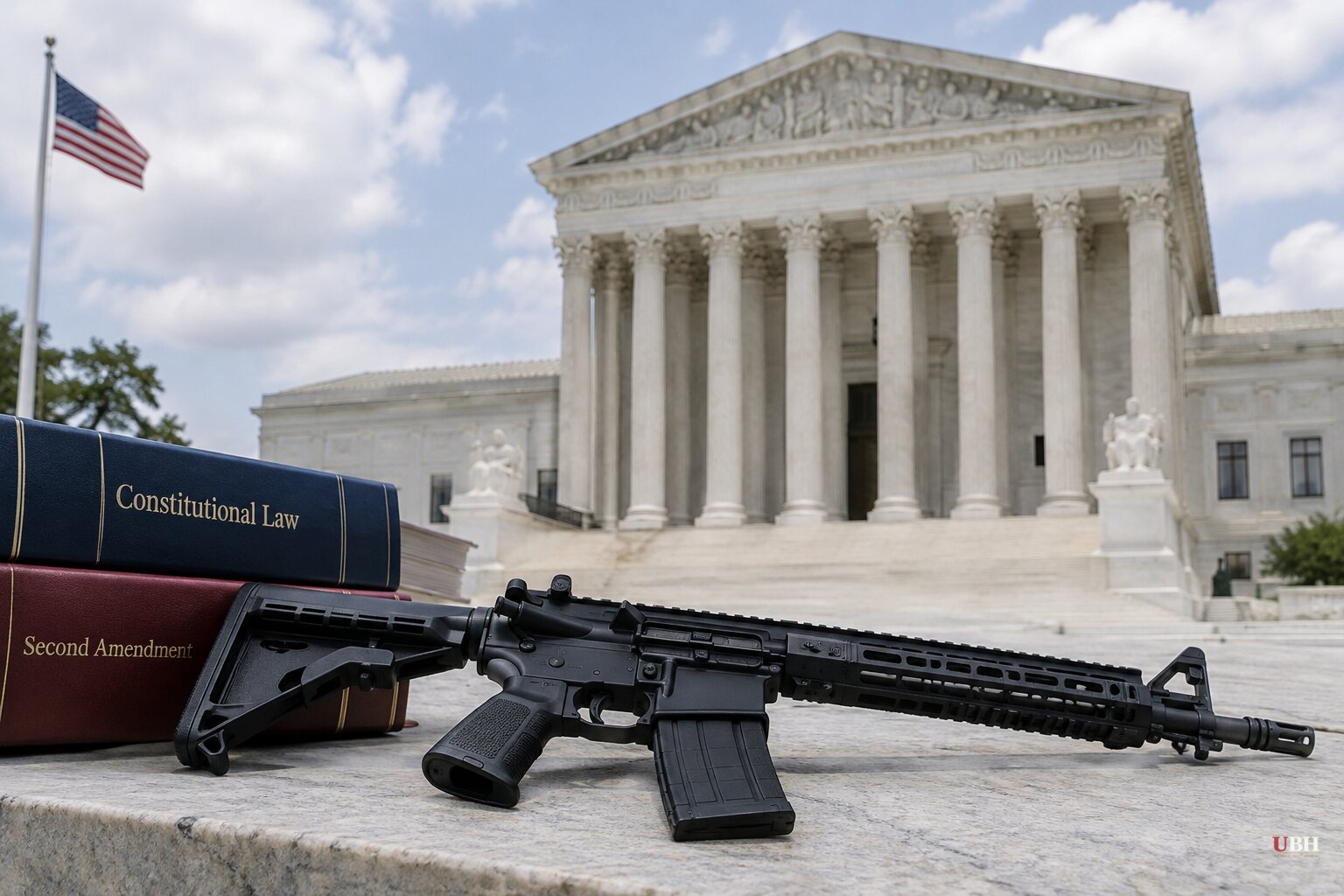
The Supreme Court is set to hear one hour of argument on Wednesday, Dec. 2, in the biggest Second Amendment case since Bruen. The justices will take up Viramontes v. Cook County (No. 25-238) and Grant v. Higgins (No. 25-566), consolidated challenges to Cook County, Illinois, and Connecticut laws that criminalize possession of listed "assault weapons," including the AR-15.
The Court granted review June 30, 2026. It limited both cases to the question in the Cook County petition: "Whether the Second and Fourteenth Amendments guarantee the right to possess AR-15 platform and similar semiautomatic rifles."
What is, and is not, before the Court
This is a rifle case. Cook County and Connecticut each also ban magazines holding more than ten rounds. The challengers' own brief says those bans "are not challenged and are not at issue in these cases."
The test comes from the Court's 2022 decision in New York State Rifle & Pistol Association v. Bruen. When the Second Amendment's plain text covers the conduct, a gun law survives only if it is "consistent with the Nation's historical tradition of firearm regulation." Both sides say they win under it.
The Cook County challengers are Cutberto Viramontes, Christopher Khaya, the Firearms Policy Coalition and the Second Amendment Foundation. A federal district court granted summary judgment to the county. The Seventh Circuit affirmed on June 2, 2025, relying on its 2023 Bevis v. City of Naperville decision.
Connecticut's ban dates to the aftermath of the Dec. 14, 2012, Sandy Hook shooting in Newtown. The legislature expanded it in 2013 and added the AR-15 to the list. Lower courts upheld it.
The federal government has sided with the challengers. The Court has allowed the solicitor general to take part in oral argument.
The Viramontes problem
In October, attorneys for lead plaintiff Viramontes at the law firm Cooper & Kirk filed a one-paragraph request to remove him from the case. The filing gave no reason.
Cook County State's Attorney Eileen O'Neill Burke, a Democrat, answered in a filing this month that the departure would make the case moot, meaning the justices would dismiss it. "Viramontes has not offered any explanation as to why he sought to remove himself from the suit," she wrote. "And the most natural inference from the barebones motion is that Viramontes' circumstances have changed in some significant fashion."
Cooper & Kirk has not answered CNN's repeated requests for an explanation. Both sides have since filed arguments on mootness. Viramontes' name remains on the case as of today, Nov. 22, and the Dec. 2 argument is still on the calendar.
The Connecticut case would proceed regardless. A ruling there would almost certainly decide the fate of similar bans, including Cook County's. Losing the Cook County vehicle would change the procedure more than the legal outcome.
It would still be an embarrassment for a litigation campaign built to set a nationwide precedent. Cook County also is not letting go of the other plaintiff.
Khaya says he wants to buy an IMI Galil, a semiautomatic rifle similar to an AK-47, not an AR-15. The county's filing says "there are no record facts concerning whether the IMI Galil weapon operates similarly to an AR-15," or whether it is "in common use for lawful purposes." Gun-rights groups have leaned in their briefs on how widely owned the AR-15 is, not on the Galil.
What the briefs say
The states and the county have made their arguments in October briefs. Cook County's brief concedes the founding generation distrusted standing armies. It argues the nation was free to abandon "revered, but outmoded, military practices." On the argument that these rifles serve to resist tyranny, the county writes: "Today, of course, these responsibilities are reserved for the United States military."
Connecticut's corrected brief rejects the challengers' reliance on the tens of millions of AR-15s owned by Americans. It says nothing supports reading the Constitution through "a trivial counting exercise," a phrase from the Fourth Circuit's 2024 decision in Bianchi v. Brown, which upheld Maryland's ban. The state also argues that legislatures have historically banned weapons once their dangers became "obvious and pressing."
The Texas Gun Rights Foundation, which backs the challengers, says that logic means "the more Americans choose a rifle, the stronger the case for confiscating it." Foundation President Chris McNutt said the county's position is "exactly the argument the Second Amendment was written to defeat. A right that lasts only until the government builds a big enough military is no right at all."
Cook County also cites District of Columbia v. Heller's remark that small arms may be no match for modern bombers and tanks. The Texas Gun Rights Foundation points out that the next words in Heller say modern developments cannot change the Court's interpretation of the right.
What comes next
The justices will hear argument Dec. 2. No ruling will come that day. The open procedural question is whether the Court grants Viramontes' request, and whether Khaya's Galil-based claim can carry the Cook County case if it does. Either way, Connecticut's ban is the vehicle that decides whether the AR-15 is protected.
Sources used for this briefing
5 links from 5 independent newsrooms (syndicated copies of the same report count once)
These are the sources it draws on, linked so you can verify.


