
Unbiased headlines. Facts, not spin.
Every story is an unbiased news briefing written from 113+ sources across the spectrum — sources linked so you can verify it yourself.
 defense
Major Story (8/10)
September 25, 2026 at 08:33 AM
defense
Major Story (8/10)
September 25, 2026 at 08:33 AM
Ethiopia's Tigray War Reignites: Rebels Seize Three Airports, Army Says It Killed or Captured 500 Fighters
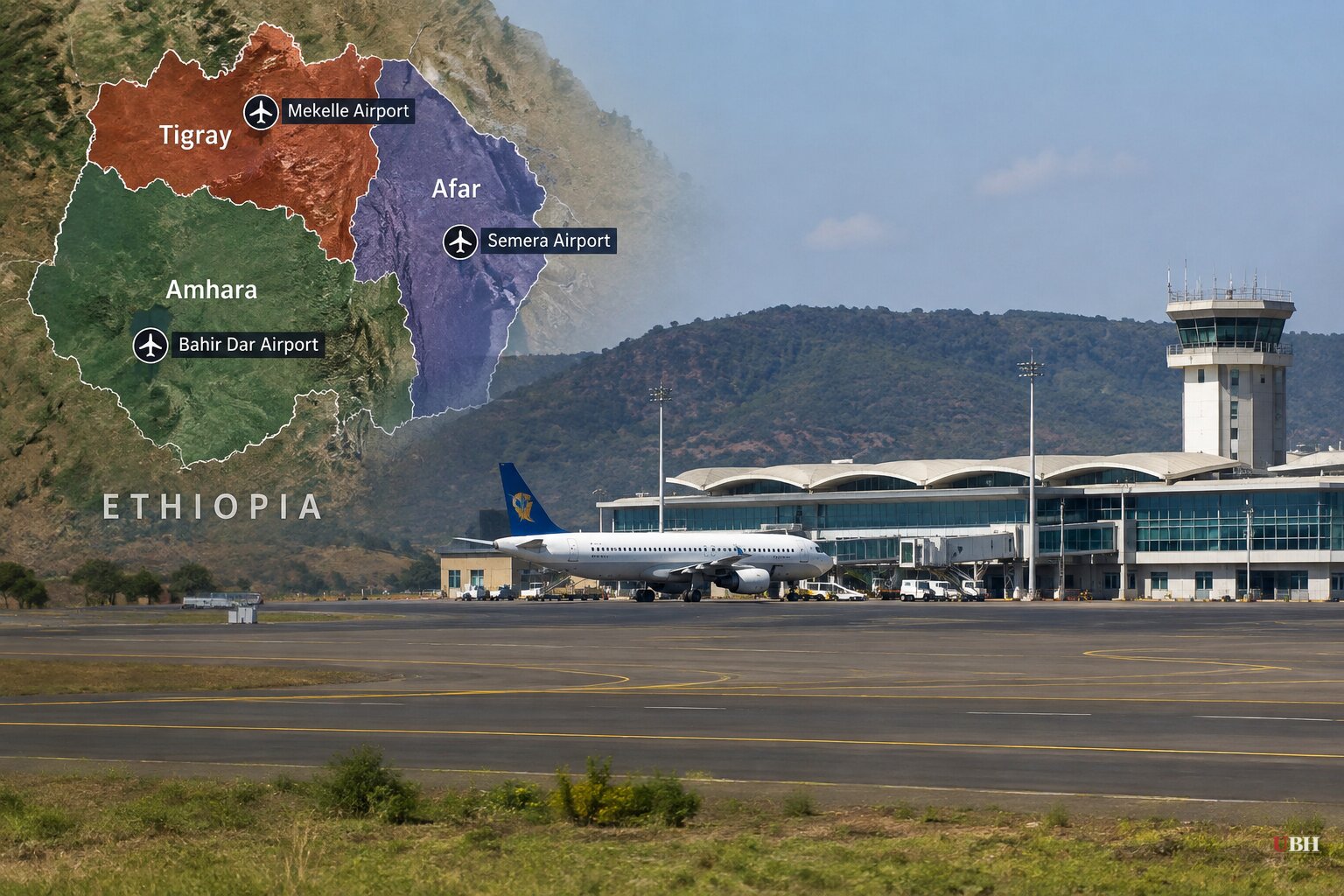
Fighting spreads beyond Tigray
Since the Tigray People's Liberation Front announced its "defensive war" against the federal government on September 23, combat has expanded from Tigray into the neighboring Afar and Amhara regions, according to CNN and the Guardian. Tigrayan forces seized the airports at Mekelle, Aksum and Shire, prompting Ethiopian Airlines to suspend service to the region, a development reported earlier this week.
Getachew Reda, an adviser to Prime Minister Abiy Ahmed and a former TPLF official, wrote on X that Tigrayan forces launched an "all-out offensive" against government positions in Afar and Amhara after taking the airports. He said the TPLF's leadership had "taken irresponsibility to new heights," according to Reuters reporting carried by CNBC Africa.
Army says it repelled the attacks
In its first public comments on the fighting, Ethiopia's army said Thursday it had foiled the rebel attacks and killed, wounded or captured more than 500 enemy fighters, the Guardian reported. That figure has not been independently verified and the TPLF has not responded to it directly.
TPLF vice-president Amanuel Assefa told Agence France-Presse, "We are in the situation of full-blown war now," confirming Tigrayan forces are fighting alongside local armed groups in both Afar and Amhara. In Afar, a humanitarian source told AFP there were heavy artillery attacks Thursday as Tigrayan-aligned forces tried to seize the town of Yallo near the Tigrayan border. A foreign security source based in Ethiopia said fighting was also underway around Weldiya in Amhara, one of the few routes into the capital, Addis Ababa.
Flights to Lalibela, the Ethiopian town famous for its 12th-century rock-hewn churches, were suspended Thursday because of nearby fighting, per the Guardian and Epoch Times.
Civilians stocking up on food and cash
Residents in Tigray are bracing for the kind of siege conditions the region endured during the 2020-2022 war, which the African Union estimates killed around 600,000 people. A resident of Adigrat, near the Eritrean border, told Reuters that shop shelves are emptying and medicine is scarce and expensive. "Daily survival has become a constant calculation," he said.
The alliance behind the offensive
The fighting follows Sunday's formation of a coalition called the Ethiopian Peoples' Forces Alliance for Survival, uniting the TPLF with six other armed groups, including the Amhara-based Fano militia, the Guardian reported. Fano fought alongside the federal government during the 2020-2022 war but turned against Abiy's administration in 2023. The alliance's stated goal is deposing Abiy's government in Addis Ababa.
According to the conflict-tracking group ACLED, the current escalation did not start this week. ACLED says the TPLF reinstated its pre-2020 regional government in May and began mobilizing and conscripting fighters, with open combat resuming August 1. ACLED's assessment is blunt: this is "very far" from the scale of the 2020-2022 war but is "in an early stage." The involvement of a coalition with ambitions beyond Tigray makes the situation dangerous.
Who's backing whom has flipped
The alliances look nothing like the last war. Eritrea backed the federal government against the TPLF in 2020-2022. Now Abiy's spokesperson, Billene Seyoum, told Reuters the new anti-government alliance has been collaborating for some time with Eritrean financial backing. Eritrea has repeatedly denied supporting Ethiopian armed groups, and its information minister declined to comment this week.
ACLED notes Eritrea is now in open hostility with Addis Ababa and has joined a "Red Sea alliance" with Egypt, Saudi Arabia and Somalia, a realignment that has nothing to do with the old 2020 battle lines. Analysts cited by the Guardian say Eritrea fears landlocked Ethiopia is angling for Red Sea access through military force, which would explain Asmara's alleged interest in weakening Abiy's government.
What Ethiopia's leadership is saying
Ethiopian President Taye Atske-Selassie Amde, addressing the U.N. General Assembly on September 23, said foreign entities were meddling in Ethiopia's affairs and insisted the government had shown "immense restraint," per the Epoch Times. He did not name Eritrea directly in that appearance.
Addis Ababa argues it is defending a sovereign, elected government (Abiy's Prosperity Party won a national election in June) against an armed faction that broke a signed peace deal and is now taking territory by force. The TPLF's counter is that the federal government violated the 2022 Pretoria Agreement first through airstrikes, drone strikes and ground operations, and that Tigrayans are fighting defensively against what they call a genocidal campaign. Neither claim has been independently verified by the sources reviewed here, and both governments have strong incentives to frame themselves as the aggrieved party.
What's unresolved
Assefa told AFP the TPLF has "no information about Eritrea's plan" and, asked whether Tigray would formally request Eritrean military intervention, answered only: "Not yet." That single word matters most. If Eritrea enters directly, on either side, a regional war involving Ethiopia, Eritrea, Sudan's ongoing civil conflict and the broader Red Sea rivalry between Egypt, Saudi Arabia and the Gulf states becomes far more likely, according to the diplomatic and analyst sourcing cited by Reuters and the Guardian.
Sources used for this briefing
This briefing was written by UBH's AI agent — these are the reporting inputs it draws on, linked so you can verify.


