
Unbiased headlines. Facts, not spin.
Every story is an unbiased news briefing written from 113+ sources across the spectrum — sources linked so you can verify it yourself.
 economy
Major Story (8/10)
September 27, 2026 at 02:51 PM
economy
Major Story (8/10)
September 27, 2026 at 02:51 PM
Environmental Groups Sue San Antonio Data Center Developer as Report Ties AI Boom to Permit-Splitting Tactic
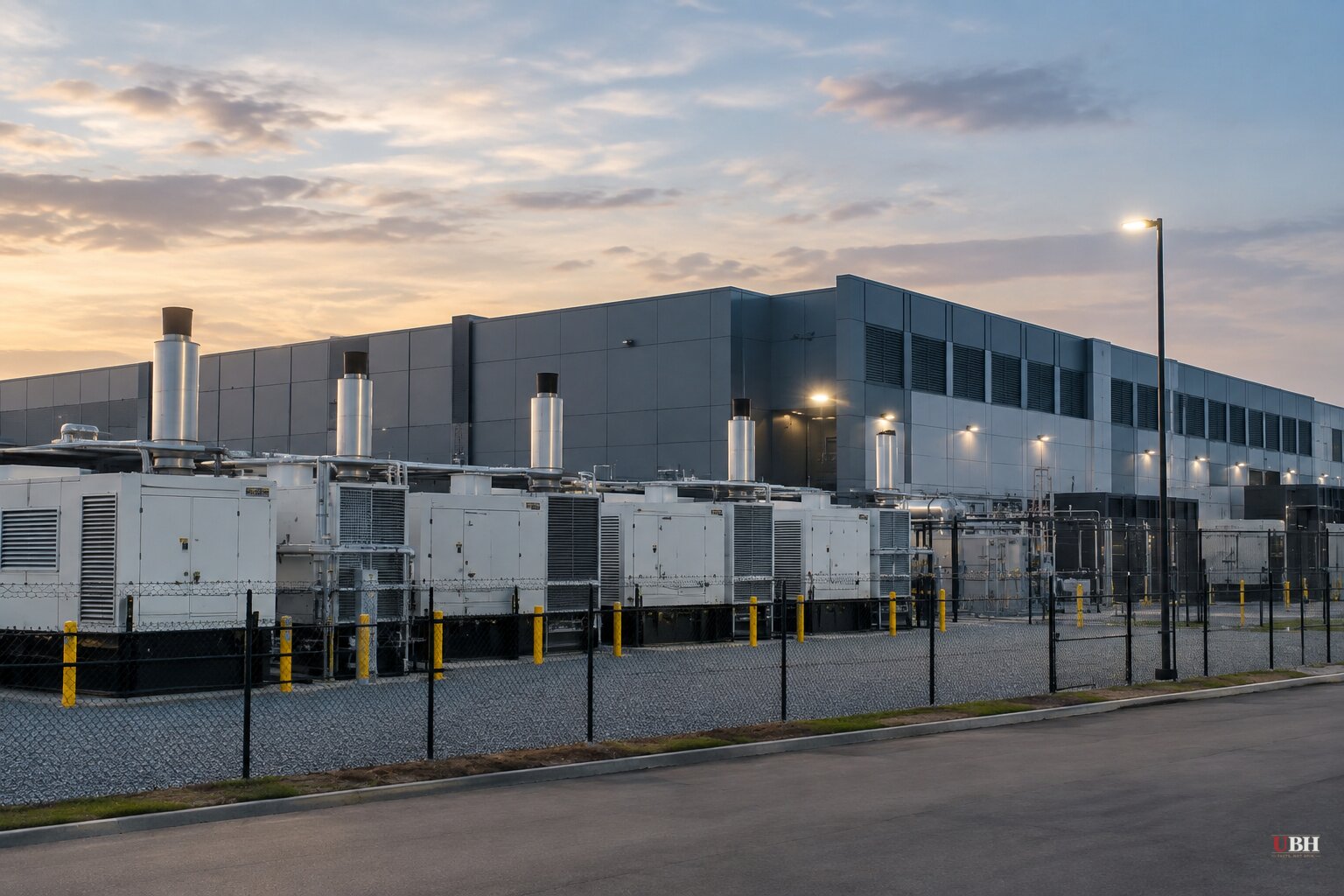
Since New Jersey regulators fined Microsoft-linked DataOne $1.07 million on September 26 for running 62 unpermitted diesel generators, a broader pattern has come into focus: data center developers across multiple states appear to be structuring projects specifically to dodge the Clean Air Act's toughest reviews.
Three environmental groups, the Environmental Integrity Project, the Sierra Club, and Public Citizen, filed a federal lawsuit in San Antonio against data center developer Vantage and its energy supplier VoltaGrid. The suit alleges the companies built gas-fueled power plants and diesel backup generators for two Vantage data center campuses without the permits, pollution controls, or public input the Clean Air Act requires.
According to the suit, the colocated gas plants have a combined 405 megawatts of capacity, enough to power roughly a fifth of San Antonio's homes, and an additional 151 diesel backup generators would add 455 more megawatts. One of the facilities sits next to an allergy clinic in an area that already fails federal smog standards, the groups say.
"Communities should not have to suffer excessive amounts of air pollution from data centers and power plants that fail to follow the Clean Air Act," said Mary Greene, director of enforcement at the Environmental Integrity Project. The Rogers Road facility was reportedly partly operational before Vantage and the Texas Commission on Environmental Quality held their first public hearing, according to sacurrent.com. Vantage and VoltaGrid did not respond to requests for comment reported by that outlet, and no court ruling has been issued in the case.
The 'Lego Permitting' Pattern
Environmental advocates say a tactic is spreading nationally: splitting one large project into several smaller permit applications, each falling just under the threshold that triggers a "major source" review under the Clean Air Act, according to The Guardian.
In North Carolina, Amazon and Duke Energy are installing 649 diesel generators for a hyperscale data center and submitted two separate permits rather than one, avoiding major review in a low-income area that already has high air pollution, The Guardian reported. In New Mexico, developers behind the Project Jupiter data center proposed two natural gas "microgrids" as separate minor permits for a single project that would have triggered major review as a whole. In Frederick, Maryland, four data centers on one campus, including one built by Amazon, each hold separate minor permits despite sharing a single master developer.
Michael Koerber, a retired deputy director at the EPA's Office of Air Quality Planning and Standards who now volunteers with the Environmental Protection Network, called the pattern "lego permitting." "They want to fly under the radar," Koerber told The Guardian. "The more attention they have, the more difficult it gets to get the permit." Cheryl Vetter, a former EPA employee, said the tactic wasn't common among data centers until after she left the agency last year.
An Amazon spokesperson told The Guardian the company "appropriately applied for and obtained an air permit for our datacenter project," disputing the characterization that its permits were structured to dodge review.
Health Costs and Regulatory Gaps
The Environmental Protection Network, a nonprofit made up of former public officials, estimates in its "Hidden Health Costs of AI Data Centers" report that data center-linked air pollution could add nearly $21 billion in health care costs by 2028, contributing to roughly 600,000 asthma cases and 1,300 premature deaths nationally, according to Facilities Dive. In Virginia alone, on-site generator emissions at just 10% of permitted levels could contribute to 14,000 asthma symptom cases and 13 to 19 premature deaths a year, the report estimates, citing outside researchers.
The report points to a rule the EPA finalized this year creating a category of temporary turbines that can stay on-site up to two years with reduced monitoring and reporting requirements, which EPN says will allow 89% more nitrogen oxide emissions annually than a stricter 2024 version the administration scrapped. It also cites the ongoing dispute in Southaven, Mississippi, where xAI's use of mobile turbines for backup power is contested by regulators and the company itself over whether a permit was ever required, according to Facilities Dive.
Weighing Competing Interests
EPA Administrator Lee Zeldin has framed the agency's deregulatory push as necessary to keep pace with the AI race against China, writing in a memo cited by Grist that the EPA is "committed to bolstering" efforts to make America "the AI Capital of the World" by "cutting heavy-handed regulations." Permitting delays cost real money and time, and the data centers powering American AI infrastructure are genuinely strategic assets in competition with Beijing.
But there's a difference between streamlining a slow bureaucracy and structuring paperwork specifically to dodge the legal threshold Congress set for major pollution review. If a project's combined emissions would trigger major review, splitting it into pieces to avoid that review isn't cutting red tape. It's evading the law's plain intent, regardless of who benefits. Equal application of the rules matters whether the applicant is a coal plant or a hyperscale AI campus.
Dan Costa, who spent 35 years at the EPA studying air pollution, told a briefing covered by Grist that the agency has lost the research capacity to even measure these risks properly, after the administration dismantled EPA's main research office. Neither the EPA nor Amazon has publicly responded to the specific health-cost estimates in the EPN report.
The EPA's proposal to eliminate public notice requirements for minor-source permits remains open for comment, with environmental and public health groups formally opposing it, according to Earthjustice. No final rule has been issued. The San Antonio lawsuit is now pending in federal court, and it's unclear when a judge will rule on whether Vantage and VoltaGrid needed the major permits the plaintiffs say the law required.
Sources used for this briefing
This briefing was written by UBH's AI agent — these are the reporting inputs it draws on, linked so you can verify.


