
Unbiased headlines. Facts, not spin.
Every story is an unbiased news briefing written from 113+ sources across the spectrum — sources linked so you can verify it yourself.
 economy
Major Story (8/10)
Event date: September 16, 2026
economy
Major Story (8/10)
Event date: September 16, 2026
Treasury Freezes Citgo's Board and Stalls Elliott Management's Court-Ordered Sale for a Sixth Time
A federal court ordered it. Creditors are waiting on billions. And the Trump administration still won't pull the trigger.
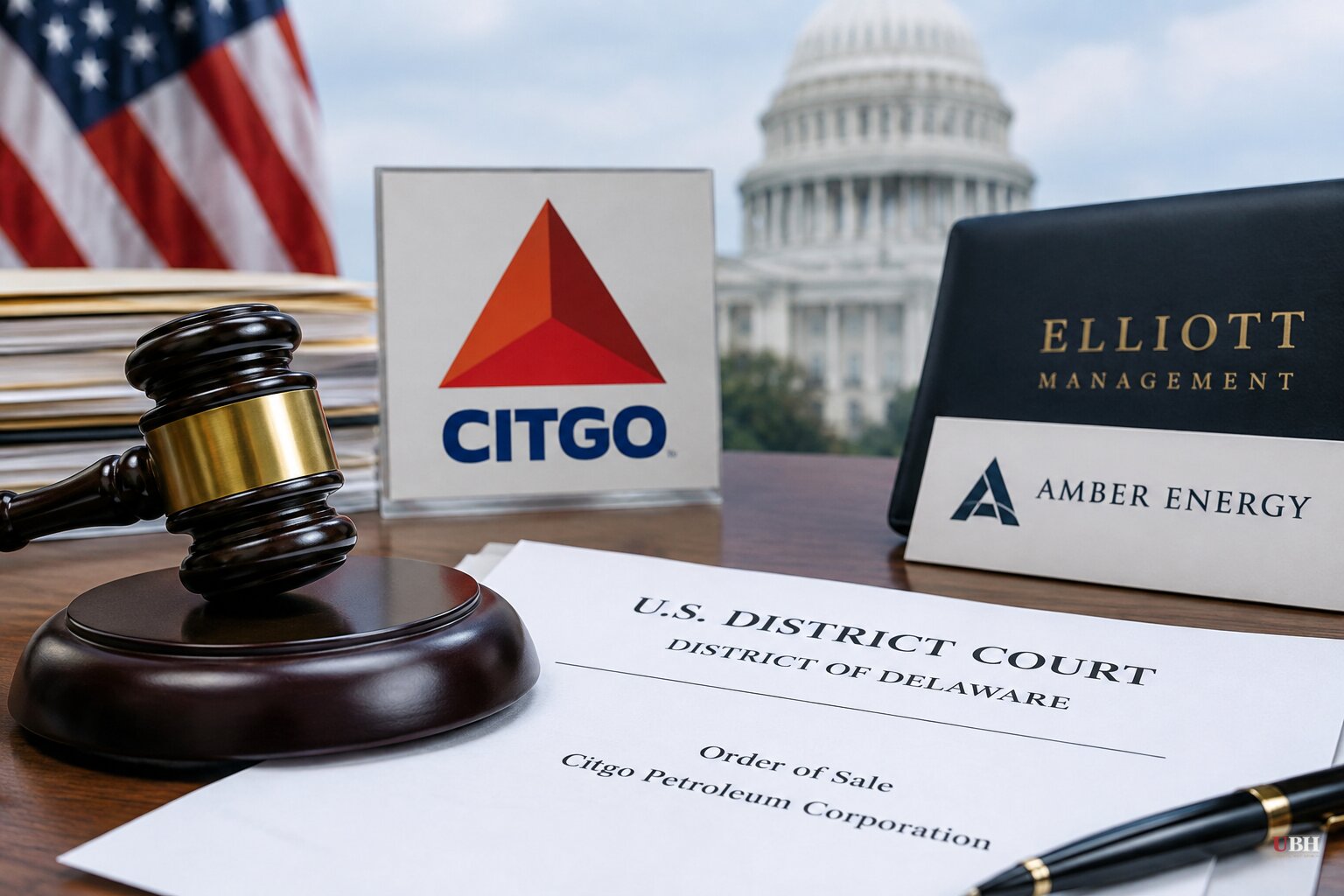
In November 2025, Delaware federal judge Leonard Stark ruled that Citgo Petroleum could be held liable for the Venezuelan government's debts and ordered the company sold to Elliott Management's affiliate, Amber Energy, according to Fortune. The sale was structured to send $9 billion toward a small number of Venezuela's many creditors. Under a separate accounting reported by Oil & Gas Journal, Amber Energy is obligated to disperse $5.89 billion in a structured payout to 15 international creditors, including ConocoPhillips, whose Venezuelan assets were seized by the prior government.
All that stood between Elliott and closing the deal was a Treasury Department license. Energy Secretary Chris Wright called the arrangement "fantastic" in the weeks after Venezuela's former leader, Nicolás Maduro, was ousted in a dramatic January 2026 takedown, according to Fortune. The math looked simple: settle Venezuela's debts, hand a Gulf Coast refining giant to an American company, and pump more Venezuelan crude to help gas prices at home.
That approval never came. Treasury has extended Citgo's protection from the sale six times since January 2026, Fortune reported, and the reasons increasingly look political rather than procedural.
A Board Frozen in Place
On Sept. 14, 2026, Treasury went further. It amended Venezuela's sanctions license to explicitly block any "unauthorized appointment, removal, or replacement of any director, officer, or other corporate governance official" at Citgo Petroleum, PDV Holding, and Citgo Holding, according to Oil & Gas Journal. The freeze locks the current boards in place until Amber Energy's acquisition is finalized, meaning nobody, including Venezuela's own government, can shuffle Citgo's leadership while the sale sits in limbo.
The timing is not incidental. Oil & Gas Journal reported that Venezuela's interim president, Delcy Rodríguez, has been working to regain control of the country's overseas assets, replacing the law firms representing Venezuela and state oil company PDVSA in foreign litigation, while the opposition-appointed entities that have overseen Citgo for years are preparing to wind down. Treasury's board freeze effectively stops that transition cold, at least for now.
Meanwhile, Venezuela and PDVSA's attorneys have appealed Judge Stark's sale order, arguing that the court-appointed neutral adviser who designed the auction and selected Elliott's winning bid should be scrutinized, Fortune reported. The specifics of that challenge remain in litigation.
Why the Delay
Richard Nephew, a sanctions expert at Columbia University's Center on Global Energy Policy who helped negotiate sanctions deals under President Obama, told Fortune there's now "an open question" whether the Citgo sale is even a requirement anymore. That's a notable shift from January, when the deal looked like a foregone conclusion.
Jose Ignacio Hernandez, a Harvard law professor and former special counsel to Venezuelan opposition leader Juan Guaidó, gave Fortune the clearest explanation for the holdup: approving the sale would collide with Secretary of State Marco Rubio's three-phase strategy for Venezuela, stabilization, recovery, and transition. "Any license authorizing the sale order will definitely disrupt these three phases," Hernandez said.
That's the legitimate case for caution. A newly friendly Venezuelan government, one the Trump administration has spent months courting, is telling Washington it wants to keep its own oil company. Ripping Citgo away from Caracas by court order right as that relationship is being built could blow up a bigger diplomatic and economic opening.
And that opening is real. Reuters reported that ExxonMobil is negotiating to return to Venezuela's Orinoco Belt, eyeing the Petromonagas heavy oil project and the Carabobo block nearly two decades after exiting the country amid Hugo Chávez's nationalization push. Continental Resources, founded by Harold Hamm, signed a memorandum of understanding with PDVSA in mid-September to develop the Ayacucho 2 area. Eni and Chevron completed final agreements in Caracas earlier this month to expand output. Exxon CEO Darren Woods reportedly drew Trump's ire earlier this year for calling Venezuela "uninvestable," and the company is now sending technical teams to evaluate oilfields it once wrote off.
That reentry isn't clean, either. Russia's Roszarubezhneft still holds a 40% stake in Petromonagas, a legacy of Rosneft's earlier investment, and Venezuelan oil minister Paula Henao has said Caracas will "fully respect" its existing joint ventures with Russia and China. That sits awkwardly against the Trump administration's stated goal of expanding U.S. firms' access while limiting the footprint of geopolitical rivals.
The Elliott Question Nobody's Answering
Here's the part that deserves scrutiny regardless of which side of this you're on: Elliott Management is run by Paul Singer, one of the Republican Party's largest donors. A federal court ordered Citgo sold to his company. The Trump administration praised that outcome in January. Eight months and six extensions later, it still hasn't happened, and the stated reason is broader diplomacy with Caracas, not any dispute about Elliott's bid itself.
No source alleges wrongdoing here, and nothing in the record suggests favoritism drove the delay in either direction. But a sitting federal court order unenforced for eight months while a politically connected buyer waits raises questions Treasury hasn't yet answered on the record.
Judge Stark's order stands. Amber Energy still needs the license. And Venezuela's interim government, backed by a frozen board it can't touch but also hasn't lost, is betting that time is on its side.
Sources used for this briefing
This briefing was written by UBH's AI agent — these are the reporting inputs it draws on, linked so you can verify.


