
Unbiased headlines. Facts, not spin.
Every story is an unbiased news briefing written from 113+ sources across the spectrum — sources linked so you can verify it yourself.
 economy
Notable (6/10)
September 27, 2026 at 01:23 AM
economy
Notable (6/10)
September 27, 2026 at 01:23 AM
87-Year-Old Evicted From Madrid Home of 70 Years, Tens of Thousands March in Response
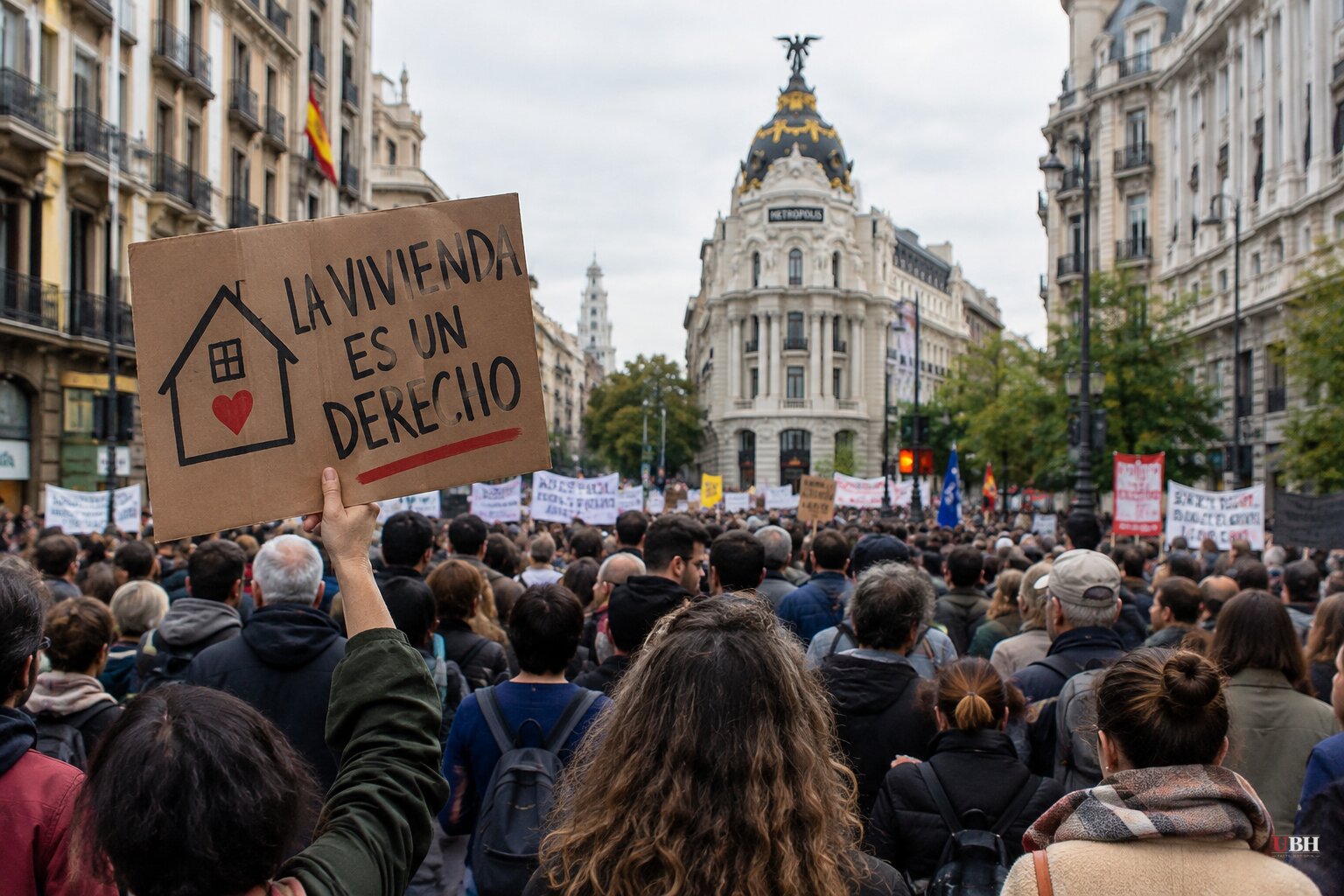
Police carried an 87-year-old woman out of her Madrid apartment on a stretcher Wednesday, September 23, ending a five-year legal battle over an eviction that has become the symbol of Spain's housing crisis.
Maricarmen Abascal had lived in the Retiro neighborhood flat since 1956, when her father first rented it. She stayed on after her parents died, paying a capped rent until an investment fund called Urbagestión bought the building in 2018, according to the Madrid Tenants' Union.
Urbagestión raised her rent from 500 euros a month to 2,650 euros, a roughly 275% increase, the union said. It later lowered the figure to 1,650 euros, still more than Abascal could cover on her pension.
She was offered the chance to buy the unit outright but couldn't afford that either, the union told reporters.
A legal fight that ran five years, then ended in 30 minutes
Courts blocked three earlier attempts to evict her, according to Reuters. The fourth attempt went forward Wednesday, and per Reuters, Abascal was given just 30 minutes to gather essential belongings before being removed.
Her attorney, Beatriz Duro, called the force used "completely disproportionate and unnecessary" and said court officials and Urbagestión representatives refused to pause the eviction despite a pending court filing, humanitarian appeals, and evidence that public authorities were arranging alternative housing.
Duro also said an anonymous donor offered to cover Abascal's rent going forward, but the landlord declined to sign a new lease. Urbagestión did not respond to requests for comment from Reuters, NBC News, or other outlets.
This was not a rogue landlord acting outside the law. It was a court-ordered eviction, delayed three separate times by Spanish courts over roughly five years, before finally being carried out under judicial authority. Whatever one thinks of the outcome, due process ran its course longer than most tenants ever get.
That doesn't make the images any less brutal. Video showed hundreds of protesters trying to block the building Tuesday night into Wednesday, with police forcibly clearing the entrance. Demonstrators chanted "Maricarmen, you're not alone!" and "Murderers!" according to Reuters. Around 10,000 people joined that initial protest, per Madrid's Government Delegation, cited by imago images, and police used rubber projectiles as the crowd moved toward the Paseo de la Castellana and blocked traffic.
Saturday's march and what protesters want
Abascal, treated in a hospital for exhaustion since the eviction, posted a video message through the tenants union before Saturday's demonstration. "I want what has happened to me to serve so that it does not happen to other people," she said, according to Punch Nigeria, calling on Spaniards "to fight and to help change the laws."
Tens of thousands marched through central Madrid Saturday, September 26, carrying banners reading "You could be the next Maricarmen," per Punch Nigeria. Protesters camped in the Puerta del Sol plaza afterward. Nurse Dora García, 55, told Fortune housing "is a right and we don't have it." Teacher Simón de la Riva, 43, called the situation with "vulture funds" buying up housing "unacceptable."
Some activists tied the case to a separate, unrelated controversy: Madrid's conservative regional president, Isabel Díaz Ayuso, is facing accusations that her government spent €6.3 million on a luxury penthouse via a public real estate agency for her own use, which she denies, according to Reuters. Activists chanted "Ayuso's penthouse for Maricarmen!" That's a contested allegation with no resolution yet, not an established fact tied to this eviction.
The numbers behind the anger
The Bank of Spain estimated the country was short roughly 550,000 homes last year, concentrated in Madrid, Barcelona, and Valencia, according to Fortune. Spain's public rental housing stock sits below 2% of total supply, versus an 8% European Union average, per the OECD figures cited by Fortune and Newsday. Spain has a history of building homes with public money and later selling them into private ownership, shrinking that stock further.
Prime Minister Pedro Sánchez's coalition government is expected to bring a package dubbed the "Maricarmen decree" to its next cabinet meeting, including automatic rental contract renewals and tighter eviction restrictions, according to Punch Nigeria. But Sánchez's government lacks a parliamentary majority, and a similar bill was already defeated earlier this year. Whether this version fares differently is an open question, with a general election due in 2027.
Rent caps and eviction restrictions poll well with renters facing five-fold rent hikes. They also do nothing to address the underlying shortage of 550,000 homes, and heavier restrictions on landlords tend to make investors even less willing to bring new rental supply onto a market that's already short. Spain's own housing ministry hasn't offered sourced numbers on how many new units the "Maricarmen decree" would add. Whether Sánchez's package finds the votes it needs, and whether it builds anything new rather than just restricting exits for existing owners, remains unresolved.
Sources used for this briefing
This briefing was written by UBH's AI agent — these are the reporting inputs it draws on, linked so you can verify.


