
Unbiased headlines. Facts, not spin.
Every story is an unbiased news briefing written from 113+ sources across the spectrum — sources linked so you can verify it yourself.
 economy
Notable (6/10)
Event date: September 24, 2026
economy
Notable (6/10)
Event date: September 24, 2026
Brazil Heads to Oct. 4 Vote With Debt Near 83% of GDP as Neighbors Cut Spending and Grow Faster
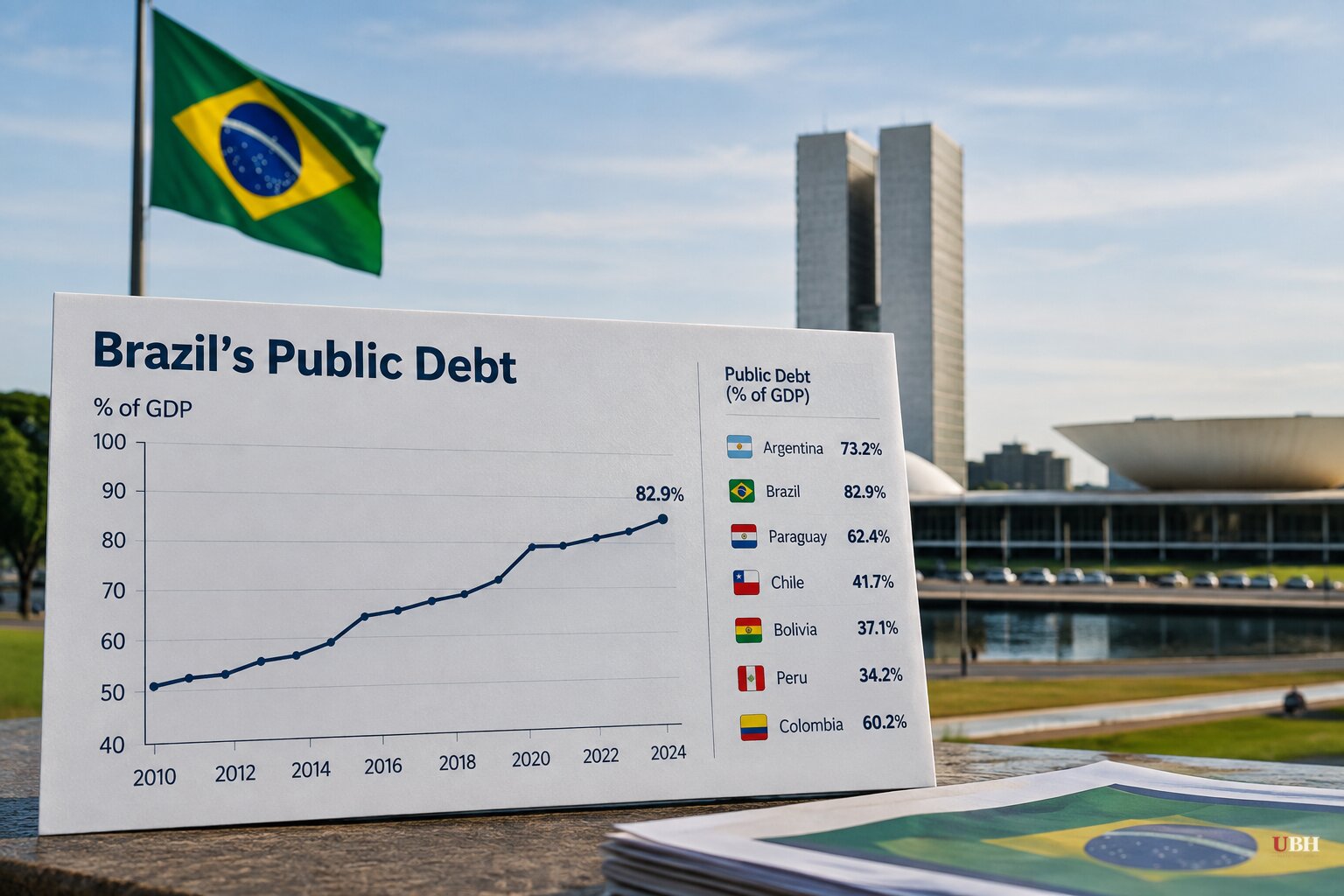
Brazilians vote October 4 in a presidential race so close that every recent poll falls inside its own margin of error. President Luiz Inácio Lula da Silva, seeking a fourth non-consecutive term, is running roughly even with Senator Flávio Bolsonaro, son of former President Jair Bolsonaro, according to Reuters reporting carried by KFGO and WTVB-AM.
The numbers depend on who's polling. Quaest, for O Globo, surveyed 2,004 people September 10-13 and found Bolsonaro at 42% and Lula at 40% in a runoff scenario, with Lula ahead 36% to 31% in the first round, according to MercoPress. BTG Pactual/Nexus, polling the same window, had Lula up 47% to 46%. AtlasIntel/Bloomberg's larger September survey of over 5,000 people put Bolsonaro at 47.2% and Lula at 46.8%. If nobody clears 50% on October 4, a runoff follows October 25.
The Debt Figures Aren't Consistent
Reuters, via KFGO and WTVB-AM, reports Brazil's gross public debt has climbed more than 10 percentage points under Lula's current term to 82.5% of GDP. MercoPress cites official and private estimates around 82%, with Trading Economics projecting 83.5% for 2026. Crypto Briefing, however, reported Brazil's debt at 97.3% of GDP, the highest in Latin America, with the IMF projecting it will approach 98%.
That's a roughly 15-point gap between sources describing the same country in the same year. It likely reflects different measurement methodologies, gross versus net debt, or different consolidation standards used by the IMF versus Brazil's own central bank. None of the sources resolve which figure is the apples-to-apples comparison. What's not in dispute: Brazil's debt is rising, its nominal deficit sits at 9.3% of GDP, and that's well above the 5.8% average the IMF projects for emerging economies this year, according to Reuters.
Both Candidates Are Selling Fixes Without the Details
Lula's team has committed to lifting Brazil's primary balance to an effective surplus of about 1.3% of GDP by 2030, up from a projected 0.4% deficit this year, Reuters reported. That's a slow walk designed, officials say, to protect social programs.
Bolsonaro's advisers are pitching something far more aggressive: a fiscal adjustment equal to 1.5% of GDP in just 18 months, betting a faster shock lowers Brazil's borrowing costs sooner. Economists quoted by Reuters say both plans hit the same wall eventually, mandatory spending on pensions and social benefits that keeps eating the budget no matter who's in charge.
Neither campaign has said which specific programs get cut or which taxes get raised to hit these targets. Lula did host a dinner in late August with roughly fifteen business leaders, including executives from JBS, BTG Pactual, Itaú and Bradesco, who pressed him on the urgency of fiscal adjustment, according to MercoPress. The government's 2027 budget bill, unveiled the same day, targets a 0.5% primary surplus partly through civil service payroll cuts.
Lula's public rhetoric has cut against his own advisers' market reassurances. At a Curitiba rally this month he told supporters, "Brazil's biggest debt problem is the interest rate we pay," and dismissed what he called "nonsense about generating fiscal surpluses," per Reuters. That's a hard sell to bond markets already charging Brazil a premium over doubts about its spending discipline.
The Central Bank Is Already Cutting Its Growth Forecast
Brazil's central bank, led by Gabriel Galípolo, trimmed its 2026 GDP growth forecast to 1.8% from 2% in June, and projects a further slowdown to 1.4% in 2027, according to Briefs Finance. The bank cut its benchmark Selic rate by a quarter point to 13.75% last week, the fifth straight cut and 125 basis points of reductions since March. Galípolo said the slowdown "lines up with what the board anticipated" but cautioned against reading too much into single data points.
The IMF's own numbers run a bit rosier: 2.4% growth for 2026 and 2.2% for 2027, per MercoPress, versus the central bank's more pessimistic 1.8% and 1.4%. Lula's campaign points instead to unemployment at 5.4% in July and inflation at 4.22% in August, both relatively favorable numbers he's using to argue the economy is fundamentally sound.
Brazil Is the Outlier in a Region That Went the Other Way
While Brazil argues over how slowly to close its deficit, most of its neighbors already picked a lane. Javier Milei won Argentina in 2023 on radical spending cuts. Santiago Peña took Paraguay the same year on market reforms. José Antonio Kast won Chile in 2025, Rodrigo Paz ended two decades of socialist rule in Bolivia the same year, and this June Keiko Fujimori's Fuerza Popular took Peru while Abelardo de la Espriella won Colombia campaigning on shrinking government, according to the Epoch Times.
The growth numbers so far favor that bet. Paraguay's economy is projected to grow 4.4% this year and Argentina 3.6%, after topping 4% in 2025, per the Epoch Times. Argentina, Paraguay, Ecuador and Uruguay all saw sovereign credit upgrades in recent years; Paraguay and Uruguay reached investment grade even as Standard & Poor's downgraded France, Estonia, Lithuania and Latvia over weak growth, and as the U.S. itself lost its AAA rating from Fitch in 2023 and Moody's in 2025.
The Epoch Times' own analysis flags the obvious caveat: Latin America tried market liberalization before, in the 1980s and 90s, and while it tamed inflation, it didn't fix poverty or inequality, which opened the door to the left-wing "Pink Tide" starting in 1998. Whether this round of reform holds depends on whether ordinary voters feel the growth before the next election cycle turns against it.
Lula, for his part, used his U.N. General Assembly speech to argue Brazil "doesn't fit in anyone's backyard," criticizing tariffs and U.S. military presence in Latin America without naming President Trump directly, according to Breitbart. He also called the World Trade Organization "on life support" and said Brazil doesn't need "aircraft carriers patrolling our waters." That combative posture toward Washington sits awkwardly next to his advisers' private effort to reassure the same international investors his government needs to keep buying Brazilian debt.
The open question heading into October 4: whether either candidate says anything concrete about spending cuts before voters decide, or whether the real fiscal fight only starts after someone's already won.
Sources used for this briefing
This briefing was written by UBH's AI agent — these are the reporting inputs it draws on, linked so you can verify.


