
Unbiased headlines. Facts, not spin.
Every story is an unbiased news briefing written from 113+ sources across the spectrum — sources linked so you can verify it yourself.
 economy
Notable (6/10)
September 26, 2026 at 10:09 AM
economy
Notable (6/10)
September 26, 2026 at 10:09 AM
Study Ties Medicaid Meal Deliveries to 31% Fewer Hospitalizations, But Program Faces $900 Billion Medicaid Squeeze
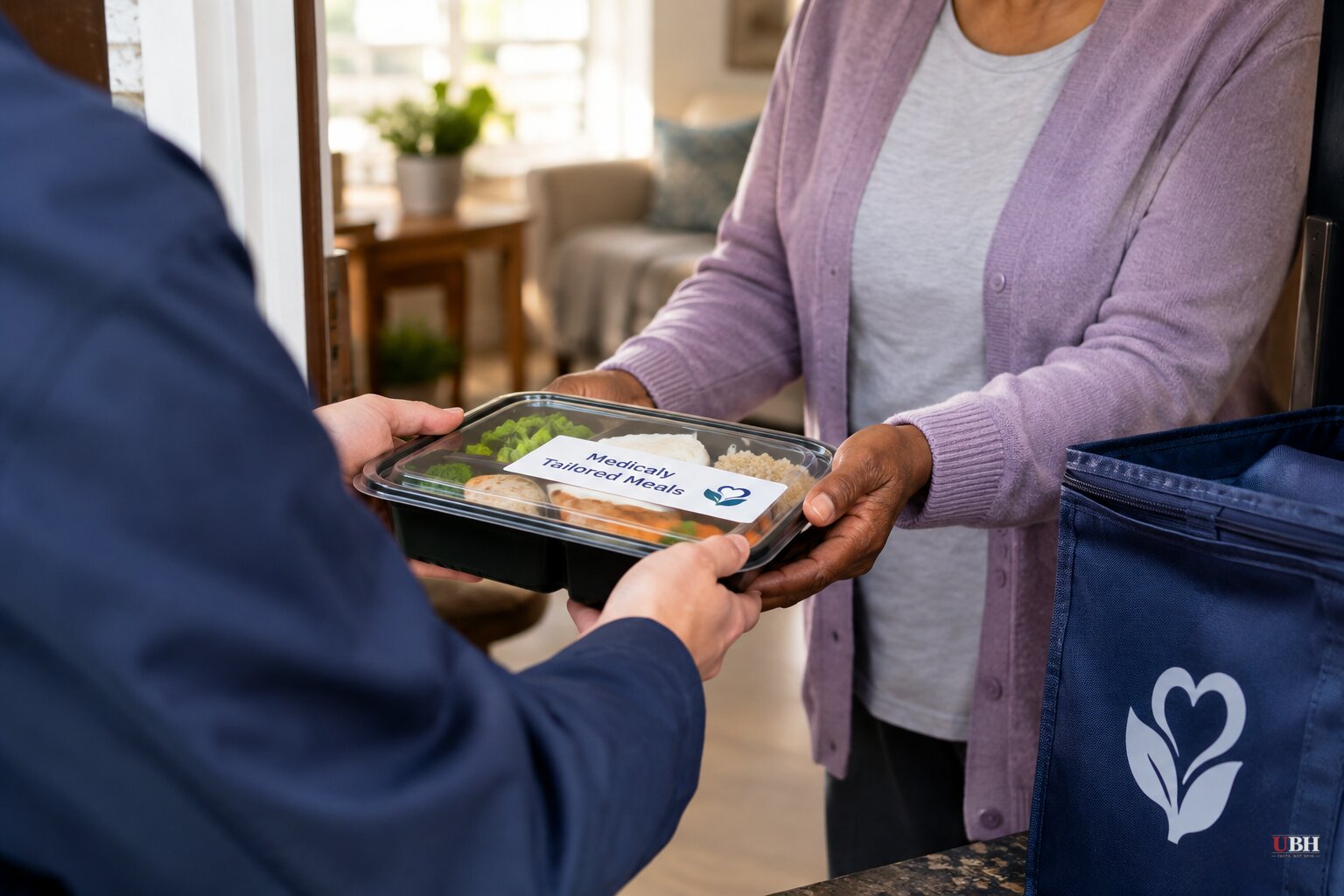
A Boston kitchen run by the nonprofit Community Servings churns out stuffed peppers and portioned chicken breasts every weekday, all labeled for specific medical conditions. It's part of a growing bet that feeding sick Medicaid patients the right food beats treating them after they end up in the ER.
Vanessa Georges, a throat cancer survivor in remission, is one of the patients getting those meals. "Once I started to eat these meals that were geared toward my illness, I built up my muscle mass again, built up my strength, built up my confidence in myself," she said, according to reporting produced jointly by NPR and KFF Health News. "These meals have given me a second chance."
Georges also noticed she was spending less time at the doctor's office. A study of about 1,900 Massachusetts Medicaid patients, published in the journal Nature Medicine and led by Tufts University cardiologist Dariush Mozaffarian, found people who received medically tailored meals for at least three months had 20% fewer emergency department visits and 31% fewer hospitalizations than similar patients who didn't get the meals.
"It actually saves the healthcare system money," Mozaffarian said. "That's a really big deal, because most things in healthcare don't."
The Fiscal Case, and the Fiscal Threat
Here's the tension. This is a Medicaid program that appears to pay for itself by keeping people out of expensive hospital beds. That should be a fiscal conservative's dream: government spending that reduces future government spending. Yet it's now sitting in the crosshairs of the biggest Medicaid rollback in the program's history.
The One Big Beautiful Bill Act, signed into law in 2025, cut projected Medicaid funding by more than $900 billion, according to NPR and KFF Health News. Thirteen states currently have federal waivers letting them use Medicaid dollars for meal delivery under the "food is medicine" umbrella, with three more programs awaiting federal approval.
Amaya Diana, a policy analyst at KFF, said states are about to face brutal tradeoffs. "If states are not able to offset the loss of federal funds with new taxes or reductions in other state spending, they may have to make program cuts," she said. Meal delivery, which isn't a federally mandated Medicaid benefit, is exactly the kind of line item that gets cut first when budgets tighten.
The Fraud Concern Is Real, Even If Unproven Here
There's a legitimate argument on the other side. Sen. John Kennedy, a Louisiana Republican, has accused California of "outrageous fraud" for using Medicaid dollars on housing and nutrition programs, according to NPR and KFF Health News reporting. The underlying worry deserves consideration: Medicaid was built to pay for medical care, not groceries or rent, and once you open that door, it's harder to police where the money actually goes and whether it's producing results anywhere near the Massachusetts numbers.
No sources here show charges, an active fraud investigation, or an audit finding against California's specific nutrition spending. It's an accusation from a senator, not a court finding, and it should be reported as exactly that.
The Massachusetts data itself comes with a caveat worth stating plainly: it's a comparison between patients who got meals and "similar" patients who didn't, not a randomized trial. That's solid evidence, but it's not the same as a controlled experiment ruling out every other difference between the two groups.
Trump's Own Position Has Moved
The politics here cut across the usual lines. The first Trump administration allowed states to pursue medically tailored meals and similar social supports through Medicaid waivers. The second Trump administration rescinded Biden-era guidance encouraging states to use Medicaid for these social-needs initiatives, according to NPR and KFF Health News. The administration's own position on food-as-medicine has flipped once already.
Every outlet running this story (NPR, St. Louis Public Radio, Houston Public Media, Maine Public, WBHM, High Plains Public Radio, and ArcaMax) published the same underlying NPR/KFF Health News reporting, so this isn't seven independent confirmations of the facts. It's one investigation distributed widely.
Which of the 13 states with active waivers will actually keep funding meal delivery once the $900 billion in Medicaid cuts phases in remains unresolved, as does whether Congress or CMS revisits the rescinded guidance before state budgets force the issue. Community Servings and programs like it are, for now, operating on waivers that states control, not federal guarantees.
Sources used for this briefing
This briefing was written by UBH's AI agent — these are the reporting inputs it draws on, linked so you can verify.


