
Unbiased headlines. Facts, not spin.
Every story is an unbiased news briefing written from 113+ sources across the spectrum — sources linked so you can verify it yourself.
 economy
Notable (5/10)
Event date: September 22, 2026
economy
Notable (5/10)
Event date: September 22, 2026
California's Wallis Annenberg Wildlife Crossing Tops $100 Million, Still Unfinished Weeks Before Planned Dec. 2 Opening
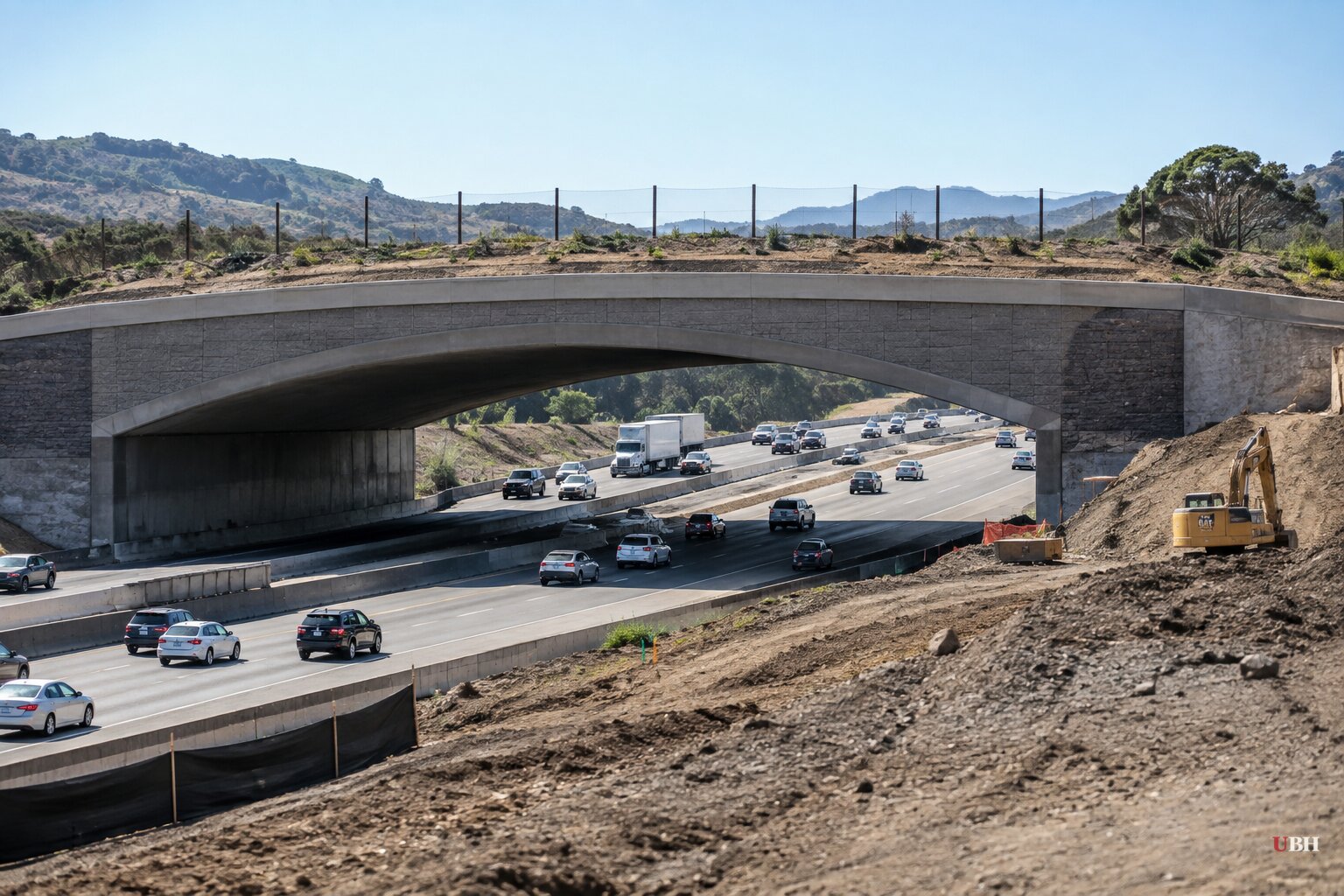
The Wallis Annenberg Wildlife Crossing, the roughly 210-foot overpass being built across US 101 in Agoura Hills, California, was designed to give mountain lions, bobcats, coyotes and deer a safe path between habitats split by the freeway, according to the New York Post. The project is behind schedule and over budget, and construction photos taken Tuesday, September 22, 2026, show a steep, unfinished hillside with a sheer artificial drop between the overpass structure and the slope below, the Post reported.
That drop still needs landscaping and stabilization before any animal will use it. The National Wildlife Federation told the Post the crossing remains on track to open December 2, 2026. The current state of construction, visible in photos from that same week, raises real doubts about whether that date holds.
The Money Didn't Work Out As Planned
The crossing was originally billed as privately funded. It wasn't. The state of California is now covering about 20% of the cost, according to the Post. The price tag has climbed from an original $92 million estimate to more than $100 million.
Public money is now sitting inside a project that was sold to taxpayers as something they wouldn't have to pay for. Whether that shift got adequate oversight from the California Legislature or Caltrans isn't detailed in available reporting, and it's a fair question for state auditors to answer once the project closes out.
Weather Is the Wildcard
An El Niño pattern expected in the coming weeks could bring heavy rain to Southern California, and past storms have already delayed construction on this project multiple times, the Post reported. A steep, freshly graded hillside is exactly the kind of terrain that erodes and slides in heavy rain, which means the December 2 target could slip again regardless of how fast crews work between now and then.
Overpass vs. Underpass, a Question Asked Late
The Post raises a design question that, in hindsight, probably should have been settled before ground broke: would an underpass have worked better than an overpass? There's evidence mountain lions and other wildlife are often just as willing, or more willing, to use tunnels under a roadway as they are to climb over one. Overpasses are more visible and more politically photogenic. Tunnels are cheaper and don't require blending an artificial cliff into a live hillside. Whether wildlife actually uses the finished 101 crossing at all won't be known for years, and it will require ongoing monitoring to find out.
The Bigger California Pattern: Proposition 45
This project isn't happening in a vacuum. California voters will decide on Proposition 45 in the November 3, 2026 election, a measure that would rewrite parts of the California Environmental Quality Act, according to KPBS and its reporting partner CalMatters. The measure, sponsored by the California Chamber of Commerce, would cap environmental reviews at 365 days for projects designated "essential," including roads, bridges, housing, schools, broadband and wildfire mitigation work, and would require courts to rule within 270 days on CEQA-related lawsuits.
Supporters, including the California Chamber of Commerce, the California Building Industry Association and the California Hispanic Chambers of Commerce, argue the current review process is outdated, invites frivolous litigation, and drives up costs that get passed to taxpayers and consumers, according to KPBS.
Opponents, including the Sierra Club, Clean Water Action and the California Democratic Party, argue CEQA exists to protect communities from harmful development, and that weakening review requirements would strip agencies of enforcement tools and shift long-term costs from developers onto the public, according to KPBS. That's a real concern from groups with a legitimate track record on environmental enforcement, and nothing in the available reporting proves that concern is wrong. It's an open policy argument voters will settle at the ballot box, not a settled fact either direction.
No source in this reporting ties the wildlife crossing's specific delays to CEQA litigation. The available reporting points instead to hillside grading, weather and funding changes. But the broader question the Post is asking, whether California can deliver large infrastructure projects on time and on budget, is exactly the question Proposition 45 puts in front of voters this November. Whichever way that vote goes, the 101 crossing will be judged on a much simpler test: does it open in December, and do the animals actually use it once it does.
Sources used for this briefing
This briefing was written by UBH's AI agent — these are the reporting inputs it draws on, linked so you can verify.


