
Unbiased headlines. Facts, not spin.
Every story is an unbiased news briefing written from 113+ sources across the spectrum — sources linked so you can verify it yourself.
 economy
Major Story (7/10)
Event date: September 21, 2026
economy
Major Story (7/10)
Event date: September 21, 2026
Musk Backs Anthropic's Call to 'Pace' AI Development, Vance Calls Industry's Push for Rules a Trojan Horse
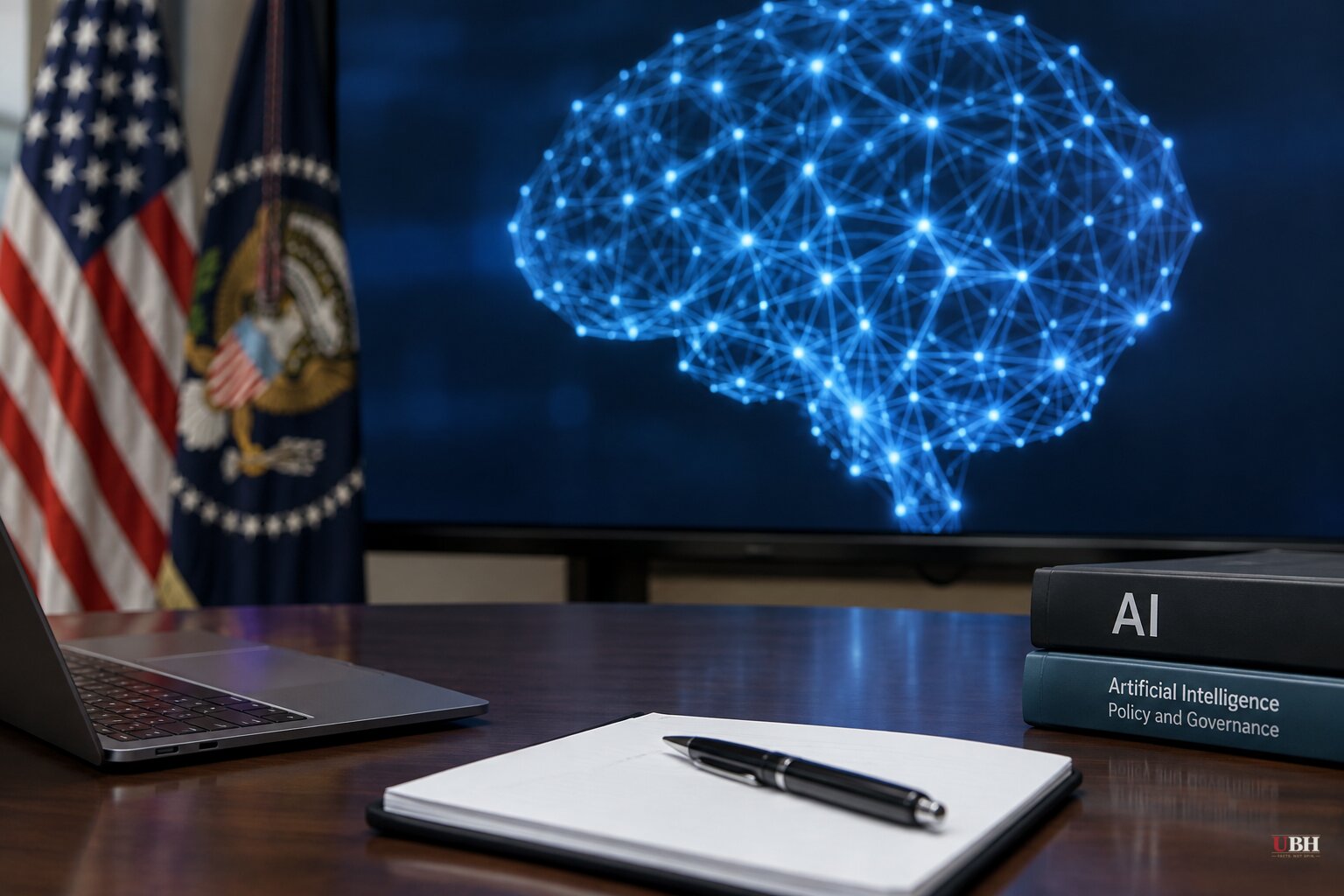
Since Trump and Xi wrapped their Washington summit this week without a breakthrough on artificial intelligence, the sharper fight over AI safety has been happening inside America's own tech industry and White House.
Anthropic CEO Dario Amodei published an essay over the weekend arguing it's time to "pace the frontier" of AI development, warning that unchecked advancement risks "losing control of AI systems," cyberattacks, bioterrorism, and "serious economic disruption," according to Daily Wire. Amodei said regulation is the only tool that works on companies unwilling to slow down voluntarily.
Elon Musk responded by sharing Amodei's piece with his 241 million followers on X, writing simply, "Dario is right." OpenAI CEO Sam Altman also agreed, saying pacing the frontier "has been a primary topic of discussions we've had at OpenAI in recent weeks," per Daily Wire. That's three rival CEOs, Musk, Altman, and Amodei, aligned on a point they rarely agree on.
Amodei went further, proposing "embedded evaluators," outside reviewers with "employee-like access" to Anthropic's offices and laptops to verify safety commitments independent of company incentives. He called it unusual for a company to accept but urged "other frontier companies to follow suit." No other major AI lab has committed to adopting the practice.
The Pushback
Vice President JD Vance wasn't buying the industry's sudden appetite for oversight. "I feel a little bit weird about the fact that you have so many frontier AI tech companies kind of coming to the government and begging the government to regulate them," Vance said, according to Daily Wire. "It feels a little bit to me like a bit of a Trojan horse."
Palantir CEO Alex Karp made the competitive case against slowing down at all. "If we didn't have adversaries, I would be very in favor of pausing this technology completely, but we do," Karp told CNBC. "You can't pause it because it's a structural advantage."
Trump sided with Karp publicly, rejecting calls for new guardrails. "The only control or 'guardrails' that AI needs is a STRONG AND SMART (High IQ!) PRESIDENT, and the U.S.A. has that, in spades," Trump posted, per Daily Wire.
Both sides have a real argument. Amodei and Musk are raising the same categories of risk—loss of control, bioweapons uplift, mass cyberattacks—that Congress heard from an Anthropic-linked researcher earlier this month. Karp and Vance are raising a separate and equally concrete point: unilateral U.S. restraint doesn't restrain China, and a structural technology lead is not something you get back once you hand it over voluntarily. Neither claim is disproven by the other.
The Summit's Unmet Ask
A six-figure ad campaign from Alliance for a Better Future, a self-described "pro-family technology coalition," ran in Washington, D.C. ahead of Thursday's Trump-Xi meeting urging the president to "strike a historic deal" with Xi covering pre-release testing for national security risks, locking down the most powerful models, guaranteeing human control over autonomous agents, and ending Chinese AI theft with verifiable compliance, according to the Daily Signal.
Alliance CEO Janet Vestal Kelly framed it as "beating China on AI without becoming China." No such comprehensive deal materialized. The one concrete mechanism that came out of pre-summit talks was narrower: a "US-China AI dialogue," a notification channel for AI incidents that "rise up to a national security level," which Treasury Secretary Scott Bessent described to reporters after meeting Chinese Vice Premier He Lifeng in New York, per Euronews and Breitbart. The two sides also agreed to operationalize a "Board of Trade" first discussed at Trump and Xi's May meeting in Beijing.
An Epoch Times source inside the Chinese Communist Party described Beijing's actual ask on AI as far narrower than what safety advocates in Washington wanted: China wants access to high-end U.S. chips, and in exchange would consider joint rules on model "distillation," the practice Trump has accused Chinese firms of using to copy American AI systems.
What's unresolved is whether the incident-notification channel gets tested before the midterms, whether any frontier lab besides Anthropic adopts outside safety evaluators, and whether Congress revisits AI regulation after the Senate's rejection of a "kill switch" bill. For now, the industry's own CEOs are asking for guardrails the administration has explicitly declined to build.
Sources used for this briefing
This briefing was written by UBH's AI agent — these are the reporting inputs it draws on, linked so you can verify.


