
Unbiased headlines. Facts, not spin.
Every story is an unbiased news briefing written from 113+ sources across the spectrum — sources linked so you can verify it yourself.
 economy
Low Interest (4/10)
September 27, 2026 at 09:45 AM
economy
Low Interest (4/10)
September 27, 2026 at 09:45 AM
Europe's Wage Data Show Spain Losing Ground on Food Prices, Even As Mamdani Touted Sánchez's Record
The Numbers Behind the Talking Point
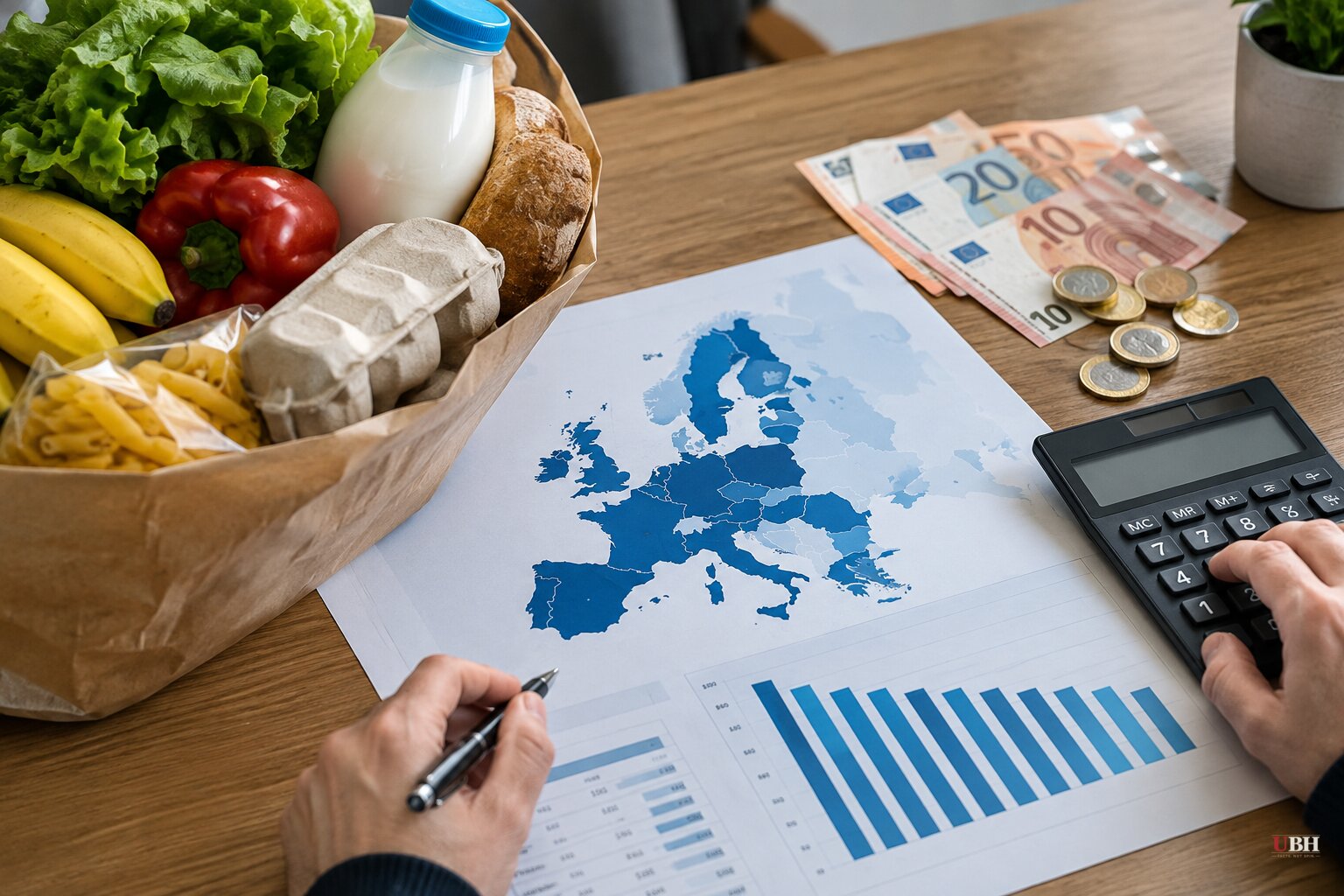
Euronews Business ran the math on 26 European countries, comparing food price increases against minimum wage increases from August 2021 to August 2026. The headline finding: in most countries, minimum wage growth outpaced food inflation, meaning low-wage workers can buy more groceries with their gross pay than five years ago.
Three countries went the other way. Malta's minimum-wage workers lost the most ground, able to buy about 6% less food despite a wage increase, according to Euronews. Spain and France also saw minimum-wage earners lose purchasing power against groceries.
Across the EU, food and non-alcoholic beverage prices rose 34% between August 2021 and August 2026, per Eurostat data cited by Euronews. Hungary saw the steepest rise at 57%, followed by Bulgaria at 54% and Romania at 53%. Spain's food prices rose 35% over that span, while its minimum wage rose only 29% in local currency terms, according to the same Euronews analysis. Turkey was the extreme outlier, with food prices up 752% amid a currency collapse tied to interest rate cuts that began in 2021, a policy Ankara reversed in 2023 without stopping the price spiral.
Mamdani's Gracie Mansion Pitch
The data lands awkwardly next to a recent event at Gracie Mansion. New York City Mayor Zohran Mamdani hosted a "Building an Economy for the Many" breakfast during United Nations General Assembly week, drawing Spanish Prime Minister Pedro Sánchez, Barbados PM Mia Mottley, and European Council President António Costa, according to Breitbart.
Mamdani used the event to praise Sánchez's economic record, specifically citing a 61% rise in Spain's minimum wage over eight years as evidence that "a different path is possible," according to Breitbart's account of remarks also referenced in Spanish outlet La Vanguardia. Alex Soros, chair of the Open Society Foundations, called the gathering "inspiring" on X and said he was "so proud of NYC."
Sánchez's eight-year framing is different from Euronews' five-year window, so the two numbers aren't directly contradictory. But the more recent data matters. Spanish minimum-wage earners have less purchasing power at the supermarket than they did in 2021, according to Euronews' Eurostat-based comparison, even as the country's minimum wage kept rising in nominal terms.
Ireland's More Careful Verdict
A separate study casts doubt on the simplest version of either side's argument. The Economic and Social Research Institute in Dublin examined Ireland's ten minimum wage increases since 2015, which lifted the rate 60% from €8.65 to €14.15 an hour.
Seven of eight increases studied since 2016 had no measurable effect on prices, the ESRI found. Only the 2024 hike, a 12.4% jump from €11.30 to €12.70, was linked to a 2.5% price increase, and only in specific categories like hairdressing, takeaway coffee, and restaurant meals, according to the Irish Times' reporting on the study.
Even that effect was small in the aggregate. The affected categories make up just 11% of total consumer spending, and minimum-wage employees account for an estimated 2.7% of Ireland's total wage bill, ESRI co-author Paul Redmond told the Irish Times. By comparison, Ireland's 2019 and 2023 VAT hikes on hospitality, which raised the rate from 9% to 13.5%, drove price increases three to four times larger than the 2024 wage effect, the ESRI found.
The EU's Warning to Montenegro
The tradeoffs get more explicit in Montenegro, where the European Union publicly pushed back on the government's plan to sharply raise wages and pensions while abolishing PIO pension contributions, according to a statement reported by Vijesti.
The EU didn't dispute that Montenegrins deserve higher pay. It argued the government hasn't explained how small and medium businesses, especially in the country's weaker northern regions, will absorb higher labor costs without raising prices, cutting investment, or laying off workers. The statement also flagged an unresolved financing gap. If pension contributions are abolished, pensions still have to be paid monthly, and municipalities stand to lose revenue while their obligations grow.
This is the strongest version of the concern critics of mandated wage hikes raise. A decree can set a number on a paycheck, but it can't manufacture more customers for a bakery or more export revenue for a farmer. Whether that plays out as job losses in Montenegro, as the EU warns, or as a mostly harmless adjustment, as Ireland's ESRI data suggests happens with moderate increases, depends heavily on the size of the hike and the underlying strength of the economy absorbing it.
For consumers stuck with high grocery bills in the meantime, Wharton marketing professor Barbara Kahn told Fox News that international and discount supermarket chains can offer real savings by cutting exclusivity costs, a market-based option that doesn't require waiting on any government's wage math to work out.
Montenegro's wage and pension changes are slated to begin in January, according to the EU's own statement, which means the country will become the next real-world test of whether large, government-mandated wage increases deliver the standard-of-living gains politicians promise, or the price and job consequences Brussels is warning about.
Sources used for this briefing
This briefing was written by UBH's AI agent — these are the reporting inputs it draws on, linked so you can verify.


