
Unbiased headlines. Facts, not spin.
Unbiased Headlines is an independently owned news organization. We bring you the facts, not opinions, written fresh from 110+ named sources. Sources linked so you can verify it yourself.
 energy
Notable (6/10)
energy
Notable (6/10)
DOE Settles Second Federal Lawsuit Over Canceled Blue-State Clean Energy Grants, Agrees to Reinstate 11 Awards Worth $82.1 Million
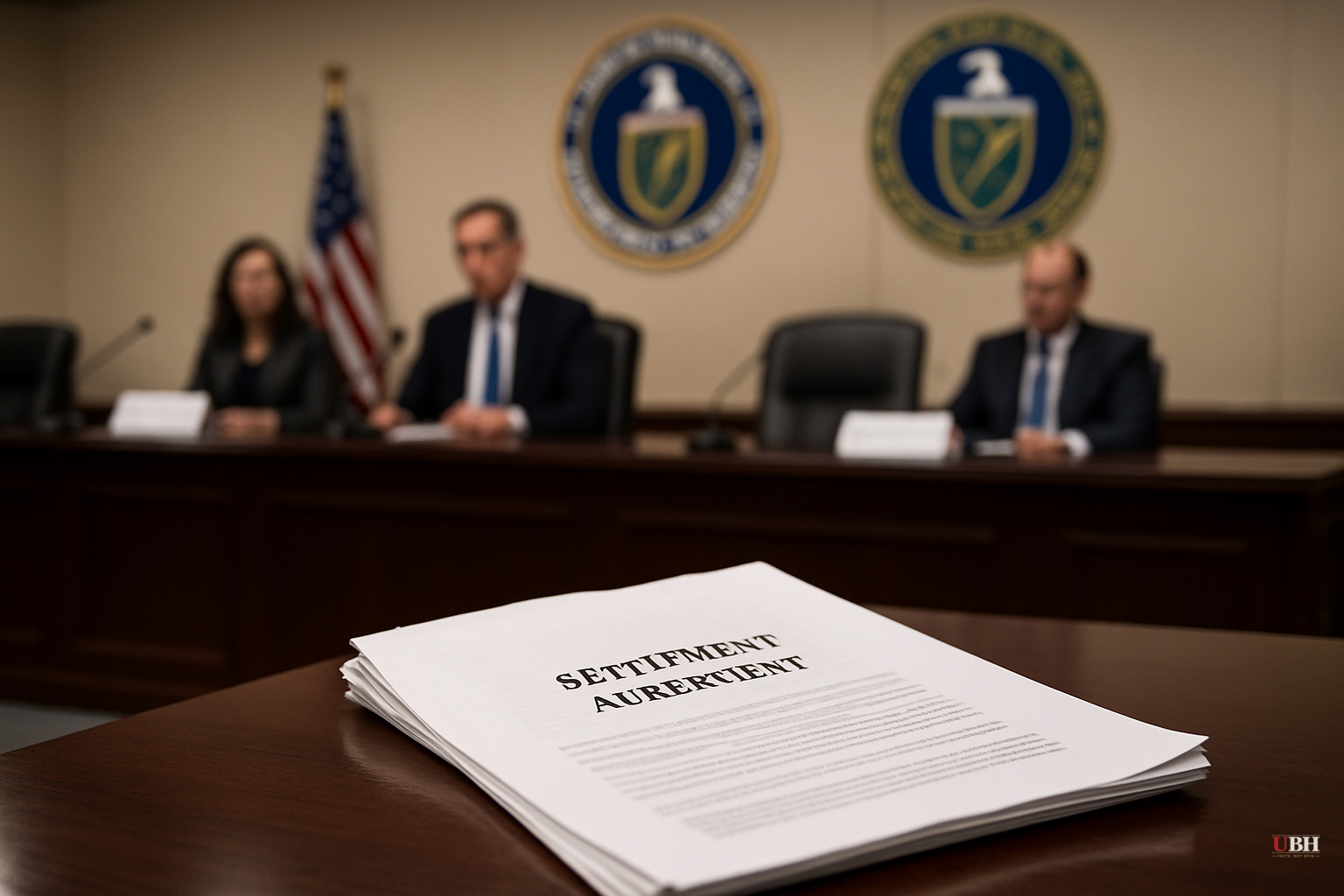
Since federal Judge Amit Mehta vacated the cancellations on June 12, more detail has surfaced about what the Department of Energy actually admitted in the settlement documents, and the gap between those documents and Secretary Chris Wright's public statements is notable.
What DOE Conceded in Court
As part of the settlement, DOE agreed not to contest that "a primary reason" for deciding which grants to terminate was whether the awardee was located in a blue state, according to Latitude Media's reporting on the case. That language mirrors the January ruling in favor of the City of Saint Paul, in which Judge Mehta found the same cancellation rationale.
The 11 reinstated grants, totaling $82.1 million, were all issued by DOE's Office of Energy Efficiency and Renewable Energy. Grantees were located in New York, Oregon, Connecticut, Minnesota, and Colorado. The New Buildings Institute alone had four Oregon grants cut, according to Utility Dive.
The case was brought by a coalition led by the American Institute of Chemical Engineers.
Wright's Denial, Verbatim
The day before Mehta signed this settlement, Energy Secretary Chris Wright was telling Congress a different story. During a June 11 House Science, Space, and Technology Committee hearing, Rep. Gabe Amo (D-R.I.) asked whether DOE planned to reinstate the rest of the canceled awards. Wright's answer, as reported by Latitude Media: "No decisions were made on politics. I keep hearing that charge. Its bullshit. We're gonna say it a million times. Its not true. Its actually false."
Wright did NOT say whether he would reinstate the hundreds of remaining terminated awards.
The Fair Case for Wright's Position
The strongest argument on Wright's side is that a legal settlement is NOT a judicial finding of fact and is NOT a confession of wrongdoing. DOE agreeing "not to contest" a claim in a settlement to resolve litigation is legally distinct from a court ruling that political targeting occurred. Agencies settle cases all the time for reasons that have nothing to do with guilt—cost, litigation risk, judicial economy. Wright's defenders can reasonably argue that reinstating 11 grants under court pressure is not the same as admitting the administration deliberately discriminated against blue-state grant recipients.
That said, this is now the second time DOE has either been ordered or agreed to reinstate grants under exactly this theory. The January Saint Paul ruling, in which Mehta DID make an affirmative finding, established the legal framework. And OMB Director Russ Vought posted publicly on X at the time of the original October 2025 cancellations that nearly $8 billion was being cut for projects in "blue states." Courts typically see such contemporaneous statements as evidence of motive.
How Big Is the Remaining Problem?
These two victories cover a small slice of a much larger dispute. DOE canceled more than 300 awards during last fall's government shutdown, according to Latitude Media. In April, DOE sent Congress a list of nearly 2,000 Biden-era awards it was retaining. Only 18 of those had appeared on the October cancellation list targeting companies in Democrat-led states, per Latitude Media.
Some of DOE's largest terminated projects remain in limbo. The Pacific Northwest Hydrogen Hub and California's Arches Hydrogen Hub are still canceled as of June 13, 2026.
Two more sweeping lawsuits are pending. One was filed by a coalition of states including California and New York; another was filed by the University of California system. Both cases remain unresolved, according to Latitude Media.
The Unresolved Question
Wright told the House committee he would NOT comment on whether DOE plans to reinstate the remaining hundreds of terminated awards. The administration retains the right to appeal the Mehta settlement. Whether DOE contests the two larger pending lawsuits, or whether the Saint Paul and AIChE settlements effectively make those cases easier to win, is the question that will determine whether billions in canceled funding ever flows again.
Sources used for this briefing
4 links from 3 independent newsrooms (syndicated copies of the same report count once)
These are the sources it draws on, linked so you can verify.


