
Unbiased headlines. Facts, not spin.
Unbiased Headlines is an independently owned news organization. We bring you the facts, not opinions, written fresh from 110+ named sources. Sources linked so you can verify it yourself.
 health
Major Story (8/10)
Congo Ebola Cases Pass 12,000 With 5,904 Deaths as Ituri Fighting Forces WHO Team Out of Hospital
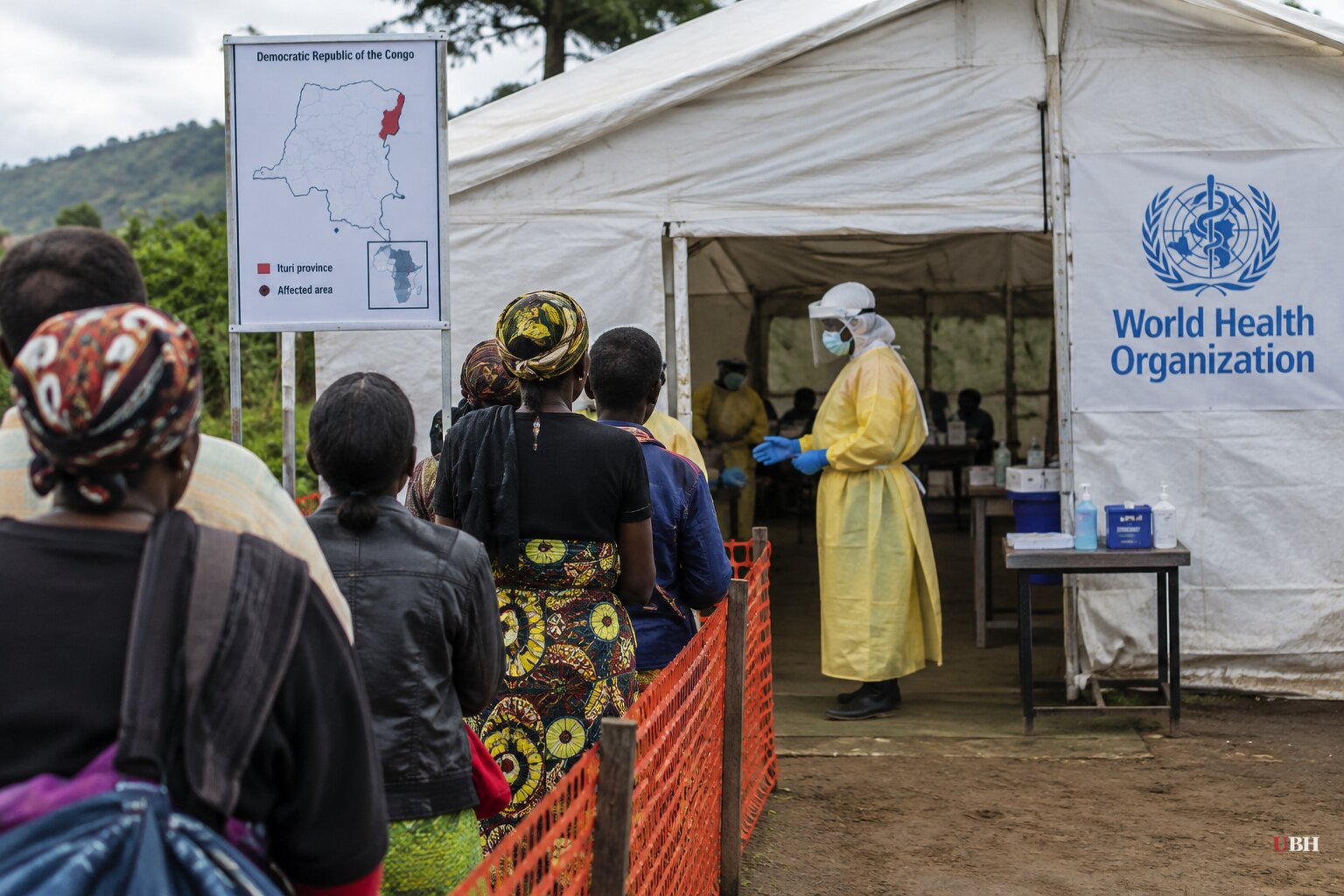
Since Congo declared the outbreak on May 15, the count has kept climbing. Government data released Thursday, Nov. 26, shows 12,021 confirmed cases and 5,904 deaths, a fatality rate of about 49%.
On Nov. 10, the National Institute of Public Health reported 11,042 confirmed cases and 5,387 deaths. That is 979 more cases and 517 more deaths in 16 days.
The outbreak is the deadliest in Congo's history. It passed the 2018-2020 epidemic, which killed 2,299 people. Across Africa, only the 2014-2016 West African outbreak is bigger, with more than 28,600 infections and more than 11,000 deaths in Guinea, Liberia and Sierra Leone.
The virus is the Bundibugyo species. No approved vaccine or treatment exists for it. It has spread to 8 of Congo's 26 provinces.
Fighting in Ituri pushes responders out
The latest disruption is violence in Ituri province. The UN mission in Congo said clashes have intensified in recent days between the Congolese army and fighters from the Convention for the Popular Revolution (CRP), displacing civilians.
WHO Director-General Tedros Adhanom Ghebreyesus said Nov. 22 that heavy fighting near a hospital had left response staff sheltering in a maternity ward for more than 24 hours. He said attacks across eastern Congo have increased since the end of October.
Catherine Smallwood, WHO's Ebola incident manager, said about a dozen people were evacuated to Bunia after three days trapped in a hospital in Akwe, northeast of the provincial capital. They included two WHO personnel and Congolese health officials.
"They were caught really in the crossfire, very intense fighting, and we managed to evacuate them," Smallwood said.
Tedros said the WHO team and its partners were moved temporarily until security improves. Health workers are expected to return when conditions allow, and no date has been given.
The CRP is led by Thomas Lubanga, convicted by the International Criminal Court in 2012 of conscripting child soldiers. The group declared a unilateral ceasefire in May, but fighting has continued. It is one of more than 100 armed groups in eastern Congo.
WHO has confirmed more than 87 attacks on health care in Congo. It has also said the Allied Democratic Forces make contact tracing in areas where they operate extremely hazardous.
A count that may be too low
The official numbers may understate the damage. A Reuters analysis of satellite imagery, combined with testimony from local gravediggers, concluded that far more new graves have been dug in two of the hardest-hit areas than official Ebola death tallies can explain. By that analysis, deaths may have been undercounted by as much as 50% in the early stages.
WHO has said the outbreak could be two to four times larger than official statistics show, because many infections and deaths go unrecorded. It also said a high proportion of deaths occur in communities rather than treatment centers, especially among young children.
The tracing gap is wide. Africa CDC data presented earlier this month showed only 15% of new cases come from contacts already known to health authorities. The other 85% are chains of transmission nobody was watching.
WHO's Africa office said as of Nov. 7 that the outbreak continues at a high, sustained level of transmission with no sign of decline. It cited unrest in Nord-Kivu and Tshopo, health worker strikes in Bas-Uélé and Tshopo, and a suspended response in Bafwasende after a violent incident in October.
Vaccine trials and the border
The one forward-looking development is on vaccines. Two candidates are expected to enter clinical trials in Ituri: ChAdOx1, developed by the University of Oxford with the Serum Institute of India, and mRNA-1469, developed by Moderna.
Gavi, the Vaccine Alliance, announced Tuesday, Nov. 24, an advance purchase commitment with the Serum Institute and Serum Life Sciences for up to 1.5 million doses of ChAdOx1. The deal depends on the vaccine succeeding in trials and winning regulatory approval.
Outside Congo, the spread has so far been contained. Cases were confirmed in Kenya and Nigeria in October. Kenyan Health Minister Aden Duale said on Nov. 11 that the last Ebola patient had been discharged, which started a 42-day countdown toward Kenya being declared Ebola-free. By that count, the period would run to around Dec. 23 if no new cases appear. Kenya now requires arrivals from Congo to undergo a 21-day quarantine.
Nigeria had identified no secondary cases, and contact monitoring there was expected to end Nov. 13.
It is unclear whether trials can run in the province where armed clashes just forced a WHO team out of a hospital. Neither WHO nor Gavi has given a start date for the trials.
Sources used for this briefing
7 links from 7 independent newsrooms (syndicated copies of the same report count once)
These are the sources it draws on, linked so you can verify.


