
Unbiased headlines. Facts, not spin.
Unbiased Headlines is an independently owned news organization. We bring you the facts, not opinions, written fresh from 110+ named sources. Sources linked so you can verify it yourself.
 health
Major Story (7/10)
Neuralink Says FDA Cleared First US Pivotal Trial of an Implanted Brain-Computer Interface, Enrolling ALS Patients
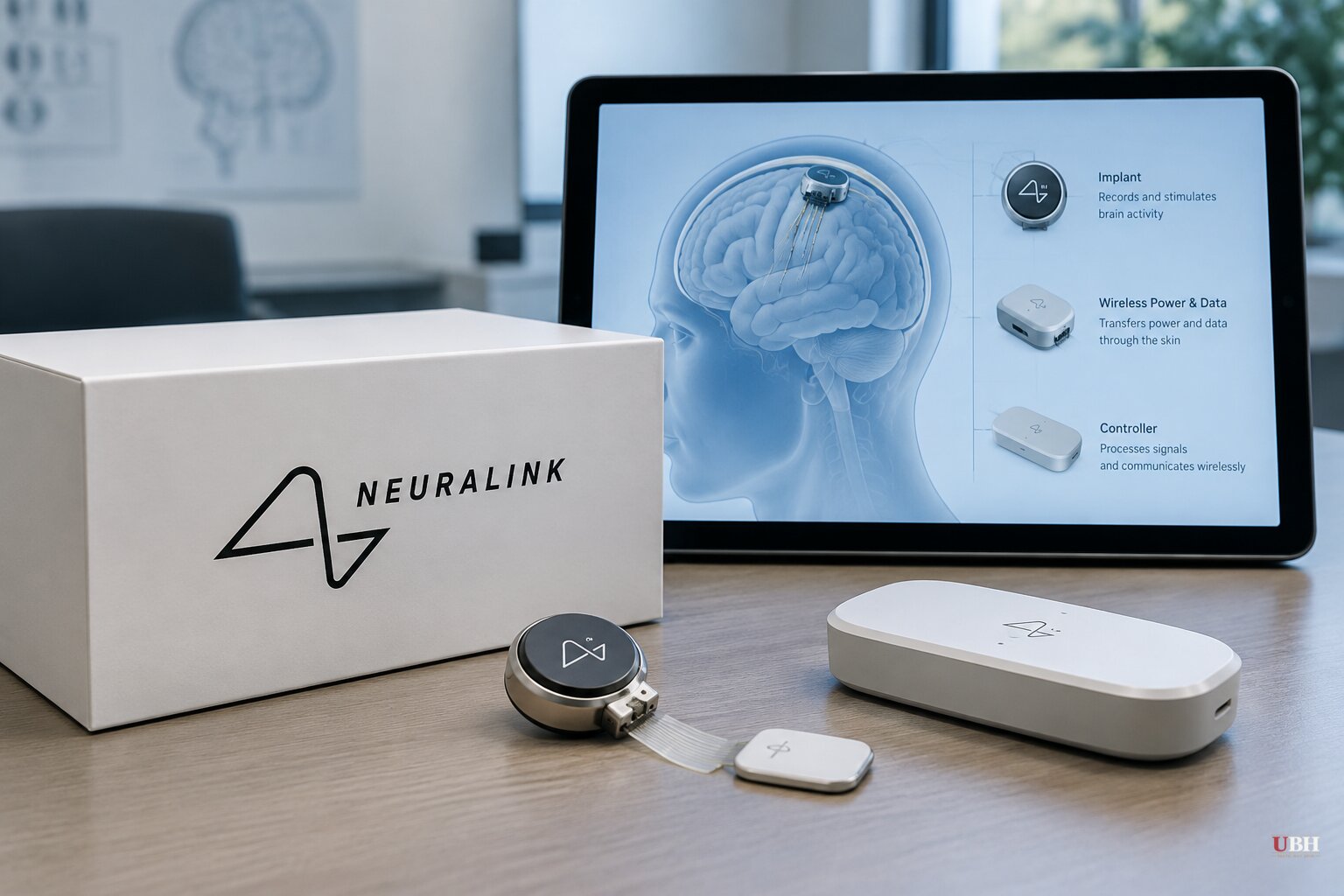
Neuralink says the FDA has approved its LINK Pivotal Study, a trial of its implanted brain-computer interface in people with severe paralysis caused by amyotrophic lateral sclerosis (ALS). The company announced it Nov. 25 on its website and on X.
Neuralink calls LINK the first pivotal trial for an implantable brain-computer interface in the United States. Enrollment is open now, the company said.
What a pivotal trial is, and isn't
A pivotal study is the stage built to generate the evidence a sponsor hands to a regulator when it asks for marketing authorization. That is a step up from the early feasibility work Neuralink has done so far.
It is not a green light to sell. The approval covers the study only. The implant remains investigational, and it would need a separate regulatory decision based on the trial's results before anyone could buy or be prescribed one.
Neuralink described the goal as evaluating the safety and effectiveness of its system in people with severe paralysis due to ALS. The study will measure whether participants can control digital devices through thought, "with a focus on functional outcomes that improve independence in daily life," the company wrote. It will also keep tracking long-term safety and reliability across multiple clinical sites.
The track record so far
Neuralink says more than 30 people in the US, Canada and the UK have received implants in early feasibility studies. By the company's account, they have collectively logged thousands of hours of real-world use.
The timeline, from the company's updates page:
- January 2024: first human implant under the PRIME study.
- Nov. 20, 2024: Health Canada approval of CAN-PRIME.
- Nov. 24, 2024: CONVOY, a feasibility trial on controlling an assistive robotic arm.
- July 31, 2025: GB-PRIME launches across two sites in Great Britain.
Neuralink has also said its first ALS participant, Bradford Smith, was able to communicate using brain signals alone. "Neuralink has given me freedom, hope, and faster communication," Smith said at the time.
How the system works
The N1 implant sits inside the skull. Neuralink's R1 surgical robot inserts fine electrode threads into the motor cortex. The implant picks up neural activity tied to intended movement, and software turns it into commands for a computer or other device. It sends data wirelessly and recharges wirelessly through the scalp, with no external wires or battery pack.
Early users have learned to move a cursor by imagining hand movement, according to Neuralink. The company says participants have also used the device for messaging, browsing, writing code, making digital art and playing video games.
Neuralink's trial pages say participants are implanted under general anesthesia. The patient process runs through screening, brain scans, implantation, device training and follow-up evaluations.
What Neuralink hasn't said
The announcement did not give a target enrollment number, a list of clinical sites or detailed eligibility criteria beyond ALS. Neuralink said only that adults living with ALS may be eligible and that the study will expand across multiple sites over time. It points interested patients to a registry on its own website.
There is also a paperwork wrinkle. The federal ClinicalTrials.gov entry that Neuralink's US work links to, NCT07929792, is a different study. It describes an early feasibility study of the N1 system in spinal cord injury, ALS and chronic ischemic stroke. It was first submitted Oct. 28, 2026, lists an estimated 10 participants, and names the University of Miami as a location. The trial pages Neuralink directs patients to carry no registry number for the pivotal study.
That does not mean the pivotal trial is not real. It means the public registry details that normally let outsiders check design, endpoints, sites and sample size have not been tied to LINK in anything Neuralink has pointed to.
Why ALS
ALS is a progressive neurodegenerative disease that destroys the nerve cells controlling voluntary movement. Patients lose the ability to speak and use their hands, which makes a device that converts brain signals into commands a practical test case. The condition also progresses, so the system has to keep working as the patient changes.
Neuralink's stated measure of success is function in daily life, not a lab demo. Moving a cursor under controlled conditions is one thing. Working reliably when a user is tired, during long sessions, and after the device has been switched off is another. Whether the data answers that is what the trial is for.
What comes next
If the trial shows the device is safe and effective, Neuralink could seek marketing authorization. That is a long way off, and the pivotal results do not exist yet. The immediate questions are concrete: how many patients Neuralink will enroll, which sites will operate on them, and when a registry listing for LINK appears on ClinicalTrials.gov with the study's endpoints and follow-up schedule.
Sources used for this briefing
7 links from 7 independent newsrooms (syndicated copies of the same report count once)
These are the sources it draws on, linked so you can verify.


