
Unbiased headlines. Facts, not spin.
Unbiased Headlines is an independently owned news organization. We bring you the facts, not opinions, written fresh from 110+ named sources. Sources linked so you can verify it yourself.
 health
Notable (5/10)
Three English Children's Hospitals Are Closing Beds and Cutting Staff to Meet NHS Savings Targets
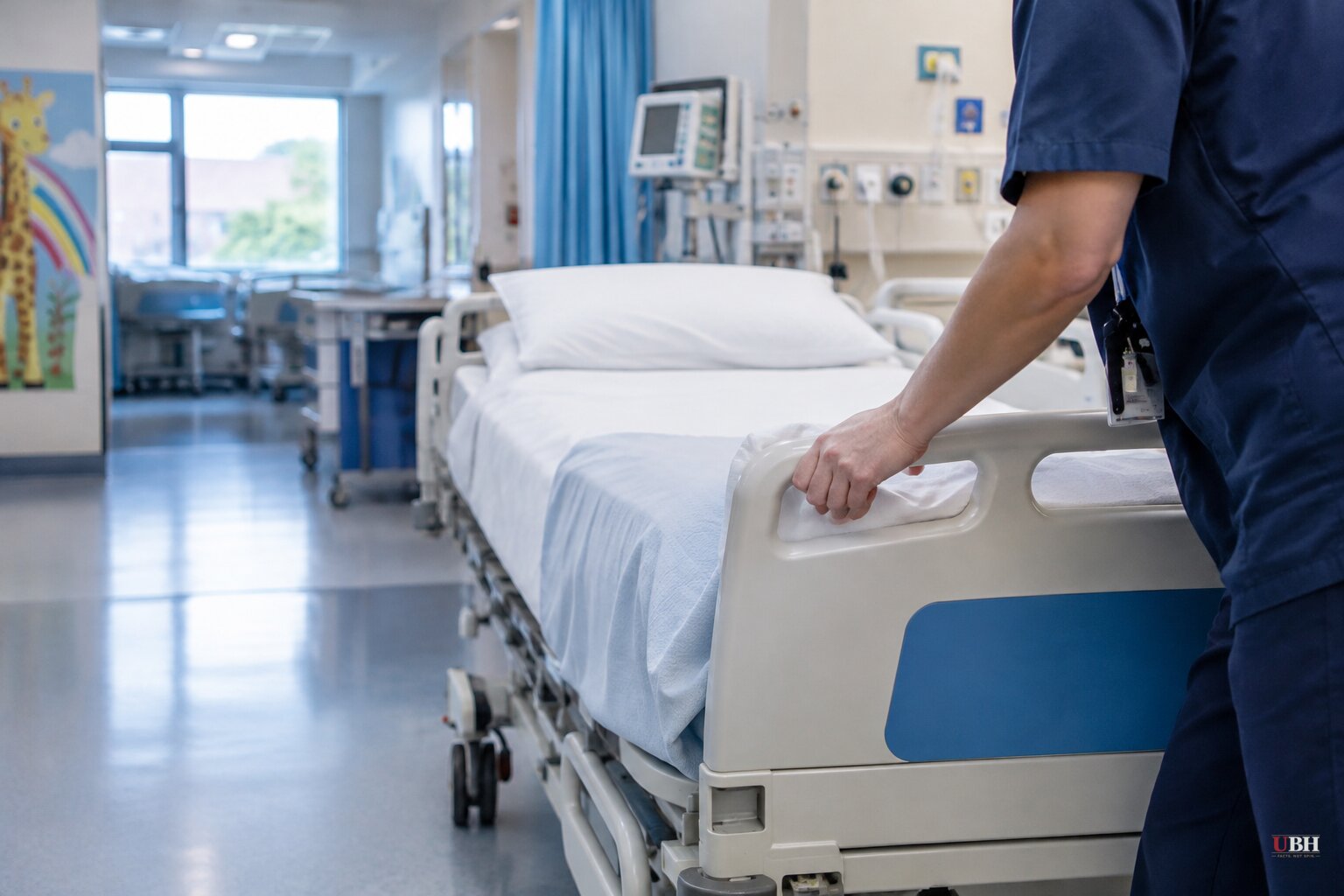
Since The Guardian revealed on Sunday, Nov. 22 that dozens of NHS trusts in England are cutting staff and services, the squeeze has reached three of the country's best-known children's hospitals. Great Ormond Street in London, Sheffield Children's and Alder Hey in Liverpool are closing beds and shedding jobs to meet savings targets set by NHS chiefs to stop the health service overspending.
Great Ormond Street: 28 beds and 300 posts
Great Ormond Street Hospital (Gosh) has closed 28 beds and is cutting 300 posts. It is trying to find £50.6m in savings by the end of March, according to board reports.
In April it shut Hedgehog ward, which had 10 beds and treated children with complex, often life-threatening conditions from the UK and abroad. The trust said the closure followed a drop in children travelling from the Middle East for inpatient care, partly because of the conflict in the region.
Board papers also show beds were cut on Koala and Alligator Endo-Met wards, which treat children with brain conditions, and on Panther ear, nose and throat ward. Documents presented to the board say the loss of beds on Koala raised concern that the hospital may lack the capacity to look after everyone who needs it.
The same board reports say many of the hospital's units do not have enough staff. Two-thirds of its £31.5m cost improvement programme for 2026/27 is due to come from "workforce cost reductions."
The trust acknowledges financial "challenges" but says the changes will not affect patient care. "Our cost improvement programme has delivered significant savings and we are on track to break even at the end of this financial year," a spokesperson said.
Sheffield and Alder Hey
Sheffield Children's has closed eight surgical beds and is cutting 300 of its 3,500 full-time-equivalent staff. It is seeking £17.7m in savings this year, about 5% of its total budget. The trust says it closed the beds because demand for surgery has fallen.
"This is not just about making short-term savings," chief executive Ruth Brown said. "We are reimagining how we provide care, so our services are sustainable and respond to the changing and increasingly complex needs of children and young people."
Alder Hey has halved its general paediatric ward 4C from 32 beds to 16. It must save £24m before next April and is reducing its workforce of roughly 4,000.
An Alder Hey spokesperson said the bed cut reflects fewer children being admitted, with more care handled at or near home through "virtual wards."
Both Sheffield and Alder Hey have listed their financial position as a major risk to their ability to function smoothly.
What the paediatricians say
The hospitals describe the changes as responses to shifting demand. The Royal College of Paediatrics and Child Health is concerned about the cumulative effect.
"It is deeply concerning that hospitals are being forced into such difficult decisions in order to stay within their budgets," said Dr Ronny Cheung, the college's officer for health services. He warned that forcing hospitals to cut services to stay inside budget limits could weaken their ability to cope with surges in patients, a particular worry in winter.
That sits awkwardly beside the hospitals' own assurances. Gosh says care will not be affected, yet its own board papers flag staffing gaps and a capacity concern on one ward. Sheffield and Alder Hey say demand is falling, yet both rate their finances as a threat to normal operation.
A wider squeeze across England
The children's hospitals are not isolated cases. The Guardian counted 31 NHS trusts that name financial difficulty as a risk to normal operations in their published risk registers. Twenty-seven rated lack of funding as their biggest threat, and six gave it the highest possible risk score. Individual trusts are seeking savings of up to £106m this year.
Trust leaders point to rising medicine prices, industrial action, the cost of covering pay increases, extra demand after summer heatwaves and the introduction of electronic health records.
The cuts elsewhere are concrete. York and Scarborough Teaching Hospitals NHS Foundation Trust closed a 28-bed step-down ward at Bridlington Community Hospital in September to save £1m. Harrogate and District NHS Foundation Trust has stopped providing out-of-hours GP services in Hambleton and Richmond after 15 years, citing affordability.
In East Kent, cancer patients faced waits of up to a month for appointments before starting chemotherapy in August. The trust linked the delays to reduced take-up of extra bank shifts after changes to staff pay rates.
What comes next
The deadlines are fixed. Great Ormond Street has until the end of March to find its £50.6m, and Alder Hey has until next April to find £24m. Both fall after the winter months in which the Royal College of Paediatrics and Child Health fears reduced bed capacity will be tested.
The hospitals have not said whether further bed or staffing reductions are planned. The coming months will show whether children's wards can absorb a winter surge with fewer beds and fewer staff.
Sources used for this briefing
6 links from 6 independent newsrooms (syndicated copies of the same report count once)
These are the sources it draws on, linked so you can verify.


