
Unbiased headlines. Facts, not spin.
Unbiased Headlines is an independently owned news organization. We bring you the facts, not opinions, written fresh from 110+ named sources. Sources linked so you can verify it yourself.
 health
Notable (6/10)
Event date: November 25, 2026 ·
New Obesity Definition Flags More Adults at Dementia Risk Than BMI Alone, Neurology Study Finds
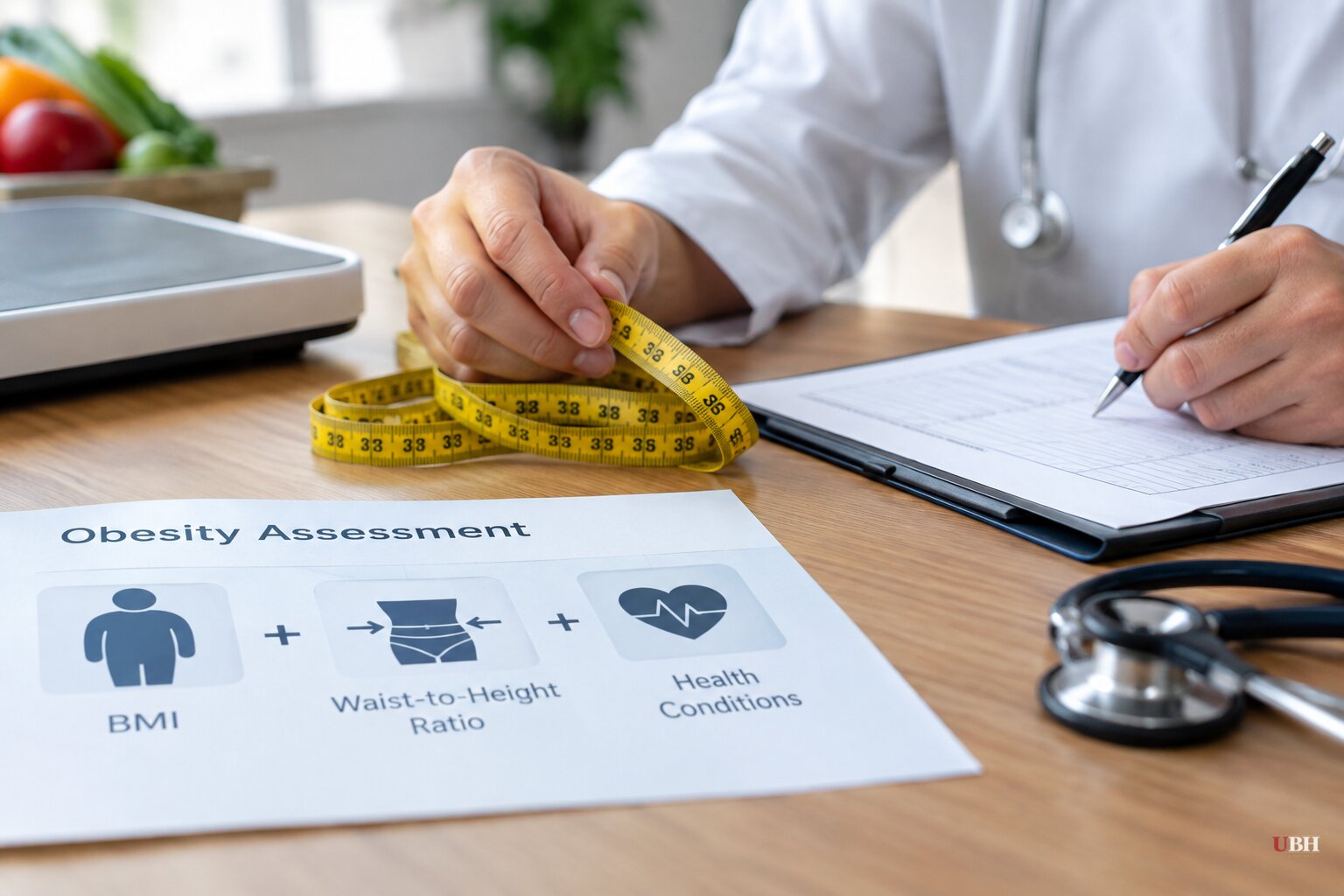
A new way of defining obesity flags more adults at risk of dementia than body mass index does alone, according to a study published today, Nov. 25, 2026, in Neurology, the journal of the American Academy of Neurology.
The lead author is Rui Zhou, PhD, of Guangdong Pharmaceutical University in Guangzhou, China. "These findings underscore the inadequacy of using BMI alone to define obesity," Zhou said. "The results support the integration of body fat distribution and other health conditions into classifying obesity."
What the new definition changes
BMI uses only height and weight. It cannot tell fat from muscle or bone, and it ignores conditions like high blood pressure.
The European Association for the Study of Obesity (EASO) framework adds two things: waist-to-height ratio, which captures where fat sits on the body, and medical, functional or psychological conditions tied to obesity.
The effect on classification was large. Among participants BMI had labeled overweight, 85.8% in the English cohort and 80.2% in the Chinese cohort moved into the obesity category.
The American Academy of Neurology's breakdown shows how much the picture shifted in the English group. By BMI, 29% of participants had obesity. Under the EASO framework, 67% did.
In the Chinese group, the share rose from 12% under BMI to 37% under EASO.
The dementia numbers
The team pooled two long-running studies: the English Longitudinal Study of Ageing (6,542 people) and the China Health and Retirement Longitudinal Study (12,402 people). The dementia analysis covered 17,617 participants and the mortality analysis 18,197.
The English participants averaged about 66 years old at baseline and were followed a median of 11.5 years. The Chinese participants averaged 58 and were followed a median of 8.2 years.
Dementia was identified through algorithmic criteria or self-reported physician diagnoses. Deaths came from registries, medical records or interviews with relatives.
Compared with people of normal weight and no other health conditions, those with EASO-defined obesity had a pooled dementia hazard ratio of 1.93 (95% CI 1.50-2.48). That is roughly double the risk.
The most common conditions in the newly defined obesity group were high blood pressure (42.6%) and diabetes (35.1%).
The academy said people with obesity were also more likely to die during the study in one of the two groups.
The overweight puzzle
One result cuts the other way. People who remained in the EASO overweight category had a lower dementia risk than normal-weight people, with a hazard ratio of 0.61 (95% CI 0.45-0.81).
That group is small. Only 6% of participants in each cohort stayed in the overweight category once the framework pulled most of them into obesity.
The researchers and the academy are explicit about the limits. The study does not show that obesity causes dementia or death, or that being overweight protects against them. It shows an association.
The study reports no explanation for why the leftover overweight group fared better.
A separate study points the other way on BMI
Research out of the University of Georgia this week reaches for BMI itself. The team tracked more than 8,200 participants over 24 years and found that rising BMI was linked to faster decline in executive function, meaning planning, attention and emotional regulation. The effect was strongest in adults 65 and older, with the strongest link appearing eight years into follow-up.
Lead author Suhang Song, an assistant professor at the university's College of Public Health, said participants who managed their weight "could significantly lower their rate of cognitive decline in just two years." She called BMI "one of the most easily modifiable risk factors when it comes to ageing well."
That is a different emphasis from Zhou's. Song treats BMI as a practical, trackable target. Zhou argues BMI alone leaves at-risk people uncounted.
The two studies are not in direct conflict. The Georgia work measures the pace of cognitive decline as BMI changes, while the Neurology paper compares classification schemes against dementia diagnoses. Both are observational.
What comes next
The EASO framework and an alternative from the Lancet Diabetes & Endocrinology global commission have both emerged in recent years as responses to long-standing criticism of BMI. Zhou's team says the implications of these definitions for dementia risk had been unclear until now.
The open question is practical. Doctors can measure a waistline and blood pressure in minutes, but the study does not test whether reclassifying someone changes their dementia outcomes. That would take trials, not cohort comparisons.
Sources used for this briefing
7 links from 7 independent newsrooms (syndicated copies of the same report count once)
These are the sources it draws on, linked so you can verify.


