
Unbiased headlines. Facts, not spin.
Unbiased Headlines is an independently owned news organization. We bring you the facts, not opinions, written fresh from 110+ named sources. Sources linked so you can verify it yourself.
 health
Notable (6/10)
FDA Approves First Limb-Girdle Muscular Dystrophy Drug at $983,500 a Year as Novartis Heart Drug Fails Big Trial
A first approval on partial trial data
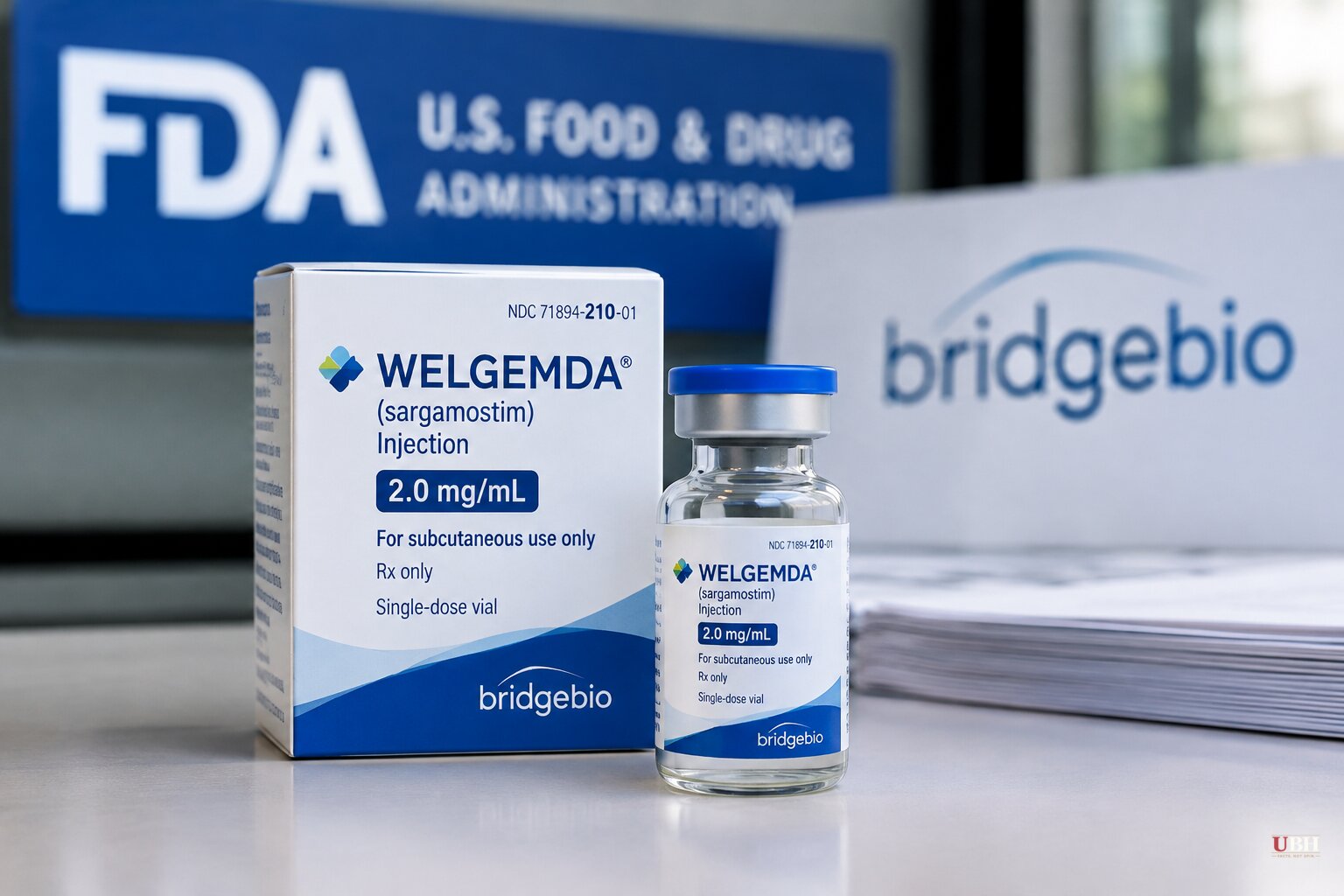
The FDA approved Welgemda (ribitol) on Monday, Nov. 23, the first therapy cleared for any form of limb-girdle muscular dystrophy. BridgeBio Pharma makes the oral drug.
It is approved only for type 2I/R9 (LGMD2I/R9) in adults and children weighing at least 30 kg (66 lbs). The decision came four days ahead of the Nov. 27 target date BridgeBio disclosed in May, when the FDA accepted the application for priority review.
The approval rests on a 12-month interim analysis of a 36-month trial. The trial is not finished.
BridgeBio says the FDA granted traditional (full) approval. The FDA's own announcement does not state the pathway.
LGMD2I/R9 is an autosomal recessive disease caused by partial loss-of-function mutations in the FKRP gene. The FDA says the FKRP enzyme normally helps attach sugar molecules to alpha-dystroglycan, a muscle protein. Ribitol is a sugar alcohol meant to supply the enzyme that still partly works.
The price tag
BridgeBio set the annual wholesale acquisition cost at $983,500, or $75,446.58 for each 28-day supply. That is a list price, not necessarily what patients or insurers will pay.
BridgeBio says commercially insured patients may pay copays as low as $0. The company also runs a program called ForgingBridges that offers insurance resources, financial assistance and a dedicated support team for eligible U.S. patients.
No insurer has announced a coverage policy for the drug.
BridgeBio estimates about 7,000 people in the U.S. and Europe live with LGMD2I/R9 and other addressable alpha-dystroglycanopathies. It says it has identified about 500 genetically confirmed U.S. patients.
The arithmetic is simple. Treating all 500 at list price would run about $492 million a year before rebates and discounts.
BridgeBio's internal targets call for 100 patients on therapy by the end of 2027, 300 by the end of 2028 and all 500 by the end of 2029. Executives believe 2,000 to 3,000 more U.S. patients have not yet been identified.
A heart drug that moved the number but not the outcome
The other side of the ledger came Saturday, Nov. 21, at the American Heart Association meeting in Chicago. Dr. Steven Nissen of the Cleveland Clinic presented results for pelacarsen, a Novartis drug designed to lower lipoprotein(a), or Lp(a).
The trial enrolled 8,350 adults who already had cardiovascular disease. They received either pelacarsen or a placebo.
The drug suppressed Lp(a) by about 78%. After five years, that drop did not translate into fewer heart attacks, strokes or other major cardiovascular events.
"It wasn't a near miss. It just didn't have an effect on outcomes," Nissen told CNN.
Nissen said the result was widely unexpected. "Uniformly expected to be favorable," he said. He told NPR he was "shocked" and called the outcome "terribly disappointing." The full results were published in the New England Journal of Medicine and NEJM Evidence.
Lp(a) matters because roughly 20% of the global population, about a billion people according to Nissen, have elevated levels. The American Heart Association says people with the highest levels are two to four times more likely to have a heart attack than those with the lowest.
Novartis disclosed last month that the trial missed its goals but released no details. CNN reports the company has decided to abandon the drug after sinking tens of millions of dollars into it.
Novartis sees some value in the result. In a statement, it said the study "provides meaningful evidence" about the relationship between Lp(a) and heart disease and may "help inform future approaches to cardiovascular management." The company added that such studies "play a crucial role in moving the field forward, even if the results are not what we had hoped for."
Chinese-funded RNA developer closes a round
Separately, on Wednesday, Nov. 25, Shanghai CirCode Biomed announced a Series A+ financing round in the tens of millions of dollars. Fosun Health Capital, a platform whose cornerstone shareholder is Fosun Pharma, led it, with existing investors including a global corporate venture also taking part.
CirCode develops circular RNA therapeutics. It says the money will fund an ongoing Phase I trial of HM2002 for ischemic heart disease and clinical development of HM2003 for ischemic limb disease. It will also advance in vivo CAR-T and CAR-M programs toward clinical evaluation.
CEO Dr. Chenxiang Tang said circular RNA has gone "from a compelling scientific concept to a drug candidate being studied in patients." Fosun Health Capital CEO Irene Li called CirCode the first company to advance a clinical-stage candidate against angiogenesis-related diseases. Both statements are company claims, and the round's exact size was not disclosed.
What comes next
The unfinished part of the Welgemda story is the back half of its 36-month trial. Insurers still have to decide whether a drug priced at $983,500 a year, approved on 12 months of data, earns coverage. BridgeBio's first target, 100 patients on therapy by the end of 2027, will show how quickly that decision plays out.
Sources used for this briefing
7 links from 7 independent newsrooms (syndicated copies of the same report count once)
These are the sources it draws on, linked so you can verify.


