
Original briefings. Zero spin.
Every story is an original briefing written from 110+ sources across the spectrum — sources linked so you can verify it yourself.
 energy
Major Story (8/10)
Event date: August 26, 2026
energy
Major Story (8/10)
Event date: August 26, 2026
China's Iran Oil Imports Collapse to 523,000 Barrels a Day as US Blockade Bites, OPEC+ Loses Its Grip on Prices
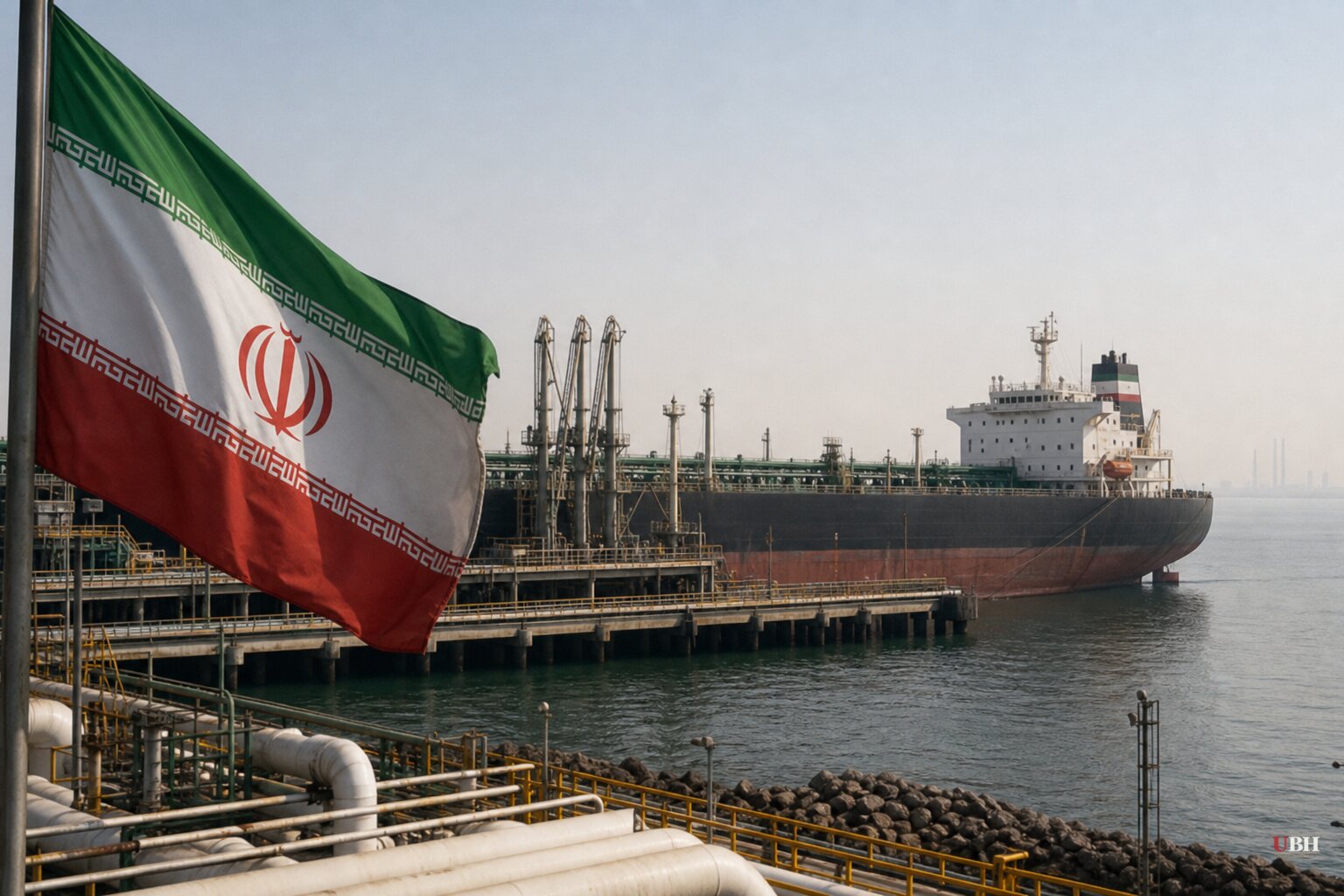
Since the U.S. and Israel struck Iran in late February, and since the U.S. Treasury's "Economic D-Day" sanctions push launched this week, the numbers behind the oil war have kept moving. The newest data shows Iran's oil exports are cratering faster than at any point since the fighting started, and the group that used to run the global oil market can't do much about it.
Iranian crude loadings have fallen to about one-seventh of pre-war levels, according to tanker-tracking data reviewed by Iran International. Iran loaded roughly 287,000 barrels a day so far this month, down from about 2 million barrels a day before the war, according to Kpler.
China, Iran's largest customer, has taken in about 523,000 barrels a day of Iranian crude this month. That's down from more than 1.7 million barrels a day at the war's start, per Kpler figures cited by Iran International. Reuters, citing its own Kpler-sourced calculations, put China's August intake even lower, around 534,000 barrels a day, down from an 823,000 barrel-a-day pace in July and a 2025 average near 1.4 million.
The U.S. Navy's blockade, reimposed on July 13, is the direct cause cited by every outlet tracking this. CENTCOM said Wednesday that American forces have "redirected 65 commercial vessels, disabled 3 and boarded 2" to enforce it, according to Breitbart. Kpler estimates more than 40 million barrels of Iranian crude sit trapped on tankers in the Persian Gulf and Gulf of Oman as a result.
Iran's floating storage, once around 105 million barrels, has dropped to about 80 million, Kpler told Breitbart. With no confirmed sightings of an Iranian supertanker crossing the Strait of Hormuz since July, analyst Muyu Xu of Kpler said buyers "could face virtually no new Iranian supplies available for late-September delivery onwards."
The money at stake is real. Oil and fuel oil exports generated $57.5 billion for Iran last year, about 55% of the country's total exports, according to Iranian central bank data cited by Iran International. Fuel oil exports have dropped from roughly 220,000 barrels a day early this year to about 61,000 now, and LPG exports have nearly stopped entirely.
OPEC+ Can't Move the Market Anymore
Reuters flagged this week that OPEC+, the cartel that used to set the global oil price by opening or closing the taps, has lost that power. The group's global output share fell to about 40% in July from more than 48% before the war, according to Reuters calculations based on International Energy Agency data. About four to five percentage points of that drop came from the UAE's withdrawal from OPEC in May, not the war itself.
The core OPEC+ group of seven, including Saudi Arabia and Russia, now accounts for just a quarter of world oil output. Since March, OPEC+ has announced six output increases. Almost none of them mattered, because the Strait of Hormuz blockade has kept the oil from moving regardless of what OPEC+ says it will produce.
What's filling the gap isn't more supply. It's less demand. China has bought roughly 400 million fewer barrels since the war began than over the same stretch last year, according to Reuters, and that falling appetite is what's actually capping prices. "They've become the swing demand centre," June Goh, an analyst at Sparta Commodities, told Reuters. That's a role OPEC+ used to own.
The Sanctions Fight With China Is Just Getting Started
None of this has forced China to fold. China's Foreign Ministry vowed this week to "take all necessary measures" to protect its "legitimate rights and interests," spokesperson Lin Jian said, according to CNN. Lin separately told reporters "sanctions and pressure tactics are not the solution," per Breitbart.
Zhao Long, director of the Institute for International Strategic and Security Studies at the Shanghai Institutes for International Studies, told CNN that Beijing "is unlikely to accept a situation in which Washington determines what Chinese companies can legally trade with third countries." For Beijing, the stakes go beyond Iran to the precedent of U.S. secondary sanctions dictating Chinese commercial policy globally.
Treasury Secretary Scott Bessent has so far avoided naming China directly in his sanctions rollout, telling reporters discussions involving China are better held privately, according to the Epoch Times. He's also urged Beijing to cooperate, citing China's own reliance on Persian Gulf energy. Trump has said he "did not ask Xi for any favors" on Iran during a May meeting. CNN's analysis suggests that comment will read to Beijing as a sign of American desperation rather than restraint.
Complicating enforcement further: China's customs agency hasn't officially reported crude oil imports from Iran since 2022. Columbia University's Erica Downs found that Iranian barrels are being relabeled as Malaysian in trade data, noting China reported importing about 1.3 million barrels a day of "Malaysian" crude in 2025, more than double Malaysia's actual production.
Xi Jinping is expected to visit the U.S. next month, with both sides hoping to extend a trade truce set to expire this fall, according to CNN. Whether the Iran sanctions fight blows that up, or gets quietly folded into it, is the open question hanging over both governments right now.
Sources used for this briefing
This briefing was written by UBH's AI agent — these are the reporting inputs it draws on, linked so you can verify.


