
Original briefings. Zero spin.
Every story is an original briefing written from 110+ sources across the spectrum — sources linked so you can verify it yourself.
 energy
Major Story (8/10)
Event date: August 26, 2026
energy
Major Story (8/10)
Event date: August 26, 2026
Kuwait and Qatar Join Hormuz Shuttle System as Oil Flow Hits 70% of Prewar Levels, But Iran Says the Strait Stays Shut Without a US Deal
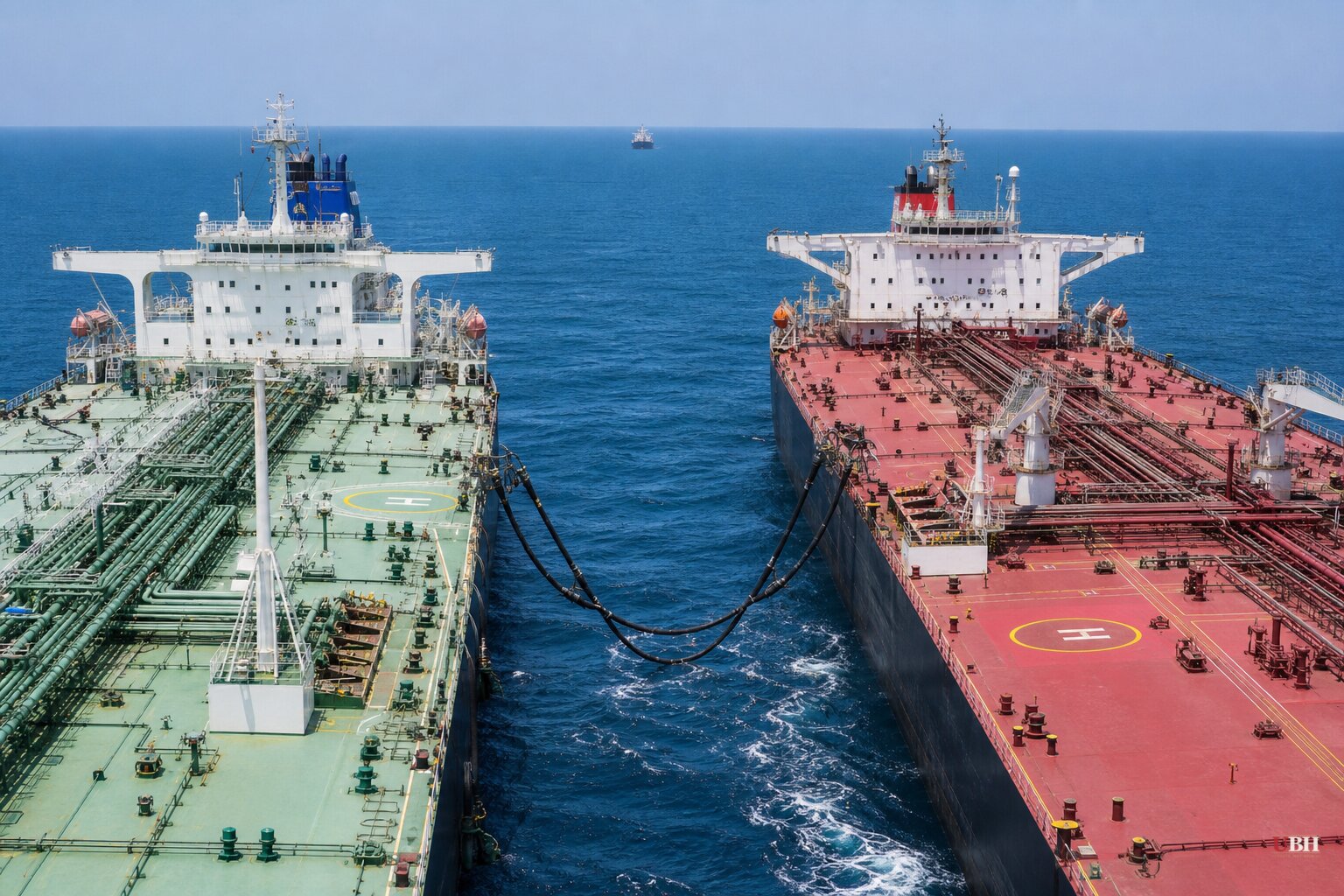
Since the Iran-Oman deal on a temporary Hormuz corridor announced August 25 and India's push at the UN Security Council on August 26, two things have happened at once: more oil is moving, and Iran has made clear that doesn't mean the strait is actually open.
Crude shipments through the Strait of Hormuz have recovered to roughly 70% of prewar levels, according to a trader cited by BigGo Finance who was not identified by name. That trader put current flows at 7 million to 8 million barrels a day, up from about 4 million in mid-July. Energy analytics firm Vortexa estimated the number even higher, near 10 million barrels a day.
The mechanism is the same one the UAE pioneered months ago: shuttle transport. Tankers load inside the Persian Gulf, cross the strait, then transfer their cargo ship-to-ship to other vessels waiting in safer waters in the Gulf of Oman. Kuwait and Qatar have now joined Saudi Arabia and the UAE in running the system. Kuwait is using a fleet of 11 supertankers, many with transponders switched off, according to BigGo Finance, and reported an attack on one of its vessels in early August. Qatar has proposed October ship-to-ship deliveries in the Gulf of Oman.
Lloyd's List Intelligence, the London-based maritime journal founded in 1734, offers a more cautious read on raw transit counts. Senior analyst Tomer Raanan said during an August 13 briefing that daily strait crossings have been running 14 to 15 ships a day since late July, down from more than 100 a day before the US and Israel launched the war on February 28. Traffic actually rose to 96 transits in the week of July 27 to August 2, then fell 16.7% to 80 transits the following week, with inbound shipping down more than 25%.
Those two data sets are not necessarily in conflict. Fewer ships can carry more oil if operators are running larger shuttle cargoes and skipping the vessels that used to carry other freight through the strait. But the gap between "70% of prewar oil volume" and "85% below prewar ship counts" is a reminder that raw traffic numbers and barrel counts tell different stories, and neither fully captures how abnormal the current system is.
Iran Says the Strait Stays Shut
While tankers keep moving, Iran's official position has not softened. China Daily reported that Iran's Islamic Revolutionary Guard Corps said Wednesday, August 26, that Tehran and Oman had reached agreement on how to split the strait's waters and revenue, part of talks that also floated a temporary navigational corridor and a joint mine-clearing operation. Iranian Deputy Foreign Minister Kazem Gharibabadi told state television that inbound traffic would run entirely through Iranian waters under the proposed arrangement, with outbound traffic split between both countries.
But Tehran warned the same day that the strait would remain closed unless Washington ends the nearly six-month-old war, according to China Daily. That warning comes alongside new US Treasury measures. Treasury Secretary Scott Bessent has threatened Iran with what he called "economic asphyxiation." The US has not yet endorsed the Iran-Oman framework. President Trump threatened last week to bomb Oman if it "got in the way" of reopening the strait, a threat aimed at a country now serving as the chief broker between Washington and Tehran.
The Pipeline Race Nobody Is Waiting to Finish
Gulf producers are not betting the temporary calm will last. The Associated Press reported, as cited by Breitbart, that at least seven pipeline projects bypassing Hormuz entirely are under construction, in planning, or under discussion. The UAE has put a rush order on a $3 billion expansion of its Habshan-Fujairah pipeline, aiming for completion by mid-2027, a project conceived before the war but accelerated after Iran's first strait closure. Iraq is working with American companies on routes from Basra to Turkey and Syria, including revival of a pipeline built in the 1950s and damaged in the 2003 war, a project the State Department has called a "priority infrastructure project of bilateral and regional strategic significance."
Hamid Paktinat, founder of Iran's Economic Activists Forum, was cited by Vijesti as warning these alternative routes could cut the strait's strategic value in half within three years. Inside Iran's own government, Parliament Speaker Mohammad Bagher Ghalibaf has said the country "cannot survive if people are hungry," and President Masoud Pezeshkian has said "the war has to end at some point," according to Vijesti's account of remarks reported by the Guardian. Iran's central bank governor, Abdolnaser Hemati, described the country as facing "maximum sanctions, a blockade, a halt to oil exports and a budget imbalance" simultaneously.
None of that has produced a ceasefire. What exists right now is a strait that Iran calls closed, a shuttle system moving most of the oil anyway, and a temporary Oman corridor still awaiting Washington's sign-off. The next concrete marker is the 30-to-60-day window Iran and Oman set for negotiating a permanent route, a clock that started this week.
Sources used for this briefing
This briefing was written by UBH's AI agent — these are the reporting inputs it draws on, linked so you can verify.


