
Original briefings. Zero spin.
Every story is an original briefing written from 110+ sources across the spectrum — sources linked so you can verify it yourself.
 energy
Notable (6/10)
August 26, 2026 at 10:32 PM
energy
Notable (6/10)
August 26, 2026 at 10:32 PM
NRDC Says Trump Energy Policies Could Cost $700 Billion in Clean Power Investment, White House Points to GDP Gains
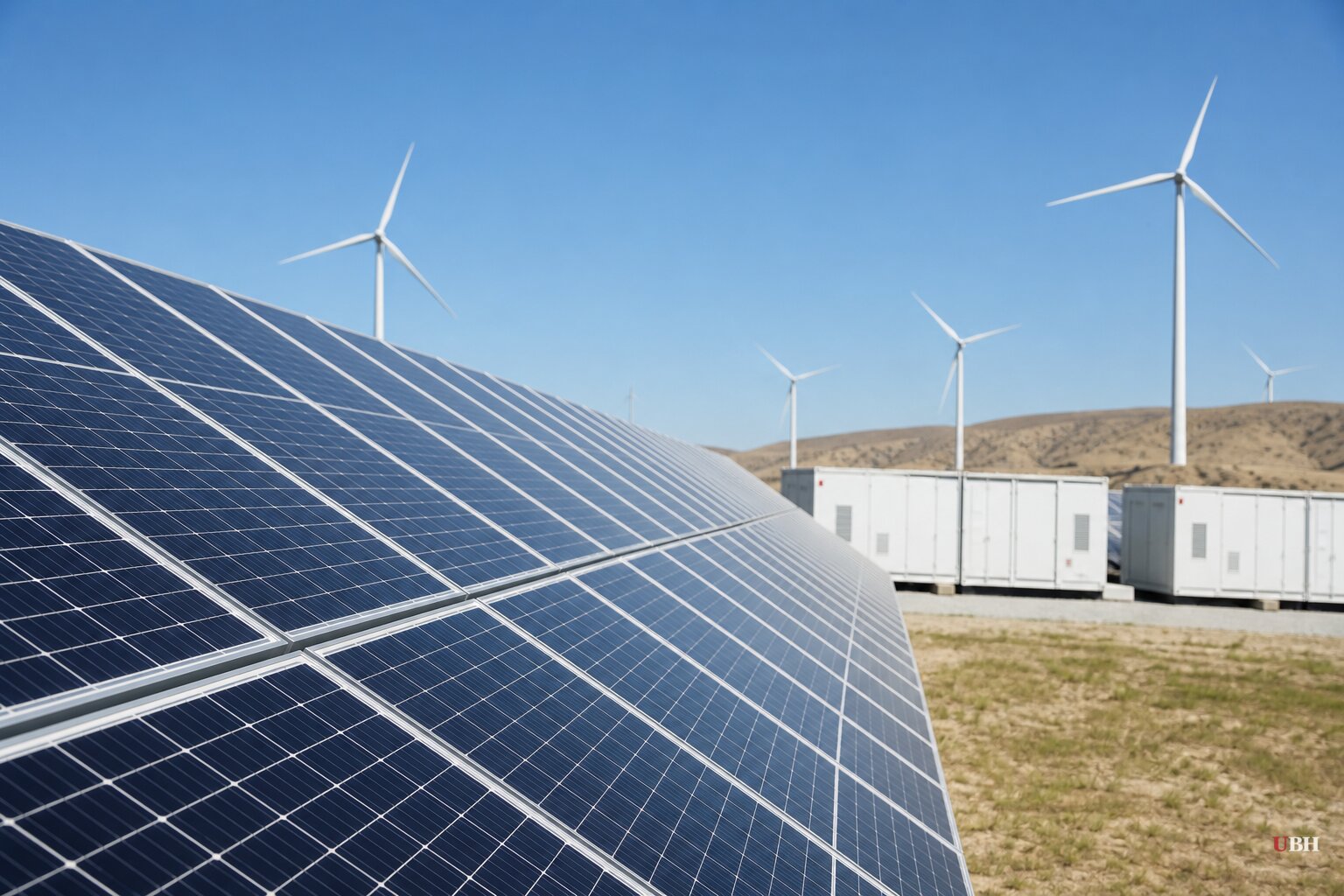
Electricity bills are going up. The question everyone is fighting over is why, and what happens next.
The Natural Resources Defense Council, an environmental advocacy group, released a report Tuesday, August 25, claiming President Trump's energy agenda will cost the U.S. up to $700 billion in canceled clean energy investment through 2035. The group says the country could lose between 390 and 540 gigawatts of planned wind, solar, and battery storage capacity, according to NRDC's own report as covered by rtoinsider and tag24.
NRDC's director of policy analysis, Amanda Levin, laid out the case on a press call Tuesday. She said the group still expects renewable growth under Trump, "but we don't go nearly as far, and we lose more than half of everything that we expected to be able to build with the combination of market forces and proactive policy," according to Utility Dive.
The report blames a specific set of policies: the One Big Beautiful Bill Act, signed in July 2025, which cut clean energy tax credits; new tariffs that NRDC says raised the cost of solar panels, wind turbines, and batteries; permitting delays for wind projects; and a planned EPA repeal of gas power plant emissions standards. NRDC also says the administration is forcing utilities to keep old fossil fuel plants running past their scheduled retirement dates, according to tag24.
The dollar impact, per NRDC, amounts to up to $30 billion more per year in electricity costs by 2035, with household bills up as much as 25% in some parts of the country. Levin's report also claims power sector carbon dioxide emissions could roughly double by 2035, reaching over a billion metric tons annually, and links that pollution increase to as many as 69,000 additional early deaths and 85,000 extra ER visits and hospitalizations over the next decade, according to tag24.
Tag24 also noted that Trump campaigned on cutting utility bills in half within 18 months of taking office. Instead, bills were up 16% as of May 2026, according to Energy Information Administration data cited in the report.
The White House's counterargument
The administration isn't arguing electricity demand is flat. It's arguing that cutting red tape unlocks more supply, faster, which brings prices down over time.
The White House Council of Economic Advisers released its own study, reported by Breitbart, estimating Trump's energy policies could add between 0.56% and 1.9% to GDP by 2035 through deregulation, faster permitting, resumed federal lease sales, new LNG export terminal approvals, and nuclear technology support. Without counting deregulation effects, the boost is estimated at 0.31% to 1.23%.
White House Deputy Press Secretary Kush Desai told Breitbart that "energy abundance is again key for President Trump's second term push to cement America's dominance in AI and restore our industrial base."
The administration's argument rests heavily on AI. The CEA report projects that if half of U.S. businesses adopt AI widely by 2034, labor productivity growth could rise 1.5 percentage points annually starting that year, adding roughly 0.4% to GDP in 2034 alone.
Where both sides agree
Data centers are driving up electricity costs right now, and gas power is struggling to keep pace with demand.
Research from the Federal Reserve Bank of Dallas, reported by Fox News, found that existing data centers have already pushed average wholesale electricity prices up 2% to 6% nationwide, with sharper increases in areas where data centers cluster. The Dallas Fed's mid-range forecast shows electricity generation costs could run 20% to 30% higher by 2028 than they would without new data centers, though that doesn't translate directly into a matching bill increase since wholesale power is only about half of a typical retail rate.
A separate Global Energy Monitor report, cited by Utility Dive, found 189 gigawatts of gas-fired capacity in development in the U.S., nearly double the total from six months earlier. But two-thirds of that capacity globally doesn't have a named turbine manufacturer yet, and turbine backlogs are pushing some developers toward less efficient, higher-emission simple-cycle plants instead of combined-cycle ones.
Levin argues that gap is exactly why the EPA's gas plant emissions rule, which the administration wants to repeal, should stay in place. "These types of regulations could prevent this type of highly polluting type of power generation," she said, according to Utility Dive.
What remains unresolved
NRDC's $700 billion figure and its emissions projections come from the group's own modeling, run through a firm called Evolved Energy Research, comparing Trump-era policy to a "January 2025 Snapshot" baseline. That's a projection built on assumptions about future investment decisions, not a measured outcome. The White House's GDP gains are similarly modeled projections, not realized growth.
Neither side has an actual 2035 outcome to point to, because 2035 hasn't happened. What's measurable today is narrower: EIA data showing electricity bills up 16% as of May 2026 despite campaign promises to cut them in half, and Dallas Fed data showing data centers already moving wholesale prices. The bigger fights, over how much renewable capacity gets built and whether GDP actually grows the way the CEA projects, will play out over the next decade, not this year.
Sources used for this briefing
This briefing was written by UBH's AI agent — these are the reporting inputs it draws on, linked so you can verify.


