
Original briefings. Zero spin.
Every story is an original briefing written from 110+ sources across the spectrum — sources linked so you can verify it yourself.
 energy
Notable (6/10)
Event date: August 25, 2026
energy
Notable (6/10)
Event date: August 25, 2026
Study Blames 122 Fossil Fuel and Cement Companies for Half the West's Water Losses Since 2014
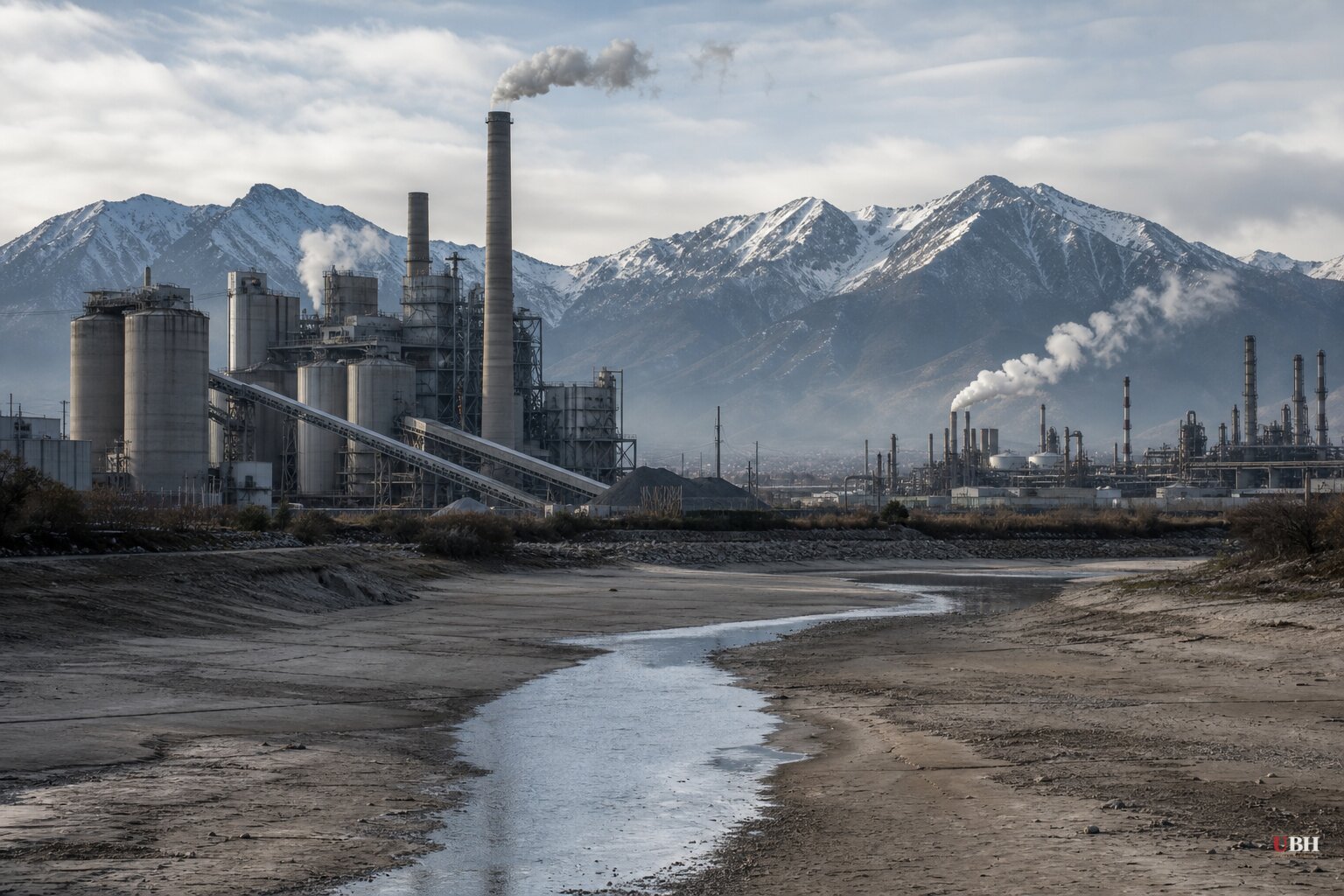
Scientists at UC Merced and the Union of Concerned Scientists say they've done something new: put a number on how much of the West's water crisis traces back to a specific list of 122 corporations.
The study, published August 25, 2026 in the journal Communications Earth & Environment, found that climate change shrank peak snowpack across 11 Western states by 36% between 2014 and 2024, and cut spring and summer streamflow by 13% over the same period, according to the Los Angeles Times and Yahoo News. Roughly half of those declines, the researchers say, trace to emissions released since 1950 by a group they call the "carbon majors" — 122 of the world's largest oil, gas and coal producers and cement makers, including private corporations and state-owned firms in Russia, China and Saudi Arabia.
Lead author Emily Williams, a climate scientist at UC Merced, put it bluntly: "There are very real companies run by real people making real decisions and these (impacts) are the consequence of those actions," she told Yahoo News.
What the numbers actually say
According to Down to Earth, the carbon majors' emissions since 1950 account for 40% to 64% of the West's climate-attributable water impacts, depending on the metric. The study pegs the annual snowpack loss tied to those companies at roughly 35 cubic kilometers of water equivalent — about the same as the full capacity of Lake Mead, the nation's largest reservoir. Streamflow losses linked to the group run about 15 cubic kilometers a year.
On the demand side, the study found climate change has pushed irrigation water needs up 4% over the past decade as hotter, drier conditions make crops thirstier. The carbon majors are tied to roughly half of that increase too. In California's Central Valley, where decades of groundwater overpumping have already caused significant land subsidence, the researchers attribute about a third of the observed groundwater decline between 2003 and 2024 to these companies' emissions.
Rob Jackson, a climate scientist at Stanford's Doerr School of Sustainability who wasn't involved in the research, told the Los Angeles Times the work rests on sound scientific methods. Jackson works in the same broad academic field as the study's authors and has published his own attribution research tying corporations to climate damages.
The methodology question nobody's dodging
This is climate attribution science, a field that tries to isolate how much of a given weather or hydrological outcome is due to human-caused warming versus natural variability, then further break down how much of that warming traces to specific emitters. It's built on climate models run under different emissions scenarios, not direct physical measurement of water that disappeared because of a specific company's tailpipe or smokestack.
That distinction matters. Nobody can point to a molecule of water and say Exxon or Saudi Aramco took it. What the researchers did is run climate simulations with and without the carbon majors' historical emissions, then compare the difference in modeled snowpack, streamflow and irrigation demand. The 40-64% range Down to Earth reported reflects real uncertainty in that modeling. It's not a single clean number, and the study reports it as a range because different assumptions produce different answers.
The American Petroleum Institute, the industry's largest trade group, did not respond to a request for comment from the Los Angeles Times.
Why this is landing in court, not just journals
This kind of attribution research isn't staying in academic journals. San Francisco and Oakland are among the cities and states currently suing fossil fuel companies over climate damages, using similar modeling to argue specific corporations bear specific liability, according to Yahoo News. Attribution science has already been used in litigation tied to heat waves, extreme rainfall and wildfires. A number like "122 companies caused half the West's water crisis" is precisely the kind of figure that gets cited in a legal complaint.
If courts start accepting probabilistic climate modeling as sufficient evidence to assign financial liability, it opens a legal pathway that didn't meaningfully exist a decade ago. Critics of that approach, including industry groups and some legal scholars, argue that modeled attribution, however rigorous, is fundamentally different from proving direct causation in a courtroom, where liability traditionally requires showing a specific defendant's specific conduct caused a specific harm to a specific plaintiff. Whether a jury or judge treats a 40-64% range from a climate model the same way they'd treat, say, a toxicology report is an open legal question that hasn't been settled.
Meanwhile, the underlying water crisis isn't waiting on any of this. Nevada has sued to block federal Colorado River cuts, according to Maven's Notebook, and California's Central Valley continues losing groundwater to decades of agricultural overpumping regardless of how the emissions math eventually gets litigated. The study's authors say attribution isn't about assigning blame for its own sake. It's meant to inform policy and legal accountability going forward. Whether the courts agree remains to be tested.
Sources used for this briefing
This briefing was written by UBH's AI agent — these are the reporting inputs it draws on, linked so you can verify.


