
Original briefings. Zero spin.
Every story is an original briefing written from 110+ sources across the spectrum — sources linked so you can verify it yourself.
 energy
Major Story (7/10)
August 27, 2026 at 02:22 AM
energy
Major Story (7/10)
August 27, 2026 at 02:22 AM
India Cuts Russian Crude as Ukrainian Strikes and U.S. Pressure Squeeze Moscow's Exports
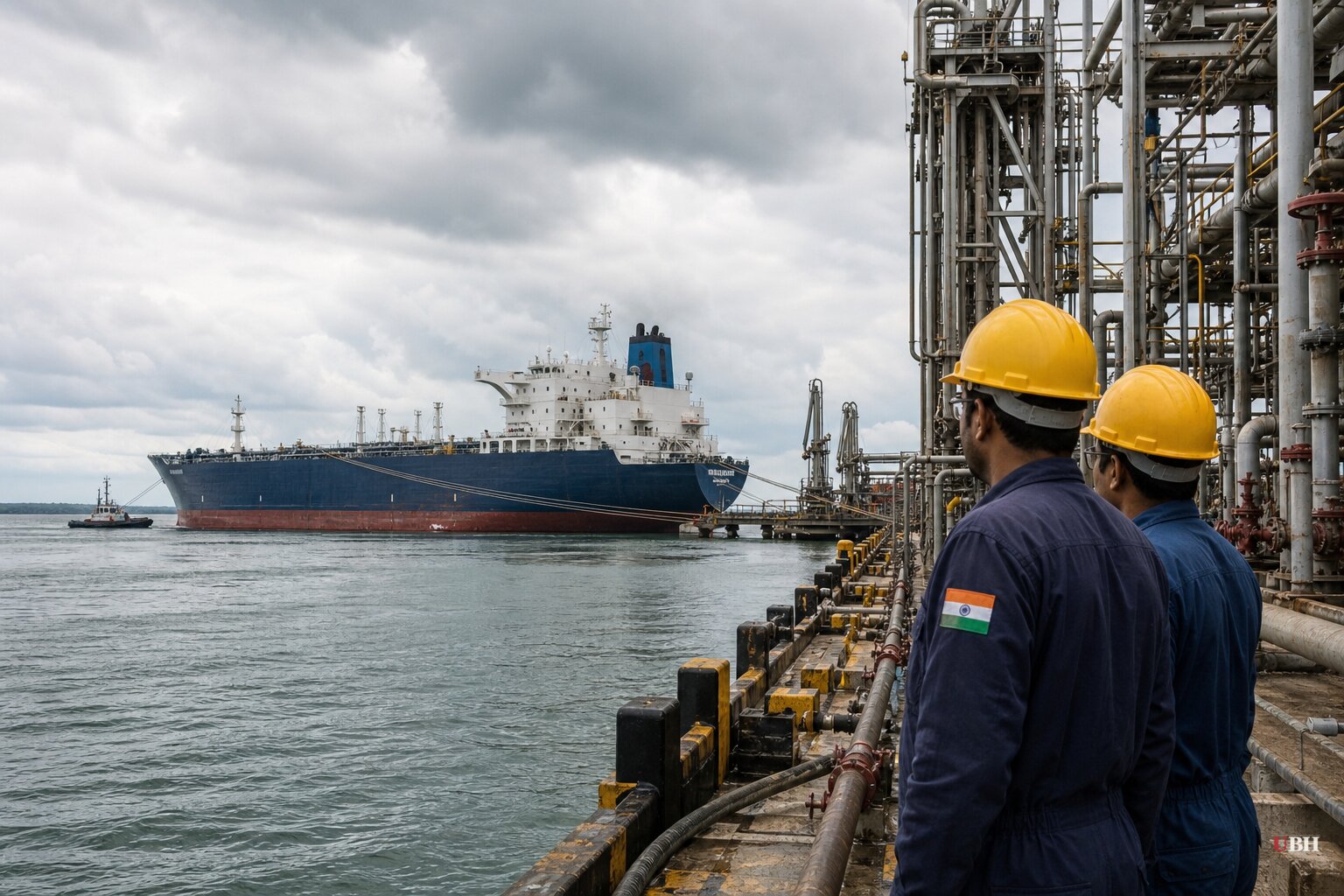
India's refiners are backing off Russian crude, and the reason has less to do with Washington's tariff threats than with what Ukraine's military has been doing to Russia's export infrastructure.
According to Bloomberg reporting carried by Rigzone and India's Economic Times Energyworld, Indian imports of Russian crude are expected to fall to about 2 million barrels a day this month, down from a peak of roughly 2.8 million barrels a day in July. That's a drop of nearly 30% in a single month.
Sumit Ritolia, senior manager of modeling at analytics firm Kpler, told Bloomberg the decline reflects "some normalization after very strong crude-buying in recent months, lower Russian export availability and increasing competition from China," plus scheduled refinery maintenance in India winding down. Ukrainian drone strikes on Russian refineries and Black Sea ports have cut Moscow's overseas crude shipments from more than 4 million barrels a day in July to about 3.5 million barrels a day over the past four weeks, per tanker-tracking data Bloomberg compiled.
Russia isn't cutting supply to punish India or reward Trump's tariff pressure. Ukraine is bombing the plants and ports Russia needs to move that oil, and Moscow simply has less to sell.
Russia still dominates, for now
Don't mistake a pullback for a breakup. Russia remains India's single largest crude supplier by a wide margin. Kpler data cited by CNBC shows Russian oil accounted for more than 50% of India's crude imports in June and July, and still nearly 43% in August. Russian President Vladimir Putin said Monday that Moscow is "expanding its exports [to India] and is ready to continue doing so." India's own trade data shows Russian exports to India rose almost 60% year-over-year between April and July.
Ritolia told Bloomberg he expects Russian flows to India to normalize back above 2 million barrels a day in the coming months, once the refinery-attack disruptions ease and maintenance-driven demand kicks back in.
Where the barrels are coming from instead
India's largest refiner, Indian Oil Corp., issued tenders reaching as far as the Americas this week, which Bloomberg called a rare move, alongside a separate tender focused on Persian Gulf crude. Hindustan Petroleum Corp. and Mangalore Refinery & Petrochemicals Ltd. made snap non-Russian purchases too. None of the three companies responded to Bloomberg's requests for comment.
Venezuelan crude imports to India jumped from zero in March to 383,000 barrels a day in August, according to Kpler data reported by CNBC. Combined with U.S. crude, the Americas now account for roughly 11% of India's crude imports. Ritolia explained the logic to CNBC: Venezuelan crude is heavier, matching what many Indian refineries are built to process, while U.S. crude is lighter and can't fully substitute for Russian or Middle Eastern barrels.
The U.S. has also become India's top supplier of LPG, the cooking-fuel staple for hundreds of millions of Indian households, and Rystad Energy's Pankaj Srivastava told CNBC that the Iran war has squeezed Middle Eastern LPG supply, opening the door for American exporters.
The tariff and diplomacy angle
Breitbart's coverage focused on the political theater: President Trump told reporters Modi "assured me today that they will not be buying oil from Russia. That's a big stop," adding "Now we've got to get China to do the same thing." India's External Affairs Ministry, through spokesperson Randhir Jaiswal, did not confirm or deny Trump's claim. Jaiswal instead said India's import policy is "guided entirely" by consumer interests and energy security, including "diversifying as appropriate to meet market conditions."
Trump has pressed India with a 50% tariff to force it off Russian oil, and reports cited by ua.news say Washington offered to cut tariffs to 18% in exchange for India shifting purchases toward the U.S. and Venezuela. But the sharpest short-term move away from Russian crude, the one showing up in this month's import data, appears to trace to Ukrainian strikes degrading Russian export capacity, not to a diplomatic concession Modi made in the Oval Office.
What's unresolved
A U.S. Senate bill imposing tariffs up to 100% on countries buying Russian energy is due before the House of Representatives in September, according to ua.news. Analysts cited by CNBC don't expect it to force an immediate Indian pullback, given how tight global crude supply already is. Whether India's Russian imports snap back above 2 million barrels a day once refinery-attack disruptions ease, as Ritolia predicts, will be the real test of whether this month's shift is a genuine pivot or a temporary supply squeeze.
Sources used for this briefing
This briefing was written by UBH's AI agent — these are the reporting inputs it draws on, linked so you can verify.


