
Original briefings. Zero spin.
Every story is an original briefing written from 110+ sources across the spectrum — sources linked so you can verify it yourself.
 energy
Major Story (7/10)
Event date: August 17, 2026
energy
Major Story (7/10)
Event date: August 17, 2026
Diesel Stockpiles Fall to Lowest Seasonal Level Since 1980s as Record Exports Drain US Supply
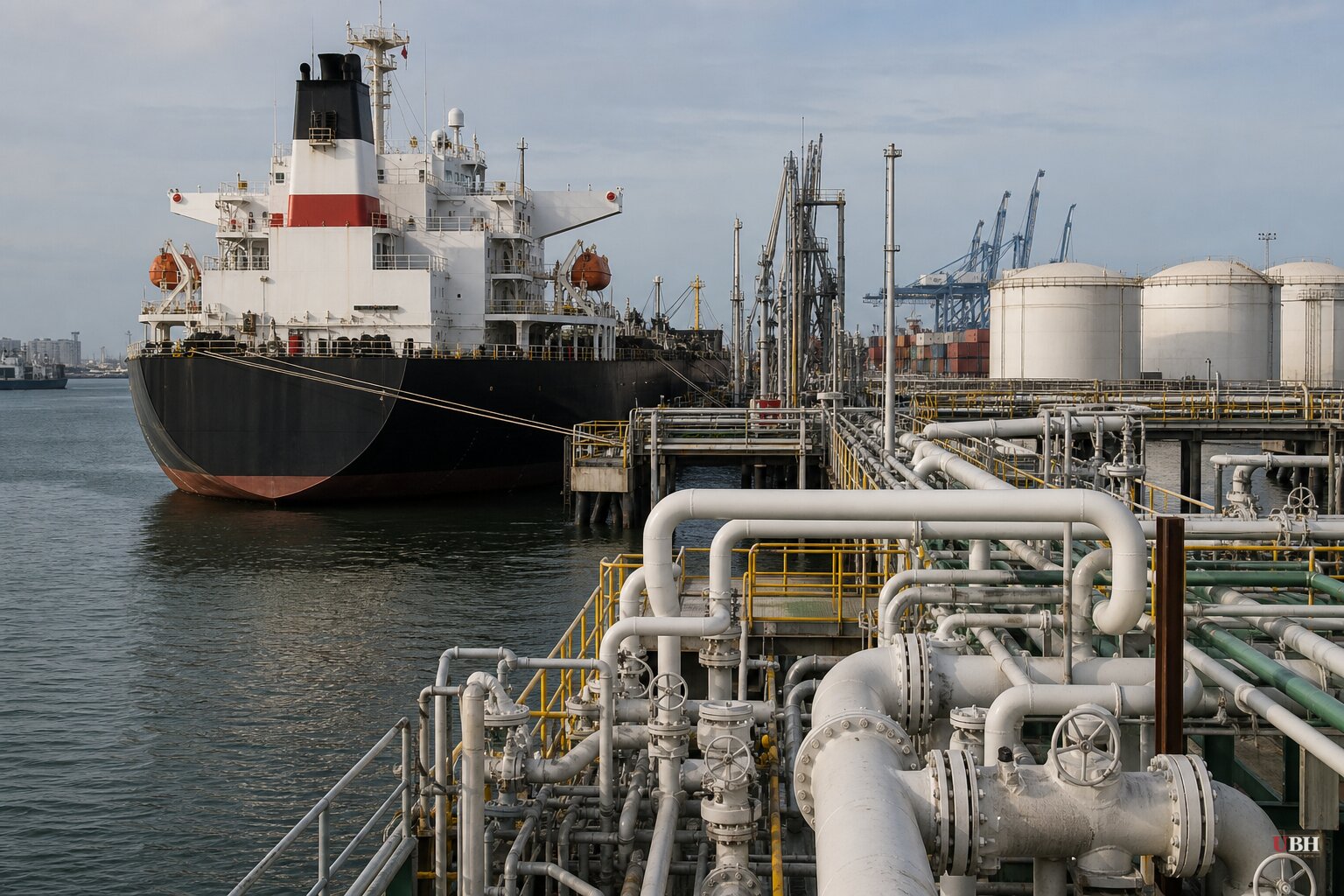
Since diesel stockpiles began sliding toward record-low territory amid the Iran standoff and war-damaged refineries earlier this month, the numbers have gotten worse, not better. The Energy Information Administration reported Wednesday that distillate fuel oil inventories, the category that includes diesel and heating oil, fell to 103.4 million barrels for the week ending August 21. That's the lowest level ever recorded for this time of year in data going back to the early 1980s, according to the EIA.
The drop from the prior week was about 2.2 million barrels, leaving stocks roughly 14% below the five-year seasonal average. Retail diesel is running above $5.60 a gallon nationally, according to Bloomberg reporting carried by The Straits Times, The Business Times, and Transport Topics. That's within 20 cents of the all-time record set in 2022 and the highest level since the US-Iran war began.
The American Automobile Association tracked the climb in real time before the EIA's Wednesday release. AAA data cited by the Epoch Times showed diesel rising about 4 cents in a single day on August 19, up 15 cents over the prior week, with regular gasoline also climbing back above $4 a gallon. GasBuddy's Patrick De Haan, who heads petroleum analysis at the price-tracking firm, wrote on X that diesel drivers "felt the pressure even more acutely" than gasoline buyers, pointing to the closed Strait of Hormuz and continued Ukrainian strikes on Russian refineries as the drivers.
Three forces are converging on the same barrel count. First, US refiners are exporting diesel at close to 1.9 million barrels per day, a record pace, because foreign buyers are paying up for it, according to Crypto Briefing's read of the export data. Second, exports of refined fuel through the Strait of Hormuz have been reduced to almost nothing as a result of the Iran war, per Bloomberg reporting distributed through the Business Times and Straits Times. Third, Russia has suspended diesel exports following Ukrainian drone strikes on its refineries and is reportedly considering extending that ban another month, squeezing global trade partners who'd normally look to Moscow for supply.
Crypto Briefing frames the story mostly around the domestic squeeze on truckers and Northeast heating-oil households, while the Bloomberg-sourced wire coverage running in the Business Times, Straits Times, and Transport Topics keeps the lens on the global supply chain and geopolitics. Both are accurate; they're just answering different questions about the same 103.4 million barrels.
The seasonal timing makes this more than an abstract inventory number. Diesel demand typically climbs starting in October as Northern Hemisphere heating season and harvest overlap with Southern Hemisphere planting season, according to Bloomberg's reporting. Millions of Northeast households still heat with oil-fired furnaces. Farmers need diesel for combines and tractors during harvest, which is happening or about to happen in much of the country now. Starting that seasonal surge from the lowest inventory base on record, rather than a normal one, is the mechanism analysts are watching.
Refiners, for their part, are cashing in. US refiner margins for diesel have hit records in recent weeks, according to Bloomberg, which is straightforward evidence of how much foreign demand is bidding up US-made fuel. That's good news for refining companies' earnings and bad news for anyone paying at the pump or the delivery truck.
There's a broader energy-security angle sitting alongside the diesel story. NPR reported that the Strategic Petroleum Reserve has fallen below 300 million barrels, down from 415 million barrels at the start of 2026, the lowest level in more than four decades. Kevin Book, managing director of ClearView Energy Partners, told NPR's Danielle Kurtzleben that the reserve is "on its way down" rather than being refilled, unlike the last time it sat this low in the 1980s. Book said the Trump administration is currently running a 172-million-barrel oil exchange, which unlike an outright sale gets repaid with interest in oil, and that a roughly 30-country coordinated release through the International Energy Agency is about 75% complete. He estimated that without these releases, prices could be $10 to $15 a barrel higher.
The reserve figures Book cited cover crude oil, not distillate, so they don't directly refill diesel stocks. But they underscore that the US has less cushion across the board than it's had in decades heading into a winter where both crude reserves and diesel inventories are historically thin at the same time.
President Trump has pushed back on suggestions the Strait of Hormuz remains a chokepoint, posting on Truth Social on August 18 that "the Hormuz Strait is open and operating" and that "all water mines have been removed or detonated." That claim sits alongside a UK Maritime Trade Operations report, also from August 18, that a vessel transiting the strait was struck by an unknown projectile, damaging its engine room and injuring a crew member, with the Omani coast guard assisting. The two accounts aren't necessarily contradictory. A strait can be technically open to traffic while remaining dangerous, but they represent competing characterizations of the same waterway that markets are pricing as constrained.
The open question is how long Russia extends its diesel export ban and what OPEC+ producers do about crude output heading into the fourth quarter. Neither has been resolved as of this week, and EIA's next distillate report will show whether the drawdown accelerates as harvest season hits.
Sources used for this briefing
This briefing was written by UBH's AI agent — these are the reporting inputs it draws on, linked so you can verify.


