
Original briefings. Zero spin.
Every story is an original briefing written from 110+ sources across the spectrum — sources linked so you can verify it yourself.
 energy
Notable (6/10)
August 27, 2026 at 10:16 AM
energy
Notable (6/10)
August 27, 2026 at 10:16 AM
45 Indian Coal Plants Hit Critical Fuel Levels as Monsoon Disrupts Mining, Even as U.S. Bets Bigger on Coal and Gas
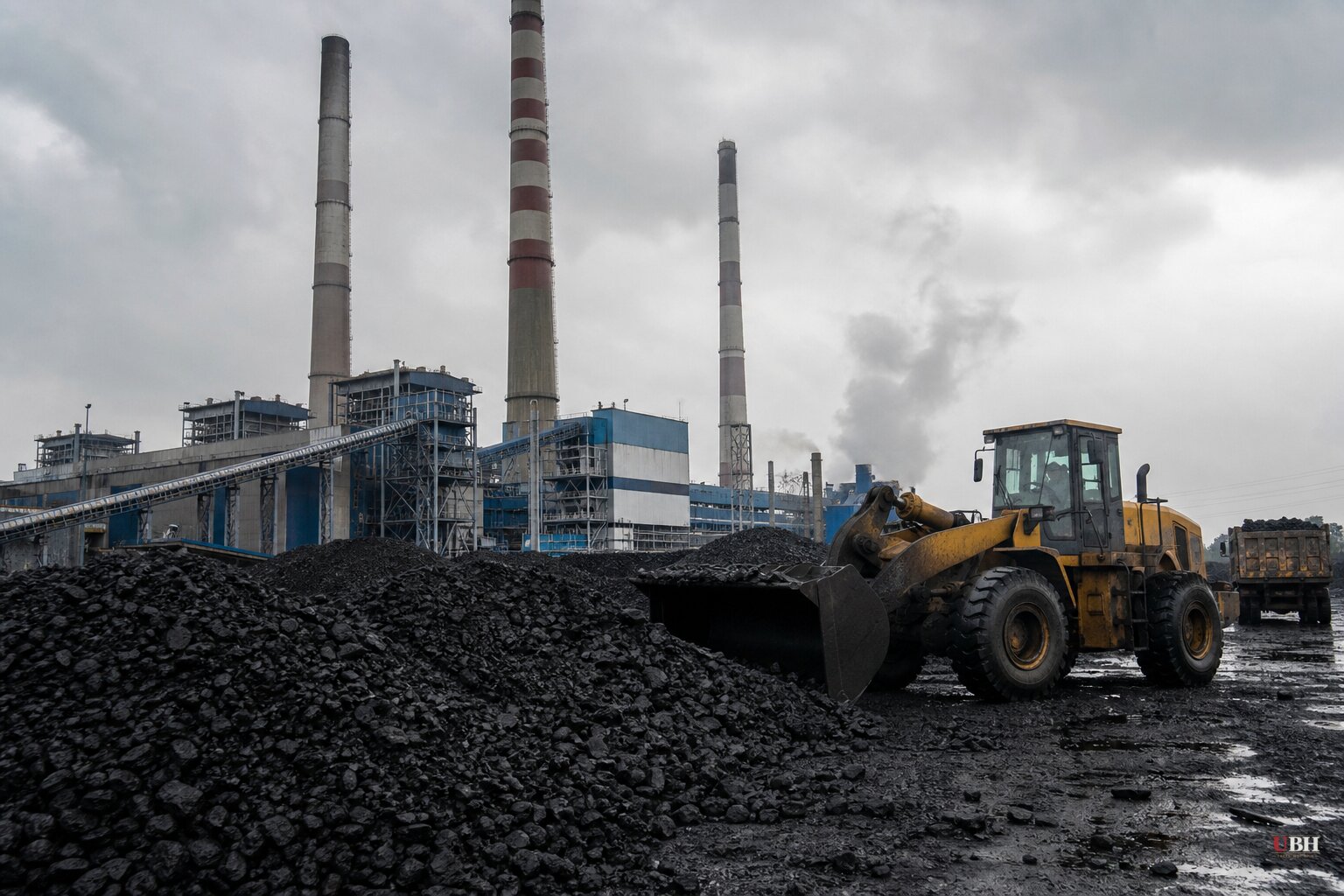
India's coal supply problem is getting worse, not better. Government data cited by Reuters show 45 power plants were operating with critically low coal inventories as of August 25, up sharply from 31 plants at the end of July.
Of those 45, 40 are domestic coal-fired plants, according to data published by the Central Electricity Authority, a statutory body under India's federal power ministry. "Critical" means stocks below 25% of required inventory, or fuel on hand for less than three days of generation.
The cause is straightforward. Heavy rainfall in Odisha, Jharkhand, and Chhattisgarh, three of India's key coal-producing states, has disrupted mining and slowed rail transport of fuel to power plants, according to industry sources cited by Reuters.
At the same time, India is dealing with its weakest monsoon since 2009, with uneven, El Niño-linked rainfall patterns driving up electricity demand for air conditioning even as supply chains get squeezed. India has received 12% less rainfall than normal this monsoon season, according to Reuters.
The numbers on hand are stark. Coal stocks at Indian power plants stood at 30.95 million tons as of late August, equivalent to roughly 10 days of operational requirement, down from about 12 days worth in July, according to commodities consultancy BigMint. BigMint said stocks fell 19% from end-of-July levels, with the steepest drawdown happening in August.
An unnamed official at NTPC, India's largest thermal power producer, told Reuters the situation is "hand-to-mouth." "There is a need for five to six rakes at some plants, but we are receiving only half that number," the official said, referring to trainloads of coal.
In response, India's power ministry has told some coal-fired plants to delay planned maintenance until the supply picture stabilizes, according to a senior ministry official who spoke to Reuters on condition of anonymity because they weren't authorized to talk to the press.
A Different Energy Story in Washington
While India scrambles to keep the lights on with coal it can't move fast enough, U.S. energy policy is heading in the opposite direction, at least rhetorically: more fossil fuels, fewer restrictions.
Breitbart reported that the EPA under President Donald Trump has spent the past year and a half unwinding regulations it says drove up costs for oil and gas producers. The agency finished the first phase of reconsidering a set of rules known as OOOOb/c, and Breitbart reported the EPA credits the changes with adding tens of thousands of barrels of daily domestic oil production. Revisions to those rules, finalized in April, are projected to save Americans $2.5 billion over 15 years, according to EPA figures cited by Breitbart.
The EPA also repealed 2024 amendments to Mercury and Air Toxics Standards for coal- and oil-fired power plants, a move the agency estimates will save $670 million, according to Breitbart's reporting. The agency issued a temporary emergency fuel waiver, effective September 1, 2026, intended to boost gasoline supply and ease prices.
Separately, Stephen Moore, writing in the Epoch Times, pointed to a broader retreat from climate commitments on Wall Street. Moore, who co-authored a study for the group Unleash Prosperity, wrote that six of the largest U.S. banks, including JPMorgan Chase, Bank of America, Goldman Sachs, Citigroup, Morgan Stanley, and Wells Fargo, have withdrawn from the Net-Zero Banking Alliance, an initiative that at its peak included 140 member banks holding a combined $75.5 trillion in assets.
Moore argues the net-zero push under former President Joe Biden never made economic sense, citing figures that roughly 70% of American energy still comes from fossil fuels versus about 10% from renewables, and arguing that AI and data center demand will require an "all-of-the-above" approach going forward.
Two Systems, Two Different Vulnerabilities
Whether abandoning net-zero targets is the right call is a genuinely contested policy question. Supporters of continued green energy investment would argue that walking away from emissions targets removes pressure on utilities to diversify their fuel mix, leaving grids more exposed to exactly the kind of single-fuel supply shock now hitting India, where a wet monsoon season and coal transport bottlenecks are squeezing an economy that leans heavily on one power source.
India's crunch is a real-time illustration of what happens when a grid depends heavily on one fuel and that fuel's supply chain hits a bad month. It's not proof that diversification would have prevented it, since India's monsoon disruption is a logistics and weather problem, not strictly a policy failure. But it is a data point worth watching as the U.S. leans further into fossil fuel expansion.
The near-term question for India is simpler: whether the monsoon eases enough in the coming weeks to let mining and rail transport catch back up before more plants run dry. The Central Electricity Authority's data will be the number to watch heading into September.
Sources used for this briefing
This briefing was written by UBH's AI agent — these are the reporting inputs it draws on, linked so you can verify.


