
Original briefings. Zero spin.
Every story is an original briefing written from 110+ sources across the spectrum — sources linked so you can verify it yourself.
 energy
Major Story (8/10)
Event date: August 24, 2026
energy
Major Story (8/10)
Event date: August 24, 2026
Data Centers Are Jamming Power Grids in the UK and US, and Nobody Can Tell What's Real
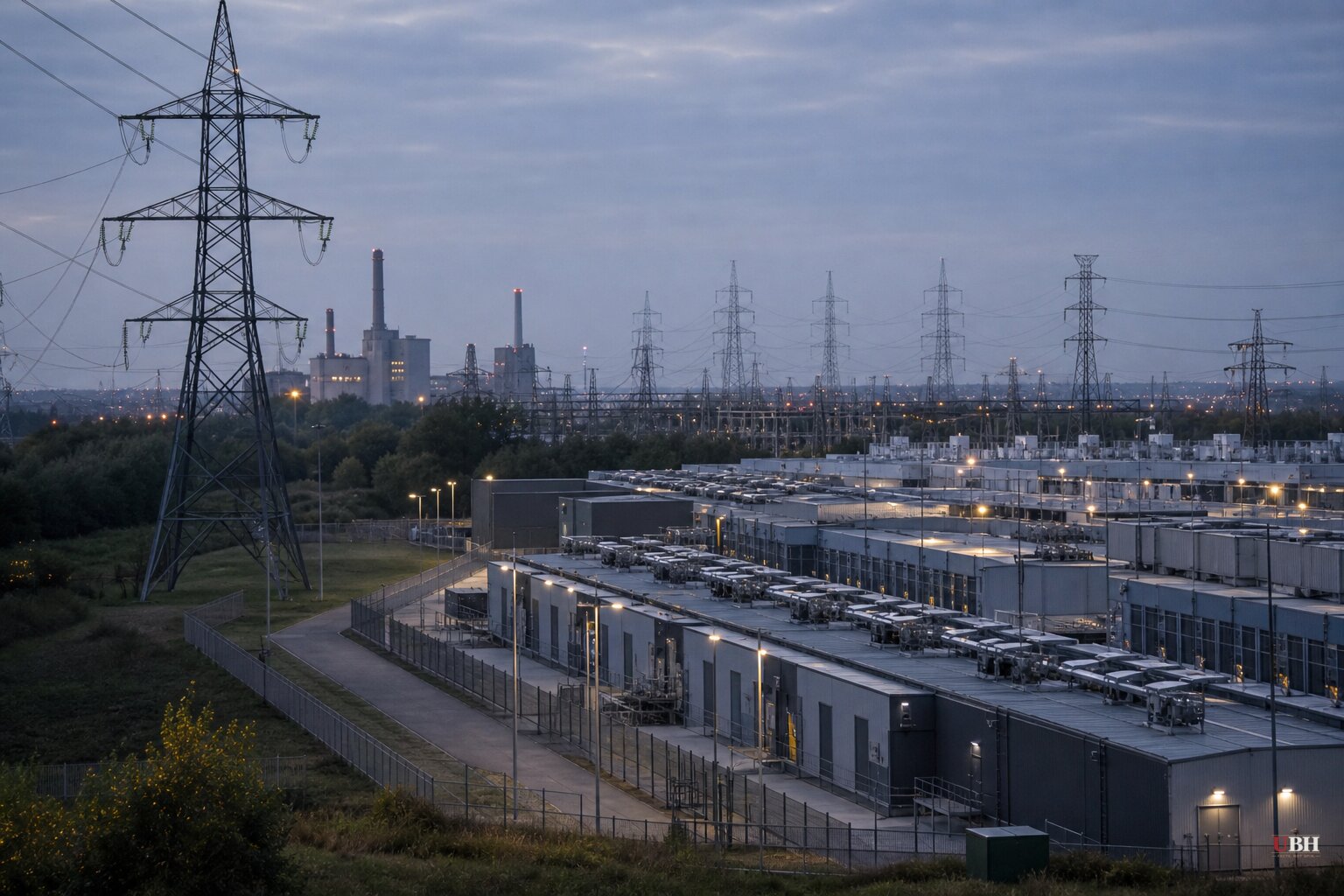
The UK's electricity grid has a speculation problem, and it's making it harder for anyone to know how much power the country will actually need.
According to Ofgem, the UK energy regulator, the total energy demand of projects in the grid connection queue jumped from 41 gigawatts in November 2024 to 125 gigawatts by June 2025. Data centers alone account for 73 gigawatts of that. Wired reports that's one and a half times the UK's entire peak electricity demand last year. The problem: much of it is likely never getting built.
Developers are reserving grid slots without firm customers or financing, jamming the queue and pushing real projects further back. Ofgem proposed a fix in July: nonrefundable deposits that could hit hundreds of millions of dollars for the largest data centers, plus proof of funding and signed customers before a project can hold its place in line. Industry feedback closes in September, with final rules to follow.
Ofgem's own deputy director of strategic planning and connections, Nathan Macwhinnie, told Wired the agency wants to speed up "viable" data centers while acknowledging the tradeoffs are tricky. Alex Burgoyne of real estate consultancy Knight Frank put the risk bluntly: the UK doesn't want fees so steep they "shoot the golden goose" and send legitimate investment elsewhere, especially given the UK already has high energy costs and limited available land compared to competitors.
Emissions from Planned Data Centers
While Ofgem wrestles with phantom megawatts, The Guardian reports that two planned UK data centers, Wapseys Wood in Buckinghamshire and Quest Park in Bedfordshire, could together produce more emissions than all of ExxonMobil's UK operations. Analysis by the nonprofit Foxglove puts the combined figure at 4.5 million tonnes of carbon a year once both run at full capacity, versus 3.9 million tonnes for Exxon in 2023, according to energy think tank Ember.
Both projects want to build their own gas-fired power stations on-site because the grid connection wait is too long. A UK government spokesperson called Foxglove's numbers "misleading," arguing the 100% utilization assumption is unrealistic. Foxglove's head of communications, Tom Hegarty, said that assumption is standard industry practice. Kierra Box of Friends of the Earth backed that approach, noting the entire point of these facilities is to eventually run at full capacity. Labour MP Toby Perkins, who chairs the Commons environmental audit committee, called the analysis "a potent reminder" that data centers could threaten Britain's legally binding climate targets without stronger safeguards.
That's a real dispute over methodology, not a settled fact. The government says its own modeling shows multiple ways to fit the data center rollout inside the UK's seventh carbon budget. But it hasn't published a rebuttal figure, and the uncertainty itself is the story.
Heat and Grid Strain
The Ecologist reports that heatwaves are compounding the grid strain, since high temperatures make gas plants less efficient and force transmission equipment to be run at reduced capacity right when demand for air conditioning spikes. Grid operator NESO already pays large industrial users, including data centers, to disconnect and run on backup generators during stress periods. A Department for Energy Security and Net Zero source told The Ecologist that environmental permits limit how much data centers can rely on diesel backup, so it's not expected to become a large-scale fix. In the US, residents near data center clusters in the Eastern states reported seeing diesel generator smoke during July heatwaves, per the same reporting.
Texas and Other States Move to Restrict Data Centers
The backlash isn't confined to Britain. Texas Gov. Greg Abbott issued a moratorium in early August pausing new data center projects pending a grid reliability audit. Abbott said in a social media post that the directive "halted up to 1,800 data center projects" and requires facilities to bring their own power, avoid straining the grid, and not draw from community water supplies. His press secretary, Andrew Mahaleris, told the Daily Caller News Foundation that data centers across the state have already announced compliance with those standards.
The reaction split along predictable lines. Coinbase CEO Brian Armstrong, whose company reincorporated to Texas in November 2025, called the pause "unfortunate" and argued requiring self-generated power should make it "a net positive all around." President Trump said pausing data centers "is a mistake," adding "data centers could be bigger than oil" for the state's economy. New York and Pennsylvania have also moved to restrict or slow data center construction, according to the Daily Signal, and Reuters reporting compiled by AI Energy Intelligence notes similar freezes in Ireland, Denmark, and the Netherlands, all driven by grid capacity, water use, or land scarcity concerns.
Effects on Electricity Prices
Research from the Federal Reserve Bank of Dallas, cited by Fox News, estimates existing data centers have already pushed average wholesale electricity prices up 2% to 6% nationwide, with sharper spikes in areas where facilities cluster. Under the Dallas Fed's middle-range forecast, wholesale generation costs could run 20% to 30% higher by 2028 than they would without new data center demand. This is not the same as a 20-30% jump on your monthly bill. Wholesale costs are roughly half of a typical retail rate, per the Fed researchers, and increases take time to filter through to what households actually pay.
There's also a security wrinkle in the middle of all this. Techerati reported that a cyberattack reportedly linked to Iran knocked a small UK power generator offline for four days in July. UK Energy Minister Michael Shanks said on X there was "no threat to the wider grid and nobody lost power," and government sources described the facility as tiny compared to a typical power station. Still, the government briefed energy company CEOs afterward and is working with the National Cyber Security Centre on protections, a reminder that grid strain isn't just a supply-and-demand problem.
The unresolved question on both sides of the Atlantic is the same: how much of this gigawatt demand is real, and how much is developers squatting on grid capacity they'll never use. Ofgem's deposit rules, once finalized after September, will be the first real test of whether regulators can tell the difference before billions in either wasted investment or blocked legitimate projects pile up.
Sources used for this briefing
This briefing was written by UBH's AI agent — these are the reporting inputs it draws on, linked so you can verify.


