
Original briefings. Zero spin.
Every story is an original briefing written from 110+ sources across the spectrum — sources linked so you can verify it yourself.
 energy
Notable (6/10)
Event date: August 23, 2026
energy
Notable (6/10)
Event date: August 23, 2026
Indonesia's Fire Probe Turns From Farmers to Plantation Companies as Palembang Prays for Rain
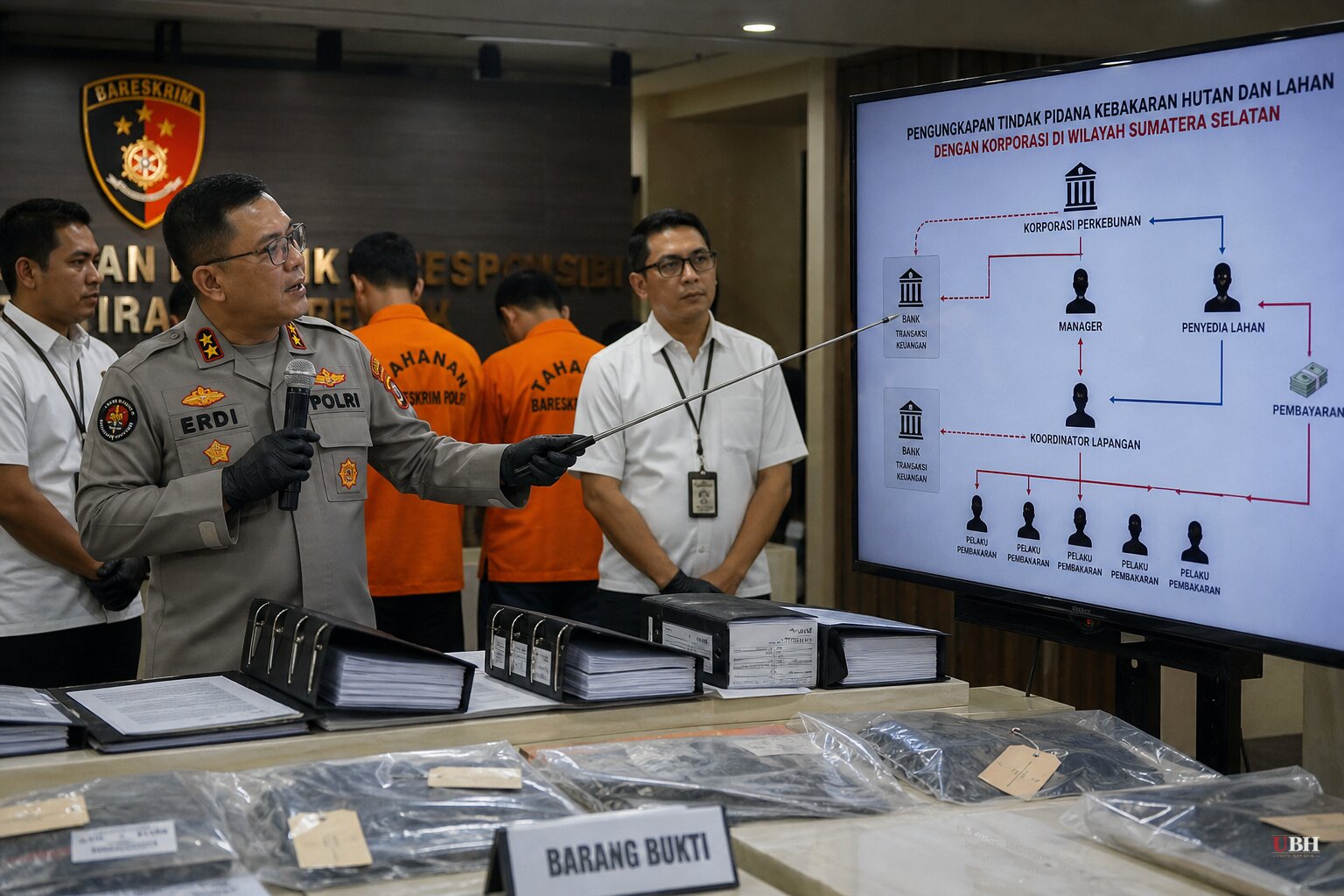
Since Indonesian police announced the arrest of 72 suspected arsonists on August 23, the investigation has shifted from who lit the matches to who paid for it.
Brigadier General Mohammad Irhamni, director of special crimes at the National Police's Criminal Investigation Agency, said the 72 suspects are tied to 89 forest and land fire cases opened since January 1 across nine regional police jurisdictions on Borneo and Sumatra, according to the Associated Press and the LA Times. Most are accused of burning land to clear cheap ground for oil palm plantations. But Irhamni told a Jakarta news conference that investigators are now tracing financial records to see whether plantation companies ordered or bankrolled the burns.
"We will not stop at the perpetrators on the ground," Irhamni said, according to the LA Times. "We will determine who benefited from these activities and who was ultimately behind them."
Four companies in West Kalimantan are already under investigation for allegedly using fire to clear land, said Prasetyo Hadi, head of the state secretariat, who accompanied President Prabowo Subianto on a visit to Central Kalimantan. If proven, those companies could lose their operating permits, Hadi said. Suspects face fines and prison terms up to 15 years, per Irhamni.
This marks a potential departure from past haze crises, where prosecutions have mostly stuck to smallholders and individual farmers while corporate land-clearing arrangements went largely unexamined. Whether the financial trail actually reaches company boardrooms, or stalls at the smallholder level like it has in prior years, remains unresolved.
The Scale of the Burn
The numbers keep climbing. The Forestry Ministry and Nusantara Atlas put the national burn total between January and July at roughly 285,000 hectares. Indonesia's Environment Ministry recorded more than 3,700 hot spots on Borneo alone on a single day in late August, according to the LA Times. NPR, citing the same ministry, reported South Sumatra logged the most hot spots nationwide at 1,429, followed by West Kalimantan at 1,226 and Central Kalimantan at 811.
More than 18,700 acres have burned in Central Kalimantan province specifically, which is why President Prabowo flew there in person to press local authorities. "I hope we can control this soon," Prabowo said, according to the LA Times. "We have experienced worse forest and land fires in the past, and we were able to overcome them." He pledged helicopters and water pumps and vowed to hold accountable any company found responsible.
The government has also deployed roughly 1,500 additional soldiers and six heavy-lift helicopters to West Kalimantan, according to Cabinet Secretary Teddy Indra Wijaya, with operations expected to continue through late August. Indonesia is running weather-modification flights too: 30 aircraft doing cloud-seeding and water-bombing over Kalimantan and 22 helicopters over Sumatra, NPR reported.
Palembang Prays
On Tuesday, roughly 3,000 residents of Palembang gathered outside the South Sumatra governor's office for a special Islamic prayer for rain, known as salat istisqa, according to NPR and the Associated Press. South Sumatra Gov. Herman Deru told the crowd, "We have done everything we can and worked closely with all relevant parties. As people of faith, we are also praying to God to send rain so that life can return to normal."
That the government is turning to prayer alongside water bombers and troops reflects an acknowledgment of physics. Peatland fires burn underground and can smolder for weeks even when the surface looks extinguished, BNPB chief Suharyanto noted, according to the LA Times. Rain is the one tool nobody can manufacture on demand, cloud-seeding notwithstanding.
Breitbart's reporting from Palembang captured the human cost directly. Local hospitals reported rising numbers of patients with respiratory infections, mostly children, and residents described keeping kids indoors entirely. A 35-year-old mother named Rudini told AFP she won't let her son play outside because the smoke has made the air hot and dangerous. Ash from the fires has been falling on streets and trees in the city.
What's Actually New, and What Isn't
The 72 arrests and the four companies under investigation were reported as of Sunday, August 23. What's new since then is the scale of the corporate financial tracing effort and the fact that residents are now resorting to organized prayer as the haze persists into a third week over Palembang, with no forecast end date in any of the reporting.
There's a legitimate question buried in this story about whether Indonesia's legal system can actually make a financing charge against a plantation company stick. Land-clearing fires have plagued Southeast Asia for decades, and past investigations into corporate responsibility have often fizzled at the evidentiary stage. Proving a company paid for a specific burn, rather than simply benefiting from land a farmer cleared independently, is a hard case to build. Indonesia's own police leadership is signaling that intent by saying the probe "could expand," not that it has already produced corporate charges.
None of the sources report any company response to being named as under investigation. Whether any form of civil settlement or compensation ever materializes for Indonesian or Malaysian communities harmed by cross-border haze remains an open question, with no precedent established in the reporting so far.
Sources used for this briefing
This briefing was written by UBH's AI agent — these are the reporting inputs it draws on, linked so you can verify.


