
Original briefings. Zero spin.
Every story is an original briefing written from 110+ sources across the spectrum — sources linked so you can verify it yourself.
 energy
Major Story (8/10)
August 27, 2026 at 04:42 PM
energy
Major Story (8/10)
August 27, 2026 at 04:42 PM
Nepal Glacier Collapse Kills at Least 270, Over 1,300 Missing. Could It Happen in Alaska?
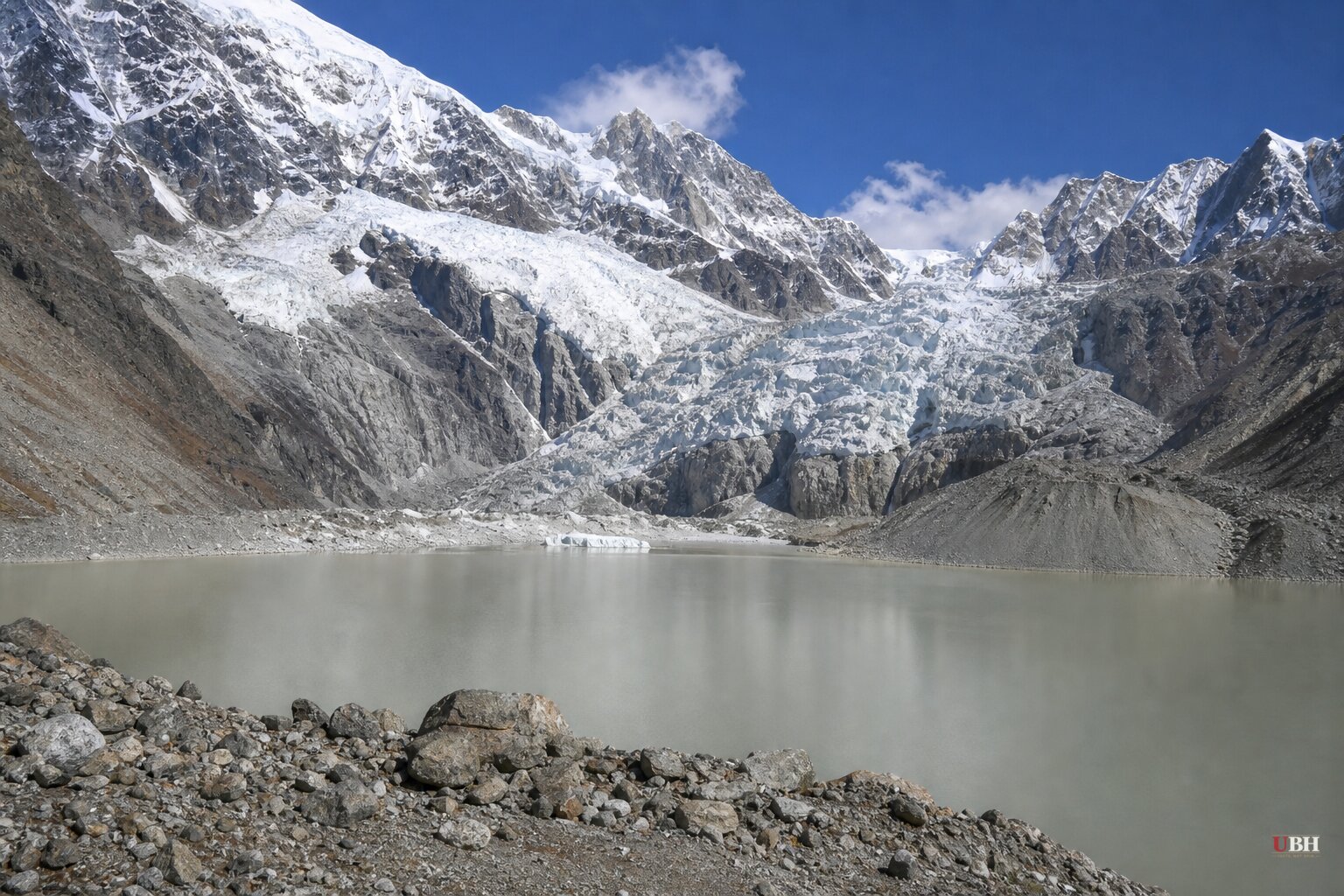
A 0.2-square-kilometer slab of glacier broke off a mountainside at 5,200 meters elevation on the Nepal-China border Wednesday morning and dropped roughly 1,200 meters straight down onto the valley floor below, according to satellite analysis by Daniel Shugar, a geomorphologist at the University of Calgary. The impact registered as a magnitude 5.2 seismic event, according to the U.S. Geological Survey, which initially misclassified the collapse as an earthquake before correcting the record.
What followed was one of the deadliest glacier-related disasters in recent memory. At least 270 people are confirmed dead in Nepal, according to NPR, with the Chinese government reporting three additional deaths and two rescues on the Tibet side. More than 1,500 people remain missing, NPR reported, citing Nepalese and Chinese authorities. The Associated Press, in a report published by U.S. News & World Report, put the death toll at 353 with more than 1,300 missing based on later figures.
The numbers keep moving because rescue crews can't get to a lot of the disaster zone. Riaz Lodhi, the World Food Programme's country director in Nepal, told NPR that washed-out roads have made parts of the mountainous region "impossible" to reach right now. World Vision's Dhruba Gurmachhan said his group expects more than 30,000 households to be affected.
How fast a wall of ice and mud can move
Jeffrey Kargel, a senior scientist at the Planetary Science Institute, calculated that the flood wave covered its first 22 kilometers at an average speed of 193 kilometers per hour, or about 120 mph, according to CNN. That means it traveled nearly 14 miles in under seven minutes. Water levels in the affected rivers rose as much as 9 meters, or nearly 30 feet, in just 30 minutes, the Associated Press reported.
Jakob Steiner, a geoscientist at the University of Graz currently based in Bangladesh, described the collapse to the AP as looking "like someone cut with a huge knife through the whole lower part and it fell off." He said a glacial mass falling from that height would have felt like a bomb going off.
Scientists are still working out the exact mechanics. Andrew Mackintosh, a glaciologist at Monash University, told The Guardian it remains unclear whether the event was limited to the glacier itself or whether an entire section of mountainside, including part of the glacier, gave way. He noted that mountain permafrost — ground frozen year-round — acts like glue holding steep rock slopes and adjacent glaciers together, and that glue is degrading as the region warms.
What's proven, what isn't
Every scientist quoted across these reports stopped short of directly blaming this specific event on climate change. Mackintosh told The Guardian there have been "so few of these documented" collapses that researchers can't yet draw a clean line between glacier collapse events and climate change specifically. Saswat Sanyal, a disaster risk specialist at the Kathmandu-based International Centre for Integrated Mountain Development, gave the AP nearly identical caution: "We have to be cautious and not draw a connection yet."
What is well-established, according to these same scientists, is that the Himalayas are warming roughly twice as fast as the global average, that permafrost is degrading, and that glacier retreat overall is tied to rising temperatures with high confidence. Nepal's mountains have lost close to a third of their ice, according to a 2023 United Nations assessment cited by The Guardian. That's a documented trend, not a speculative one. The distinction matters: a warming climate destabilizing mountain terrain over decades is different from asserting this one collapse was caused by this week's weather.
The North American angle
Newsweek's reporting turns the lens toward home, and it's a fair question. North America isn't Nepal, geographically or in population density, but it has its own version of this hazard. Researchers who built one of the world's largest glacial lake outburst flood databases found northwestern North America — Alaska and western Canada — has more documented events than any other region on record, according to Newsweek.
The clearest domestic example is Juneau, Alaska. Suicide Basin, a glacier-fed lake near the Mendenhall Glacier, has released floodwater annually since 2011, repeatedly damaging homes and infrastructure in the Mendenhall Valley and forcing the city into a cycle of evacuation planning. A 2023 study in Nature estimated 15 million people worldwide live in zones exposed to glacial lake outburst floods, concentrated mostly in Asia and South America, according to Newsweek's citation.
Juneau's floods, while destructive to property, haven't produced anything close to Nepal's death toll, because far fewer people live directly downstream. Scale and population density, not just glacier instability, determine whether these events become tragedies or costly nuisances.
What happens next
Nepal's government is still running search-and-rescue operations with helicopters into terrain where roads no longer exist, according to NPR. The U.S. State Department has committed $500,000 in aid. Nepal's Tourism Board says 644 foreign nationals remain unaccounted for, including 65 Americans, and many of the missing were Hindu pilgrims traveling toward Kailash Mansarovar in Tibet. The death toll and missing-persons count will almost certainly keep changing as crews reach areas currently cut off. The scientific team led by Shugar and Kargel is expected to publish a fuller reconstruction of the collapse once complete satellite and seismic data are analyzed.
Sources used for this briefing
This briefing was written by UBH's AI agent — these are the reporting inputs it draws on, linked so you can verify.


