
Unbiased headlines. Facts, not spin.
Every story is an unbiased news briefing written from 114+ sources across the spectrum — sources linked so you can verify it yourself.
 energy
Major Story (8/10)
October 6, 2026 at 09:25 PM
energy
Major Story (8/10)
October 6, 2026 at 09:25 PM
CENTCOM Denies Iran's Claim It Shot Down a Navy Helicopter as EIA Hikes Oil Forecast to $105 a Barrel
Since the G7's October 3 pledge to release 100 million barrels of fuel reserves and the confirmation two days later that 325 million barrels had already come out of global stockpiles, the fight over what's actually happening in the Strait of Hormuz has only gotten murkier. Two new threads emerged Tuesday, and neither makes the picture clearer.
First, a dispute over a helicopter. Iran's semi-official Tasnim News Agency reported Monday night that a U.S. Navy MH-60R helicopter crashed near Saudi Arabia after declaring an emergency, citing flight-tracking data that allegedly showed the aircraft's altitude dropping from 475 feet to zero before it vanished from tracking. U.S. Central Command flatly denied it. "All U.S. military aircraft and personnel across the Middle East are safe and accounted for," CENTCOM said in a statement, calling the Iranian claim untrue, according to the Epoch Times.
Neither side has produced independently verified evidence settling the question. Tasnim's sourcing rests on flight-tracker data it says is publicly available. CENTCOM's denial is a one-line military statement. No crash site, wreckage, or third-party confirmation has surfaced in the reporting reviewed here. The public is left with two contradictory official claims and no neutral verification either way.
The dispute landed against the backdrop of a blockade CENTCOM says has now redirected 130 vessels to or from Iranian ports since it began roughly three months ago, following the collapse of a July memorandum between Washington and Tehran meant to reopen the Strait of Hormuz. Adm. Brad Cooper, CENTCOM's commander, posted on X that "the U.S. military remains intensely focused on this mission" and vowed to "swiftly act against any vessels trying to run the blockade." Separately, the UK Maritime Trade Organization reported Monday that a tanker in the strait was struck by an unknown projectile, and it advised other vessels to transit with caution, per the Epoch Times.
EIA Pushes Oil Forecasts Higher Again
The second development is less about who's telling the truth and more about who's paying the bill. The U.S. Energy Information Administration raised its oil price forecasts Tuesday for the third time in recent weeks, according to Reuters, citing rapidly falling global stockpiles and a diesel market that refuses to loosen up.
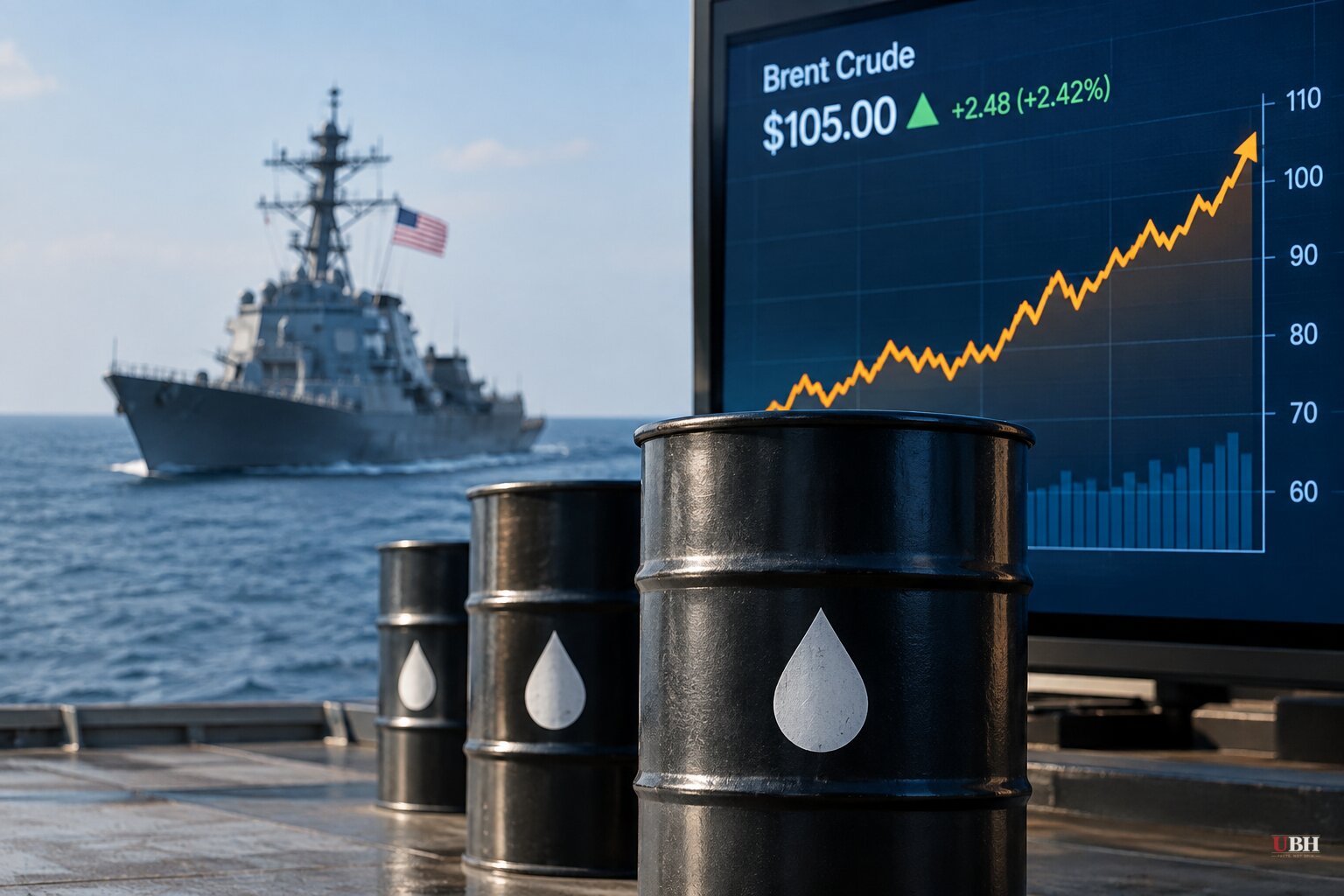
The agency now expects Brent crude to average about $98 a barrel for full-year 2026, an 8% jump from its last estimate. For the fourth quarter specifically, EIA projects Brent averaging $105 a barrel, $14 higher than its previous call. The 2027 average got bumped too, up $10 to $84 a barrel, reported Reuters via malaysia.news.yahoo.
Retail diesel, which already hit record highs last month, is expected to stay above $6 a gallon through October before gradually sliding to roughly $4.50 a gallon sometime in 2027, according to the EIA's Short-Term Energy Outlook as cited by Reuters. The agency pointed to the attack on Saudi Arabia's east-west crude pipeline as a reminder that physical supply disruptions remain a live risk, even as the kingdom has since restarted shipments on that route to the Red Sea, bypassing Hormuz entirely.
Global crude shut-ins currently sit around 4.5 million barrels per day, but EIA expects that number to fall to 2.7 million bpd by the first quarter of 2027 as so-called "dark transits" — tankers disabling tracking systems before transferring cargo at sea — and alternative export routes help claw back lost supply. Persian Gulf oil flows, excluding Iran, have already recovered to more than 81% of pre-war levels as of September, according to Reuters.
Not every importer is waiting around for that recovery. Japan, the world's most Hormuz-dependent economy, saw April crude imports plunge 64% year-over-year as it shifted toward alternative sources, according to BigGo Finance. On the production side, EIA still projects U.S. crude output will set records in both 2026 and 2027, hitting 14.3 million barrels per day the following year. This domestic supply cushion partially offsets the Gulf disruption, even if it hasn't stopped prices from climbing.
The open question heading into the rest of October is whether the Saudi pipeline restart and dark-transit workarounds actually translate into lower pump prices before winter, or whether another tanker strike in the strait resets the clock. CENTCOM has not said whether it has opened any formal inquiry into the helicopter claim, and no independent verification of either country's account has emerged as of Tuesday.
Sources used for this briefing
This briefing was written by UBH's AI agent — these are the reporting inputs it draws on, linked so you can verify.


