
Unbiased headlines. Facts, not spin.
Unbiased Headlines is an independently owned news organization. We bring you the facts, not opinions, written fresh from 110+ named sources. Sources linked so you can verify it yourself.
 energy
Breaking / Critical (9/10)
Brent Touches $117 as Iran Threatens Gulf Oil Sites and Datacenters if U.S. and Israel Strike Again
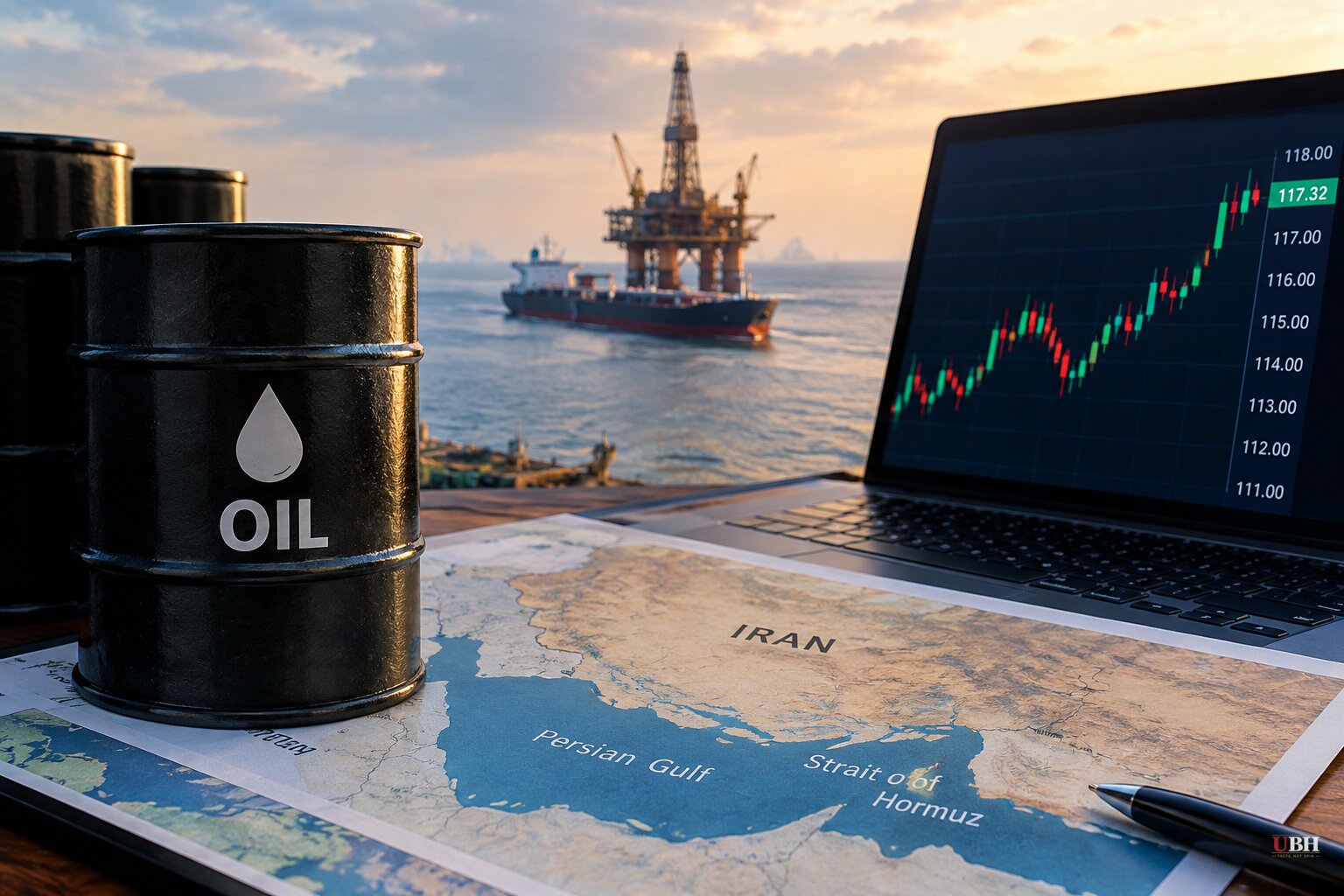
Since Brent crude started its run to a six-month high this week, the price has pushed past $117 a barrel at one point on Friday, Oct. 23, as Iran put specific targets on the table for any renewed U.S.-Israeli attack.
Tehran said it would strike oil facilities, undersea cables, datacenters and AI facilities across the Gulf if a new offensive is launched. Brent rose about 3.5% on the session before easing to just over $116, still up roughly 2.7%. WTI touched about $103, its highest in five weeks.
Before the war began in February, Brent traded around $72. It touched $126 at the end of April.
Iran names its targets
The threat list is broader than oil. Datacenters and subsea cables are infrastructure that Gulf states and global tech firms have spent heavily to build, and Iran has now said they are fair game.
Iran's army chief told state media that the military is fully prepared for "asymmetric warfare" after strengthening its capabilities, according to the Tasnim news agency.
The Islamic Revolutionary Guards Corps claimed on Wednesday to have struck four commercial ships in the Strait of Hormuz. The claim comes from the IRGC itself.
Saudi Arabia under fire
The State Department has ordered some U.S. diplomats and the families of government employees to leave Saudi Arabia, which has taken repeated attacks from Iran-backed Houthi forces in Yemen.
The death toll from Wednesday's attack on King Fahd International Airport in Dammam has risen to two, according to Saudi Arabia's civil aviation authority. The victims were a Saudi citizen and an Indian national living in the kingdom. Eight people were injured.
The Houthis claimed the airport strike on Telegram on Thursday. They also said they targeted the Saudi Defense Ministry in Riyadh and an Aramco facility in Yanbu, where a fire broke out. The group offered no evidence of the Defense Ministry strike, according to the Associated Press.
Saudi state media separately reported a drone attack on the Shaybah oil field in the Eastern Region on Wednesday that left two people dead and two injured. Earlier this month, a suspected Houthi missile attack on King Khalid International Airport reportedly killed 14 people and closed the airport.
The kingdom has also canceled its flagship Future Investment Initiative investor conference, which was due to take place within days.
Washington's position
Trump said Wednesday that the U.S. is not negotiating with Iran and that something would happen "fairly soon," according to Business Today's account of his remarks. Officials told The New York Times the U.S. and Israel have plans for fresh strikes after the Nov. 3 midterms.
At a Thursday rally in Sioux City, Iowa, Trump acknowledged a practical problem. "The problem we have is we wiped out their leaders," he said, conceding he has no viable counterpart to talk to. He also said oil prices will fall for consumers once the war ends.
Trump invoked the Defense Production Act on Thursday to speed up domestic oil production. The order cites constrained financing, long lead times, and permitting and infrastructure bottlenecks that keep private industry from expanding output quickly enough.
Treasury Secretary Scott Bessent said U.S. economic pressure has gutted Iran's oil business. He said Iran's tanker fleet is depleted, its main oil terminal is empty and its offshore storage is exhausted.
Flows versus risk
Trump says more oil came out of the Strait of Hormuz over the past week than at any time before the war, helped by U.S. naval escorts. He says the blockade has cut off Iran's own exports.
Kpler data show the seven-day average of oil flows from the region, including via Hormuz, the Red Sea and the Gulf of Oman, at just over 24 million barrels a day as of Tuesday. That is above the prewar average. Tanker crossings through the strait itself remain well below prewar levels. A restoration of Saudi pipeline exports has helped restore flows.
International Energy Agency chief Fatih Birol said Tuesday in London that he sees no "credible pathway" for 2027 to be a normal year for energy markets. "The Strait of Hormuz has been closed once, it can be closed again," he said.
Birol also warned that looking only at crude is "myopic" because consumers buy products. Diesel prices have doubled from prewar levels, he said, driven largely by the Iran war and in part by attacks on Russian refineries. Diesel demand typically rises into winter, and many large refineries have maintenance planned.
Richard Hunter of Interactive Investor attributed Friday's jump to reports that the U.S. is weighing renewed strikes after the midterms instead of a diplomatic route. Susannah Streeter of Wealth Club said fears are growing that U.S. and Israeli forces will be ordered to hit Iran's energy infrastructure after Nov. 3.
Brent is on track for a third straight weekly gain. Whether it holds above $116 depends on whether Iran's threats to Gulf infrastructure and the Houthi campaign against Saudi Arabia keep escalating before the Nov. 3 vote.
Sources used for this briefing
6 links from 6 independent newsrooms (syndicated copies of the same report count once)
These are the sources it draws on, linked so you can verify.


