
Unbiased headlines. Facts, not spin.
Unbiased Headlines is an independently owned news organization. We bring you the facts, not opinions, written fresh from 110+ named sources. Sources linked so you can verify it yourself.
 energy
Breaking / Critical (9/10)
Brent Tops $115 Even as Oil Shipments From the Gulf Run Above Prewar Levels
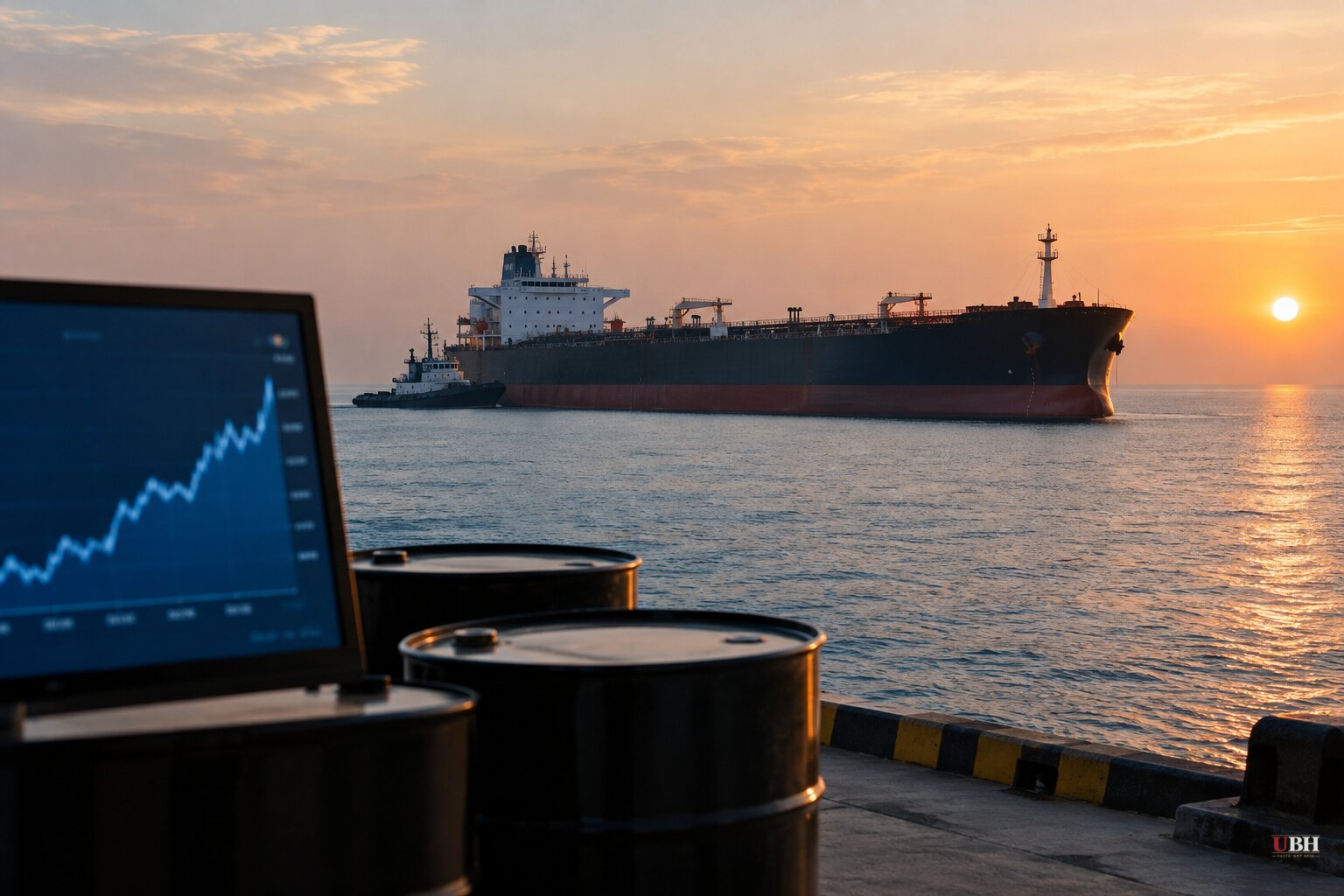
Eight months into a war that began when the U.S. and Israel struck Iran in late February, oil is again flirting with its wartime highs. Brent crude rose above $115 a barrel in Friday trading, according to market reports, after closing Thursday at $113.17, up 4%. West Texas Intermediate settled Thursday at $99.47. Oil traded near $72 before the war and peaked at $126 at the end of April.
Oddly, the barrels are moving. The tracking firm Kpler put shipments through the Strait of Hormuz and alternate routes at more than 24 million barrels a day last week, above the 23.3 million average before the war. Pipelines bypassing the strait are absorbing part of the load, and big consumers have cut demand.
Price is about the cost of moving oil
What is propping up the price is risk. Insurance premiums now run about 10% of a cargo's value, up from 3% before the war, and tanker rates from the Middle East to China have risen twelvefold, according to market reports. Iran has kept attacking tankers, but enough ships are still making the trip because the payouts are high.
JPMorgan analysts wrote Wednesday that markets are "converging on a forever conflict in the Middle East," with demand destruction in China doing much of the work. The bank said that even if supply stays constrained for another year, weaker demand could hold oil near $90 rather than the $120 to $140 some forecasters fear. More than half of investors the bank surveyed expect prices to stay "structurally elevated" for 12 months.
Hamad Hussain, senior commodities economist at Capital Economics, estimates Saudi Arabia could convert an existing gas pipeline to carry 1.2 million barrels a day of oil to its west coast within six to eight weeks. He said the United Arab Emirates should finish a second pipeline to Fujairah next year.
Saudi Arabia was supposed to be the backstop
That Saudi backstop is now under pressure. The State Department has ordered non-emergency personnel and their families to leave the U.S. Embassy in Saudi Arabia after attacks on regional oil fields and airports and more drone strikes by Iran-backed Houthis. A department spokesperson said the Houthis have "increasingly engaged in hostilities against Saudi Arabia" and that the risk could escalate quickly.
Matt McManus of the National Center for Energy Analytics called such departures "fairly routine," while noting the signal about infrastructure risk. William Stern, CEO of the lender Cardiff, said Saudi Arabia was meant to be the fallback "if and when Hormuz got ugly, and now we're genuinely worried about our Plan B."
In Yemen, the U.N. humanitarian office OCHA said Houthi fighters have encircled Taiz, the country's third-largest city, for 20 days. Spokesman Jens Laerke said water production there has fallen by about half.
Strikes before or after the midterms
The latest leg up followed reports that Washington and Israel have drafted plans for renewed strikes on Iran after the Nov. 3 elections, and that Trump has not given the order. Iran has threatened to hit Gulf energy installations, subsea cables and data centers if that happens.
The administration's public line is mixed. Trump has said there would be no strikes before the midterms. He also said Friday that the U.S. could end the war any time through a renewed military campaign, or let Iran "wither" under sanctions.
Tom Barrack, the U.S. ambassador to Turkey, who has no direct role in Iran policy, was asked on Israeli army radio whether a strike could come this weekend. "Absolutely," he said, adding that Trump is "open and available and accessible to a deal."
Mike Waltz, the U.S. ambassador to the United Nations, told the Financial Times that Washington is prepared for a standoff lasting another year if there is no deal on Iran's nuclear program and Hormuz shipping. He said the U.S. can maintain its blockade of Iranian ports indefinitely. Israeli Prime Minister Benjamin Netanyahu, who faces elections Tuesday, has repeatedly vowed to topple Iran's clerical government.
Foreign ministers from Britain, France, Germany, Italy, Turkey, Saudi Arabia, Pakistan and Egypt met in Istanbul on Friday and urged diplomacy and the reopening of Hormuz.
Qatar goes shopping in Texas
On Thursday, QatarEnergy agreed to buy 4 million metric tons a year of U.S. liquefied natural gas from Cheniere Energy through 2054. The price is indexed to Henry Hub plus a fixed fee, and deliveries are expected to start in the 2030s. Cheniere CEO Jack Fusco said the company will supply Qatar from Sabine Pass and Corpus Christi.
The volume is under 1% of the world's LNG trade, but Alex Munton of Rapidan Energy called it "about as big as you see in the U.S." for a single deal. Cheniere shares are up 26% since the war began and Venture Global's are up 40%.
Qatar was second only to the U.S. in LNG exports before the war. Iran's March strike on Ras Laffan knocked out two production lines, about 17% of export capacity, and Energy Minister Saad Sherida al-Kaabi says repairs will take about three years. Qatar has declared force majeure every month since. Al-Kaabi said Qatar exports "very little" LNG because "we can't export through the Hormuz Strait."
Munton said the decades-long contract suggests Qatar sees a risk that free navigation never fully returns to Hormuz. LNG has no pipeline workaround, he said, because it has to move by ship.
The next dates are fixed: Netanyahu's election Tuesday and the U.S. midterms on Nov. 3. Whether the strike plans stay in a drawer past that day is what oil traders are pricing.
Sources used for this briefing
8 links from 7 independent newsrooms (syndicated copies of the same report count once)
These are the sources it draws on, linked so you can verify.


