
Unbiased headlines. Facts, not spin.
Unbiased Headlines is an independently owned news organization. We bring you the facts, not opinions, written fresh from 110+ named sources. Sources linked so you can verify it yourself.
 economy
Major Story (8/10)
Brazil, China and the EU Reject US Overcapacity Tariff Proposals, With a Public Hearing Set for Jan. 25
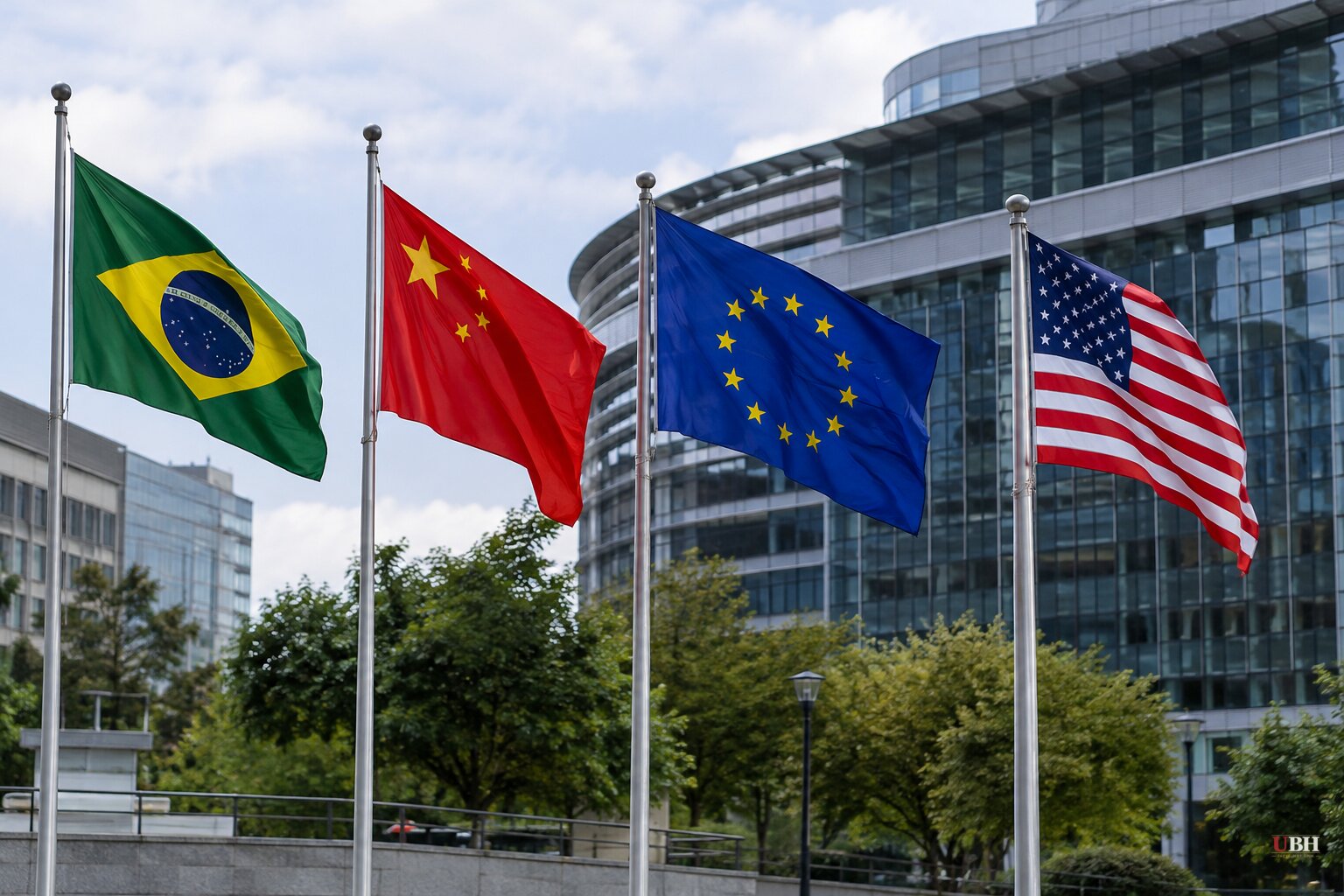
Since the U.S. Trade Representative formally proposed Section 301 tariffs on 14 economies on Wednesday, Nov. 25, the targeted governments have started to respond. Brazil's was the sharpest. Beijing and Brussels rejected the premise of the case but stopped well short of threatening a response.
Brazil says it will not yield
Brazil's government said it "will not yield to this type of threat." It called the U.S. move a "unilateral decision" that "constitutes an unacceptable action within the framework of the ongoing bilateral negotiating process."
Brasília singled out two pieces of the U.S. plan: higher import taxes on raw and refined sugar, and a new 10% tariff on aircraft. The aircraft duty would hit Embraer, Brazil's largest aircraft maker. The Brazil proposal is separate from the 14-economy overcapacity action.
Brazil said it will keep negotiating "without ruling out the possibility of adopting retaliatory measures in response to the illegal and unjust imposition of tariffs on Brazilian products." The Trump administration singled Brazil out after trade talks stalled.
China and the EU dispute the premise
A spokesperson for China's embassy in Washington said the "so-called issue of 'industrial overcapacity' does not really exist and should not be used as a pretext for political manipulation." The spokesperson urged both sides to deliver on the agreements reached between Donald Trump and Xi Jinping.
Foreign ministry spokesperson Guo Jiakun said "a tariff war or a trade war serves no party's interests" and called for dialogue.
China faces the highest proposed rate, up to 20% on most covered goods. In some cases that stacks on existing duties for a total of 45%. The rate could climb to 40% if Beijing fails to honor last year's truce, which is set to expire Jan. 10, 2027.
USTR Jamieson Greer told CNBC the administration is proposing a "broad exemption" for $30 billion worth of Chinese goods, in line with that deal.
The European Commission said it will "study the findings." A spokesperson also said: "We strongly reject the premise that Europe is a source of structural overcapacity. To the contrary, Europe is among those most exposed to overcapacity."
The Commission said the EU and U.S. share a real concern about global overcapacity, "much of it state-driven and concentrated in third countries," and said it regrets the lack of joint action. It also pointed to the August 2025 joint statement, which sets a 15% all-inclusive ceiling on EU goods. "We expect any measure from this investigation to respect it in full, including when combined with existing duties," the spokesperson said.
The EU's proposed rate is 15%, rising to 20% if the existing agreements are not honored.
Timeline and the range of rates
Nothing takes effect immediately. The administration will collect feedback from affected industries and hold a hearing on Jan. 25. Final duties are not expected before February or March. Greer said he does not expect any of the tariffs "would actually take effect earlier than a couple months from now."
Proposed rates run from 15% to 35%, according to the Associated Press. Vietnam faces up to 35%. India faces 25% absent a trade agreement. Japan, South Korea, Switzerland and Taiwan face up to 15%. Some Southeast Asian countries face up to 18%, according to the New York Times.
The administration says the duties account for existing tariffs and trade deals rather than stacking automatically. Energy, critical minerals, fertilizers and some semiconductors and pharmaceuticals are exempt. Chips and other high-tech goods from Taiwan and South Korea, which feed the AI buildout, are also proposed for exemption. Determinations on Mexico and Norway are still being considered.
Economists and Congress
Economists see a limited price effect. Mark Williams, chief Asia economist at Capital Economics, said the duties "were widely expected, are relatively small, and would return us roughly to where we were earlier in the year."
The tariffs would also help replace revenue lost after the Supreme Court ruled in February that Trump could not use emergency powers to impose across-the-board tariffs. The administration now relies on Section 301 of the Trade Act of 1974, which covers practices found to be unreasonable or discriminatory.
The political backdrop has changed. In this month's midterms, Democrats won majorities in the House and Senate. About two-thirds of voters told the AP Voter Poll that Trump's policies had made the economy worse.
Sen. Ron Wyden of Oregon, who will chair the Finance Committee next year, said he will "use every tool at my disposal to end Trump's tariffs chaos." He called the plan "another blatant attempt by Donald Trump to reconstruct his illegal global tariffs." Wyden also said "global overcapacity is a serious problem, but Trump's unilateral price-hiking tariffs are not the solution."
Overturning the tariffs would be hard. The AP notes that some Democrats are likely to support certain duties, particularly on China, and Trump can veto any bill to reverse them.
What to watch
The China truce expires Jan. 10, two weeks before the Jan. 25 hearing. Whether Beijing's 20% rate holds or moves toward 40% depends on whether the truce is honored. Brazil has said retaliation remains an option if the sugar and aircraft duties go forward.
Sources used for this briefing
7 links from 7 independent newsrooms (syndicated copies of the same report count once)
These are the sources it draws on, linked so you can verify.
More coverage: China


