
Unbiased headlines. Facts, not spin.
Unbiased Headlines is an independently owned news organization. We bring you the facts, not opinions, written fresh from 110+ named sources. Sources linked so you can verify it yourself.
 economy
Major Story (8/10)
Venezuela Puts Its Debt at $237.5 Billion, 242% of GDP, in First Fiscal Framework in Years
Venezuela's government says it owes $237.5 billion.
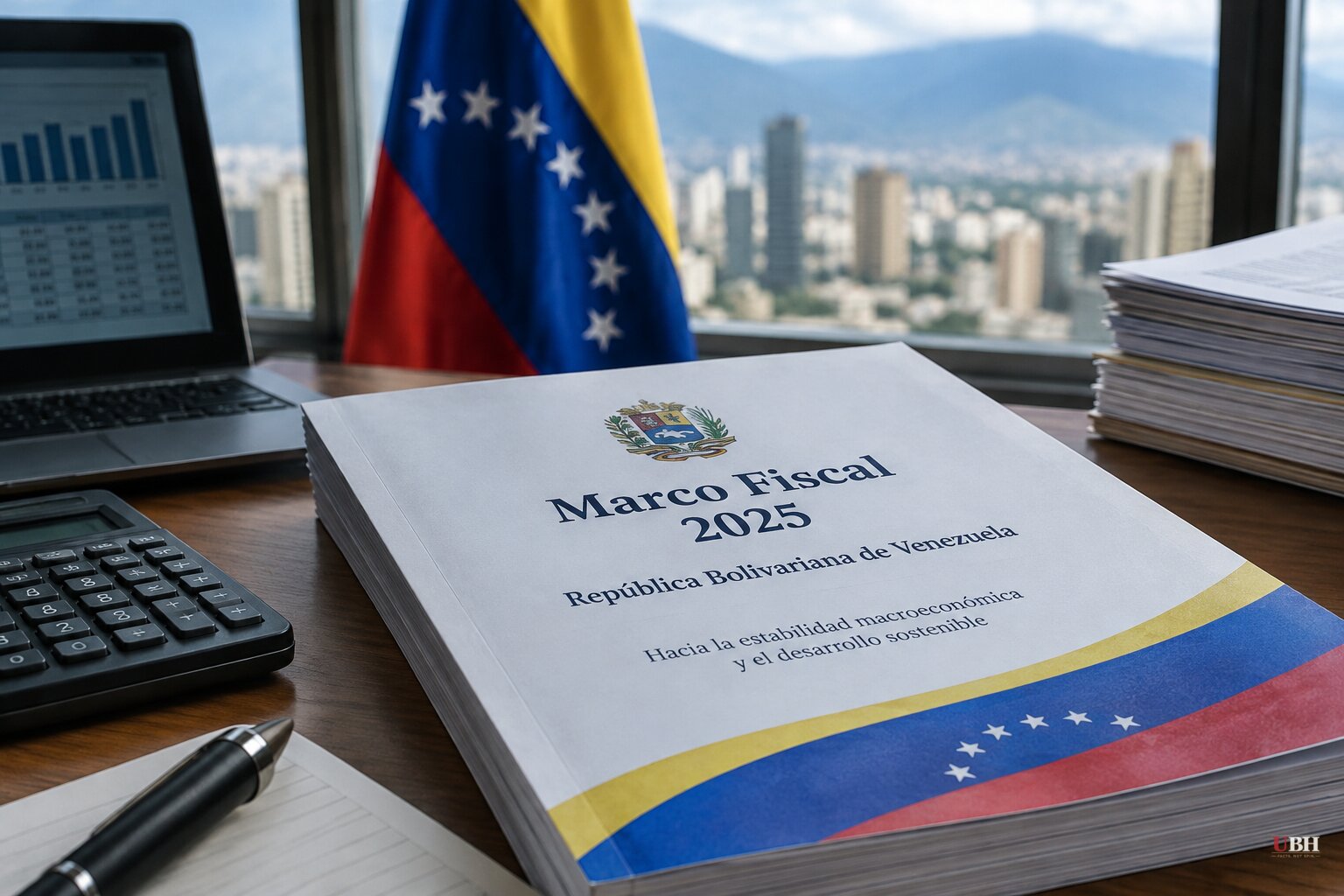
That figure comes from a nearly 200-page macroeconomic framework, called the National Program for Recovery and Prosperity, that the Finance Ministry posted online on Tuesday, Nov. 24. It is the clearest official look at the country's finances in years, and it sets up what could be one of the largest sovereign debt restructurings ever attempted.
The debt equaled 242% of GDP at the end of 2025. Venezuela's nominal GDP that year was just $98.1 billion, so the country owes more than twice what its economy produces. Venezuela has been in default since 2017.
Where the money is owed
The government's breakdown has five blocks:
- Commercial debt: $116.5 billion, including $110.1 billion in eurobonds with accrued interest.
- PDVSA non-financial debt: $67.3 billion.
- Arbitration awards: $26.3 billion.
- Bilateral debt: $23.3 billion, with China and Russia among the major creditors.
- Multilateral debt: $4.2 billion, mainly owed to the Inter-American Development Bank and CAF.
For scale, Greece's 2012 default involved about $200 billion. Argentina restructured roughly $65 billion in 2020.
What the government says went wrong
The document describes the debt as "in a state of protracted default and is unsustainable." It blames "the constraints imposed by financial sanctions, the decline in hydrocarbon revenues and years of macroeconomic imbalances."
That is the government's own account, and it spreads the blame across sanctions, oil revenue and domestic policy. The sanctions point is one the document itself makes, and it is contested by others. The framework does not settle how the shares divide.
The recovery plan runs through oil
Venezuela pumps about 1 million barrels per day, down from about 3.5 million in the 1990s. The framework targets 2.9 million by 2036, growth of 9.1% a year.
The government projects oil export revenue of $30.1 billion this year. It puts net public hydrocarbon revenue, including PDVSA's net fiscal position, at $12.8 billion in 2026, rising to $18.4 billion by 2031.
The production forecast assumes about $160 billion in oil-sector investment through 2036. Operating partners would supply $85 billion and PDVSA $75 billion. A recent reform cut the maximum royalty and tax burden on oil from 45% to 35%.
The government expects GDP to more than double in five years, to $200.9 billion. It projects a public-sector primary deficit through 2030, balance in 2031 and a surplus of 1% of GDP by 2036.
The plan has three phases. In the first year, the government wants to normalize the economy, restructure the debt and unify the exchange rate. In years one to three, it would expand oil output and consolidate fiscal and monetary policy. After year three, it would diversify the economy and adopt inflation targeting.
The hole it starts from
Inflation ran at 534.2% year-on-year in August 2026. The primary deficit was 4% of GDP in 2025. June earthquakes caused about $19.6 billion in damage.
The interim government of President Delcy Rodríguez is backed by the United States. Figures cited alongside the framework say an August oil deal with the U.S. could generate more than $200 billion in state revenue. The government has not laid out in the framework who pays what under that deal.
What creditors still do not have
The government says it will adopt a "clear and credible" restructuring plan covering all creditor groups. That matters to investors who feared a piecemeal approach, which could leave bondholders facing deeper losses.
But the numbers that would drive a deal are not here yet. Investors are still waiting for a debt sustainability analysis, which would estimate how much Venezuela can afford to repay based on expected cash flows, reserve accumulation and total debt-service costs.
The framework itself concedes the dependency. It assumes public debt returns to a sustainable path and that enough external financing is secured. Debt-service payments, financing flows and reserve accumulation all hinge on terms that have not been negotiated.
Rodríguez said Tuesday the plan includes up to $10 billion in multilateral financing for the public and private sectors, aimed at construction and public services. She had previously said the country could seek $17 billion. She gave no reason for the lower number.
Calixto Ortega, a top economic adviser, said the government has "normalized Venezuela's representation before multilateral and financial organizations" and is "in advanced discussions to resolve the existing arrears with some of them."
The open question is the one the framework leaves blank: how much of $237.5 billion creditors will be asked to write off. Venezuela's sustainability analysis, which would put a number on that, has not been published.
The government has not said when it will release it.
Sources used for this briefing
6 links from 6 independent newsrooms (syndicated copies of the same report count once)
These are the sources it draws on, linked so you can verify.


