
Unbiased headlines. Facts, not spin.
Unbiased Headlines is an independently owned news organization. We bring you the facts, not opinions, written fresh from 110+ named sources. Sources linked so you can verify it yourself.
 economy
Major Story (7/10)
US Signs Up to $2.45 Billion in Tungsten Deals Ahead of Jan. 1 Pentagon Ban on Chinese-Origin Metal
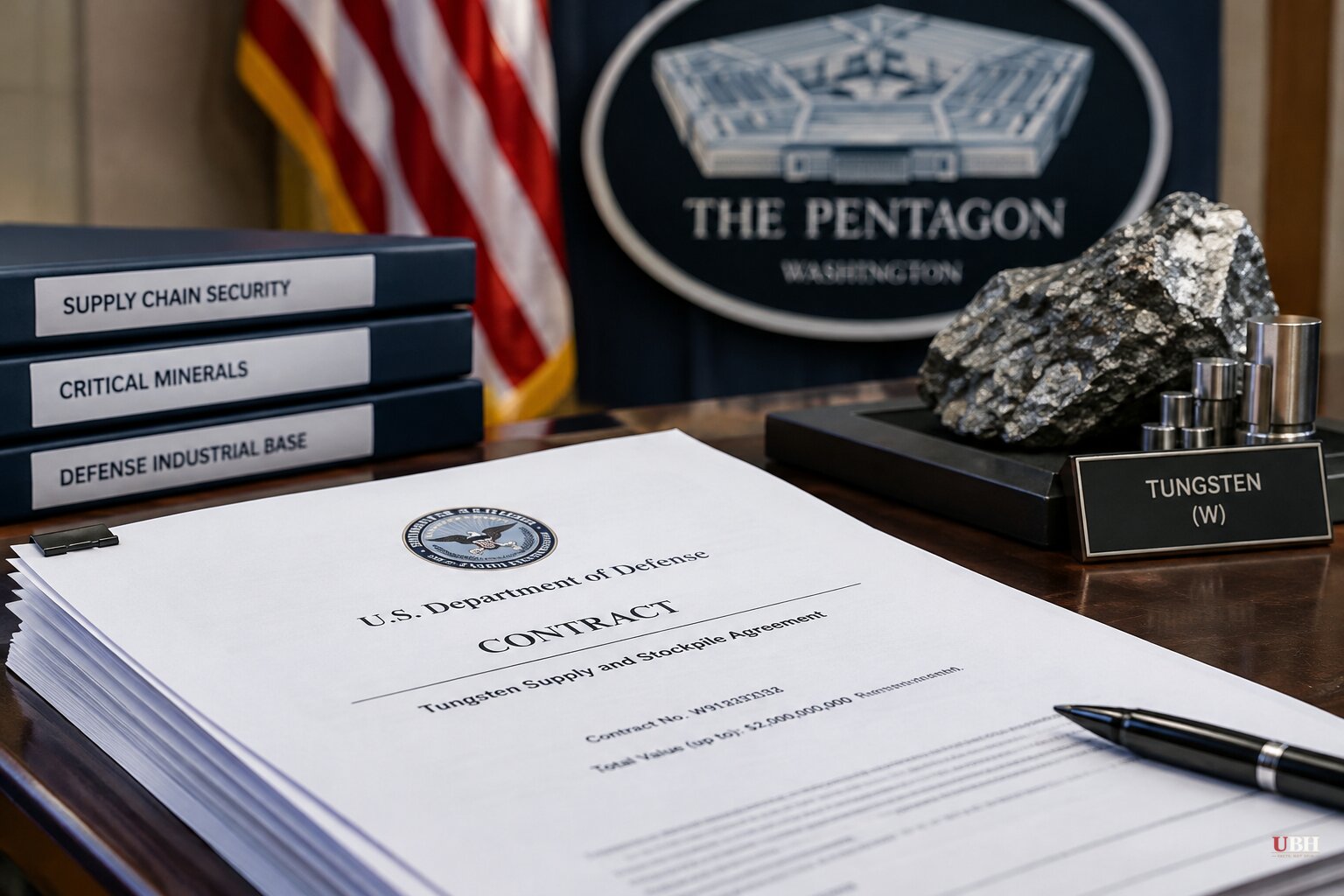
The U.S. has not mined tungsten commercially since 2015. On Jan. 1, 2027, defense contractors lose the ability to deliver tungsten that was mined, refined, or separated in China, Russia, Iran, or North Korea. The rule closes the loophole that let contractors clear earlier restrictions by finishing production in another country.
Washington has spent 2026 lining up replacement supply.
What the government has signed
The headline figure is up to $2.45 billion. It is not one check. It combines two arrangements.
In September, the Defense Logistics Agency awarded Elmet Group (NASDAQ: ELMT) an indefinite-delivery contract to supply ore, concentrate, and sodium tungstate to the National Defense Stockpile. The ceiling is $2 billion. The guaranteed minimum is $150 million.
Separately, the Pentagon committed $450 million in preferred equity and warrants for up to 19.9% of Elmet. Taxpayers now hold a potential ownership stake in a private-sector processor.
Elmet then bought 4.99% of Vietnam's Masan High-Tech Materials for about $125 million, alongside an eight-year supply agreement. Masan owns Nui Phao, the largest tungsten mine outside China.
In August, the Commerce Department ordered that all U.S. sales of tungsten waste and scrap go to domestic buyers for 386 days.
How China built the squeeze
China produced 79% of the 85,000 tons of tungsten mined worldwide last year, according to the U.S. Geological Survey, and controls most of the refining. One finance outlet, Skrill Network, puts China's share of ammonium paratungstate (APT) refining capacity at about 85%.
Beijing put tungsten under export controls in February 2025 in response to U.S. tariffs. It then limited legal exports to 15 licensed firms for 2026 and 2027.
The effect on volumes was sharp. Chinese APT exports fell to zero in January and February. Total tungsten exports dropped 22% in the first half of 2026 to 5,521 tons.
Through August, exports of tungsten in all forms other than knives and halogen lamps were down 25% year-on-year at 8,064 metric tons, according to China Tungsten Online data cited by Reuters columnist Andy Home. The value of those exports was up 209%.
Japan has felt it directly. China reportedly barred dual-use tungsten exports to Japanese military-linked buyers in early 2026, after Prime Minister Sanae Takaichi's November 2025 remarks on Taiwan. Quest Metals data show shipments of tungsten powder and carbide to Japan at zero from February through April. Sumitomo Electric's president said in May that procurement from China "has completely stopped." Mitsubishi Materials tripled prices on some carbide products from June.
Prices and demand
APT in Rotterdam rose more than 200% in the first four months of 2026, to above $3,000 per metric ton unit, according to Reuters. Tungsten concentrate started the year at $750 to $850 per mtu. It has held between $2,500 and $2,800 since late May, according to Fastmarkets.
Argus Media assessed Rotterdam APT at $355 per ton when Beijing announced its controls in February 2025. Home reports it now trades at $2,650, down from a record $3,100 in July as buyers balked at the price.
Home also reports a split market. APT prices in China have collapsed over six months, as the country sits on surplus material. Western prices remain near their record highs.
Demand is rising. Project Blue expects military consumption to grow 12% this year. Munitions destroy the metal on detonation, so that demand removes supply for good. Home writes that the Pentagon is chasing more supply after burning through tungsten-reinforced bunker bombs and interceptor missiles in the Iran war.
BMO Capital Markets analyst George Heppel says he has "never seen a market as tight as tungsten is right now." Most non-Chinese output is committed under long-term contracts, which leaves little spot material for buyers caught short.
Can the West fill the gap by January?
Home says the deadline "may be tricky," since China accounts for about 70% of primary tungsten supply by his count. A Western supply response is building, he writes, but high prices are not going away soon.
Some of that response is private. Australia's EQ Resources produced a record 51,233 mtu of tungsten trioxide in the September quarter, up 81% from the June quarter. Its Barruecopardo mine in Spain produced a record 34,088 mtu. Mount Carbine in Queensland added 17,145 mtu, up 31%. EQ is spending A$39 million to roughly double Mount Carbine's crushing capacity.
The $2 billion DLA figure is a ceiling on potential purchases. Only $150 million is locked in. Whether the stockpile contract ever approaches its cap depends on whether Elmet and its suppliers can deliver non-Chinese material at scale.
What comes next
The CME Group plans to launch a tungsten futures contract on Dec. 7, giving Western buyers a way to hedge a market that was a sedate physical spot business until last year.
The Pentagon rule takes effect Jan. 1. Whether defense contractors can certify compliant tungsten at current prices, with most non-Chinese output already under long-term contract, is the open question for the first quarter.
Sources used for this briefing
7 links from 6 independent newsrooms (syndicated copies of the same report count once)
These are the sources it draws on, linked so you can verify.


