
Unbiased headlines. Facts, not spin.
Unbiased Headlines is an independently owned news organization. We bring you the facts, not opinions, written fresh from 110+ named sources. Sources linked so you can verify it yourself.
 economy
Notable (6/10)
McKinsey Says 3.7 Million European Industrial Jobs Are at Risk as Financial Stress Spreads
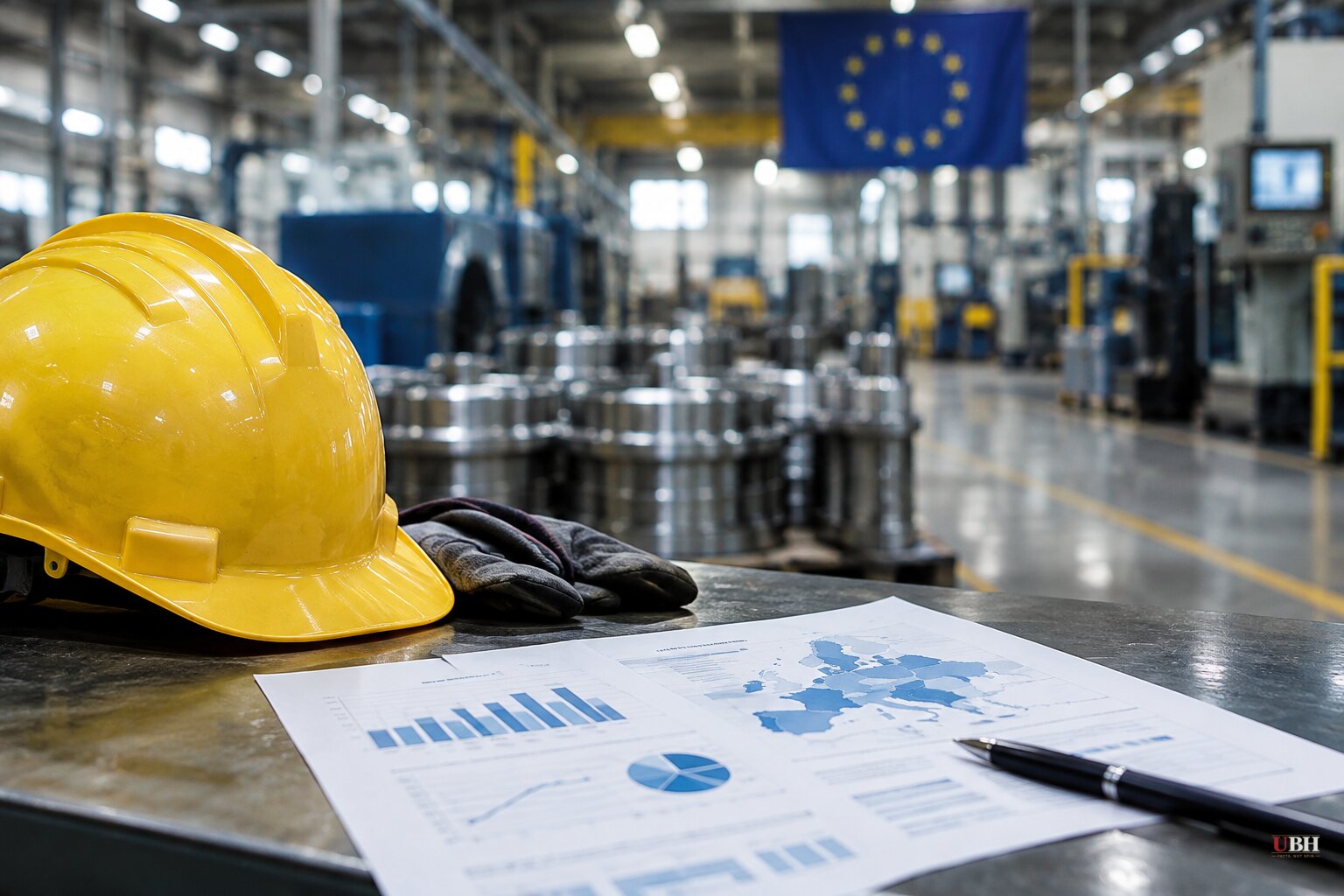
McKinsey & Company published a report today, Nov. 25, estimating that about 3.7 million jobs at European industrial companies are directly at risk from financial stress. More than €500 billion in value added is exposed too.
The number measures exposure. It is not a count of jobs cut and not a forecast of imminent layoffs.
How bad the numbers are
McKinsey's Industrial Financial Health Index covers almost 1,200 listed and privately held manufacturers in Europe, each with more than €100 million in revenue. It scores them on five warning signs, including a sharp drop in earnings and heavy debt relative to earnings. The 2025 scores use full-year figures from S&P Capital IQ.
In 2025, about 45% of those firms were classed as stressed or distressed. That compares with 39% in 2023 and 42% in 2024.
Preliminary 2026 figures show the share climbing faster. They put it at roughly half, with about 42% distressed and 8% stressed, according to the McKinsey data.
The pressure is concentrated in machinery, automotive, electrical equipment and materials.
Where it hurts most
Portugal had the highest share of stressed or distressed industrial firms in 2025. Luxembourg, the Netherlands and Spain followed.
In Germany, the EU's largest economy, the share jumped 12 percentage points in a single year.
McKinsey says European industrial firms account for about 36% of the region's value added, 29% of its jobs and more than 45% of its research and development spending.
The cost gap with China
McKinsey points to higher labor and energy costs. Industrial electricity prices in Europe averaged more than 1.5 times those in China and the United States. In automotive R&D, the consultancy puts labor productivity in China at 1.5 times Europe's level.
Together, the report finds, those gaps leave more than half of the EU industrial value chain's costs at a disadvantage against China.
Investment is lopsided too. China spent about $6 trillion (€5.5 trillion) on gross productive investment in 2025. That category covers infrastructure, non-residential buildings, machinery, software and R&D. Europe spent roughly $3 trillion (€2.7 trillion).
The factory floor
Volkswagen has called its overhaul the deepest restructuring in its 89-year history. Reported job-cut estimates there run to about 100,000 by the end of the decade. BMW and Volvo Cars have both issued recent profit warnings.
Germany's metal and electrical employers are sounding the same alarm. Oliver Zander, head of the Gesamtmetall employers' association, told the newspaper Bild on Nov. 4 that the sector has already shed 350,000 jobs over seven years. He said another 300,000 are at risk within two to three years because of idle capacity and high costs.
That would cut employment from roughly 3.7 million to 3.4 million, "the lowest figure since reunification in 1990," Zander said. "The situation is catastrophic. Many companies are fighting for survival, and there is no improvement in sight."
The union sees it differently. IG Metall cites management failures, particularly among automotive executives, as a cause of the industry's troubles. It is demanding a 5% pay raise and its officials have called for warning strikes. Employers have offered 1.8% by the end of 2028, which the union calls inadequate. Zander called the union's demand "irresponsible" and said it could put more jobs at risk.
The wider economic backdrop
The industrial squeeze sits on top of a slow economy. Eurozone GDP grew 1.4% in 2025 against 2.2% in the United States, according to World Bank data. Eurostat reported that France's economy shrank in the first quarter of 2026, while Germany and Italy grew only marginally.
Eurostat puts youth unemployment at 15.4% in the eurozone. France's debt stands at 115.7% of GDP and Italy's at 136.7%. Less growth means fewer tax euros to cover pensions, health care and subsidies for troubled industries.
What McKinsey says can be done
McKinsey calls the problems "structurally fixable" but says swift action is needed. Tunde Olanrewaju, the firm's European managing partner, said there is "no single silver bullet for Europe's productivity gap."
He said some distressed firms have improved by negotiating productivity measures with workers and using AI to cut administrative work. Overhauling, selling or shutting weak assets is another option.
Brussels has proposed packages to cut red tape, deepen the single market and improve the capital markets union. Mario Draghi laid out a competitiveness agenda in his 2024 report, and European business groups have complained about the pace of reform.
What comes next
The 2026 numbers are preliminary, and McKinsey has not yet published full-year data. The nearest test is in Germany. The IG Metall wage fight, a 5% demand against an offer of 1.8% through 2028, is heading toward warning strikes in the same industries where Gesamtmetall says 300,000 more jobs are at risk.
Sources used for this briefing
7 links from 7 independent newsrooms (syndicated copies of the same report count once)
These are the sources it draws on, linked so you can verify.


