
Unbiased headlines. Facts, not spin.
Unbiased Headlines is an independently owned news organization. We bring you the facts, not opinions, written fresh from 110+ named sources. Sources linked so you can verify it yourself.
 economy
Major Story (8/10)
Malaysia Orders Data Centers to Cut Off Megaspeed Entities and Opens Talks With US on Chip Curbs
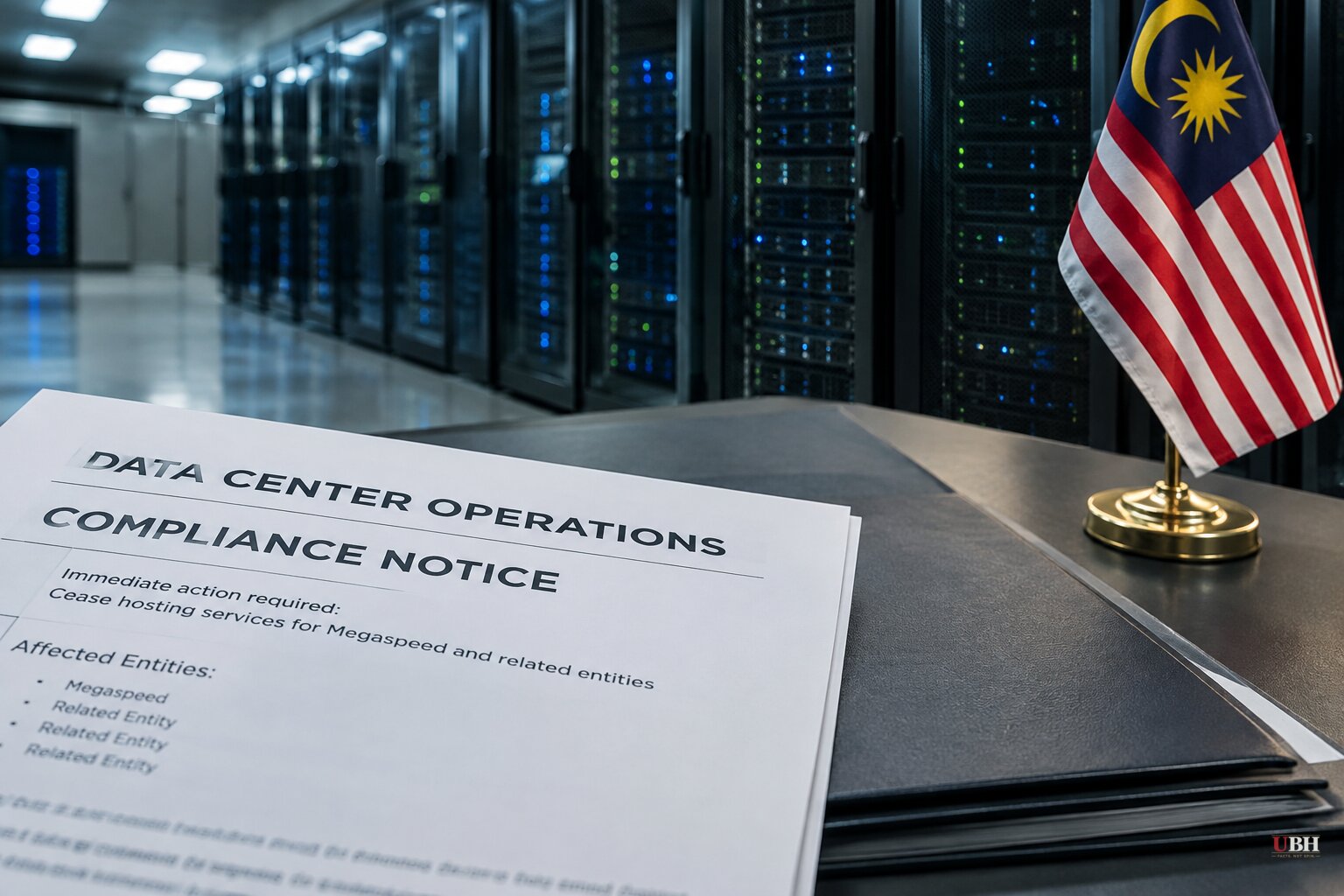
Since the Megaspeed probe widened and Commerce put the Singapore company on its trade blacklist, the pressure has moved to Malaysia, where the government is now trying to protect a data center boom while proving it is not a back door for Chinese chip access.
Malaysia orders operators to cut ties
Malaysia's Ministry of Investment, Trade and Industry (MITI) has tasked the Malaysian Investment Development Authority (MIDA) with telling data center operators not to host, lease space to or provide services to the seven blacklisted entities. Those entities sit across Malaysia, Singapore and Thailand.
The US list names three Malaysian-linked entries: MSFusion Sdn Bhd, PT Megaspeed International and Speedmatrix Sdn Bhd. The Commerce Department flagged them over a "significant risk" of diverting advanced computing hardware to unauthorized users or uses.
Second Finance Minister Amir Hamzah Azizan told Bloomberg TV that only two of the three are actually Malaysian. He said MITI is in active discussions with US authorities to find common ground.
"We will comply with whatever rules are set by the relevant country," Amir said. On the blacklisting, he said: "This is in relation to the Nvidia issue. Effectively we're just tightening up controls."
Amir also said Malaysia had not approved the shipments now being questioned by US authorities.
What the new US rules require
The Commerce Department's interim rule requires data center operators in Malaysia, Singapore, Thailand and Indonesia to get US government licenses before buying advanced chips from Nvidia and other American makers. The stated aim is to stop China and other adversaries from reaching offshore computing power built on American-designed processors.
The rules also restrict remote computing access through data centers in third countries. Washington has been trying to close that route. Chinese companies, barred from importing the top chips directly since 2022, had been renting computing power in Southeast Asia, where the hardware could legally operate.
Chinese firms are feeling it. Alibaba said the rules could affect some of its global data center expansion plans and that it is still assessing the repercussions. Tencent President Martin Lau said the rule "sets everyone back in China."
"Everyone is actually having less compute, advanced compute, to work with, no matter when you actually started leasing or building capacities outside of China," Lau said.
The money at stake
Malaysia drew RM123.5 billion (S$38.7 billion) in data center and cloud computing investment in the first nine months of 2026. That is 35.2% of all approved investment in the country over the period.
From 2021 through the first half of 2026, data center approvals totaled 385.7 billion ringgit, about $94.7 billion, according to the Malaysian Investment Development Authority. Trade Minister Johari Abdul Ghani said on Nov. 12 that 55 of 117 approved projects had begun operating.
CIMB Bank warns that Malaysia could lose 0.19 percentage points of GDP growth in 2027 in worst-case disruption scenarios.
The government is playing down the damage. Amir argued that Malaysia's hyperscalers are mostly Western-dominated companies using capacity for their own internal operations, including cloud services and other workloads, not just AI.
Industry sources told The Straits Times the exposure is uneven. Malaysia also hosts cloud applications for social media and e-commerce, so projects that depend on Chinese AI demand are the ones most at risk. One former project manager at a China-linked AI computing firm with a Johor data center, who asked not to be named, said he was glad he had left in October. He said his decision was personal and unrelated to the US action.
Where Malaysia stood before the blacklisting
On Nov. 13, Prime Minister Anwar Ibrahim said there was "not any indication" that advanced AI chips linked to Megaspeed had been exported from Malaysia. He said Malaysia had received no formal request for assistance from Singapore or the United States but would cooperate with any investigation.
MITI said that day it was working with customs to determine whether chips brought in by Megaspeed affiliate Speedmatrix had been shipped elsewhere. Speedmatrix rents space in Malaysian data centers and brings in its own servers and chips. MITI said importing those chips does not require a Malaysian permit or license.
MITI also said it had never cleared Megaspeed or Speedmatrix of potential wrongdoing. It described earlier government visits to facilities used by Speedmatrix as routine monitoring, not compliance approvals.
Malaysia has restricted export, transshipment and transit of high-performance US-origin AI chips since July 2025. The permit-free import of those chips is the gap the new US licensing rule is aimed at.
Open questions
Johari has said the government intends to make operators disclose their GPU counts, locations, facility operators and electricity use. As of the last update, those reporting requirements had not been enacted.
Singapore and US authorities are still investigating Megaspeed over alleged diversion of Nvidia chips to China. No outcome has been announced from the Malaysia-US talks Amir described, and the terms of any licensing arrangement for Malaysian operators remain unsettled.
Sources used for this briefing
8 links from 8 independent newsrooms (syndicated copies of the same report count once)
These are the sources it draws on, linked so you can verify.


