
Unbiased headlines. Facts, not spin.
Unbiased Headlines is an independently owned news organization. We bring you the facts, not opinions, written fresh from 110+ named sources. Sources linked so you can verify it yourself.
 economy
Major Story (8/10)
USTR Proposes Tariffs on 14 Economies Over 'Excess Capacity,' Up to 25% on India and 17% With a Trade Deal
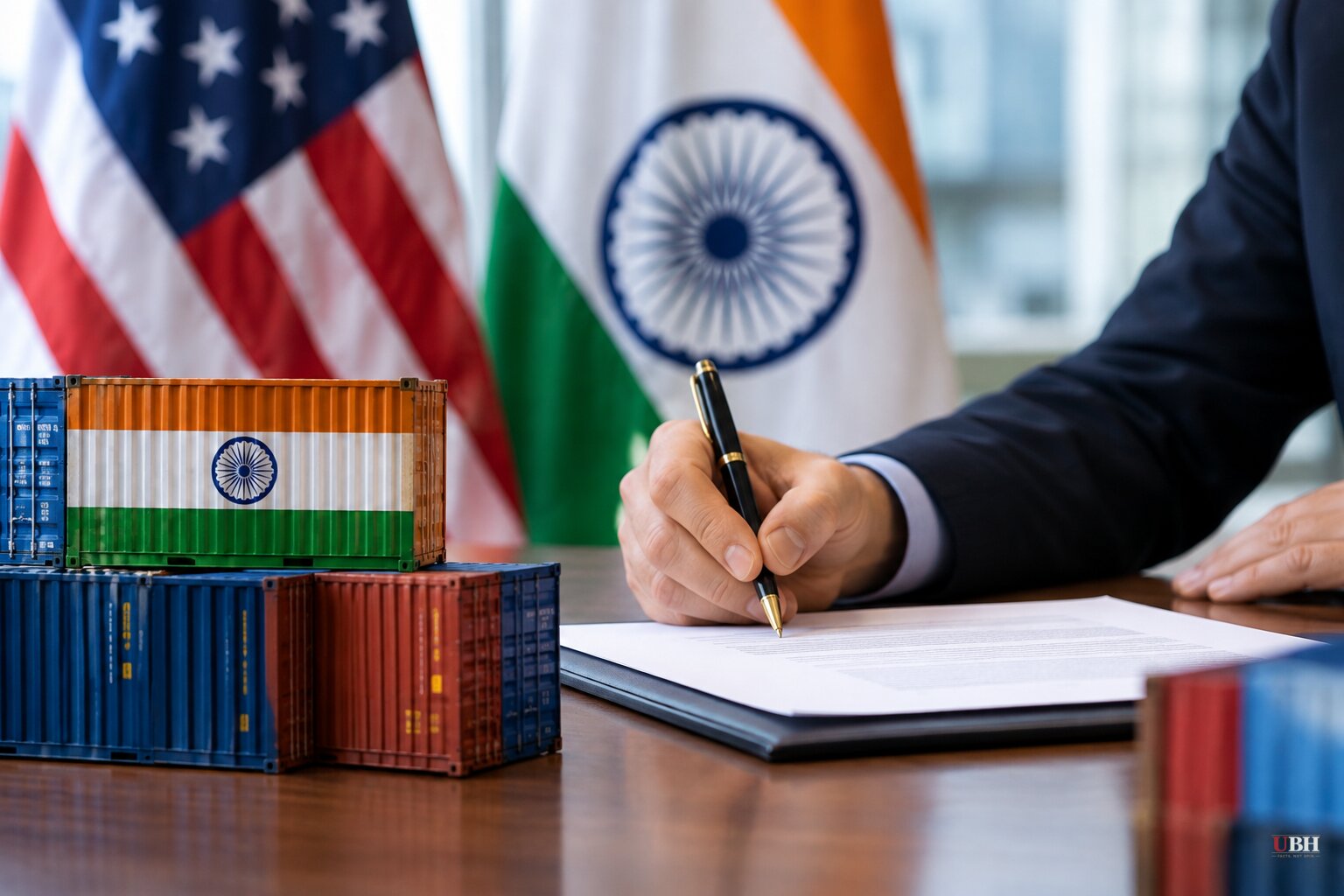
The Office of the U.S. Trade Representative on Wednesday, Nov. 25, proposed new tariffs on 14 economies after an eight-month Section 301 investigation into what it calls structural excess capacity in manufacturing. India is on the list, facing a proposed rate of up to 25%.
That rate drops to 17% if Washington and New Delhi conclude a trade agreement. The proposal is not final. USTR has scheduled a public hearing for January 25 before moving toward implementation.
What USTR is alleging
USTR's finding is that foreign governments provide financial and policy support to domestic industries, pushing manufacturers to produce more than local markets can absorb. The surplus is then sold cheaply abroad, undercutting American producers. In its report on India, USTR concluded that India's acts, policies and practices "create, sustain, or contribute to structural excess capacity" that burden or restrict U.S. commerce.
The probe was launched March 11, 2026, and covered 16 trading partners. USTR has not proposed tariffs on Mexico or Norway for now.
The rates
The proposed no-deal rate of 25% on India is the second-highest on the list. Only Vietnam, at 35%, faces more.
The deal rates vary by country:
- Singapore: 10%
- Japan, South Korea, Taiwan, the European Union and Switzerland: 15%, including existing Most Favoured Nation duties
- India: 17%
- Bangladesh, Cambodia, Indonesia, Malaysia and Thailand: 18%
- China and Vietnam (with a deal): 20%
At 17%, India would hold a 1-point edge over the 18% group and a 3-point edge over China and Vietnam. That is a thin cushion.
How it stacks with existing duties
Indian goods already face a 10% tariff, which came out of the separate Section 301 forced-labour investigation. USTR proposes calculating the new rate "net of existing Section 301 duties," so the 25% would not be piled on top of that 10%.
However, the order is less specific on overlap. It says USTR will consider adjustments to account for other Section 301 and Section 232 tariffs, but it has not said how. Indian steel, aluminium, autos, patented pharmaceuticals and semiconductors already carry Section 232 duties. The U.S. levies 50% on steel and aluminium imports from all countries under that authority, and the new tariffs would not be added to those.
Separately, the Lindsey O. Graham Sanctioning Russia and Iran Act of 2026 allows tariffs of up to 100% on large buyers of Russian oil, India among them. President Trump has temporarily paused that tariff.
India's response
India's Ministry of Commerce and Industry said late Wednesday that the notice is "currently under examination" and that India "engaged constructively throughout this investigation." It said that in response to the initiation notice and later proceedings, the Department of Commerce stated that India does not have structural excess capacity in any sector.
The ministry also said trade concerns belong inside the bilateral trade agreement talks. It said India remains committed to an early conclusion of the deal, announced February 2, 2026, and in line with the joint statement issued February 7, 2026.
The U.S. is India's biggest export market, taking more than $87 billion in goods in the fiscal year through March 2026, roughly a fifth of India's total merchandise exports. The stakes are considerable for both sides.
The "bait" argument
The Global Trade Research Initiative, a New Delhi trade think tank, calls the 17% offer "bait." GTRI argues it is a calculated attempt to extract unilateral concessions from India rather than address real overcapacity. In its reading, the Section 301 tariffs effectively recreate the reciprocal tariff regime under a different legal framework.
GTRI says the two-rate structure lets Washington use the higher baseline as leverage and offer lower duties in exchange for concessions. It argues that relief could come even if the industrial capacity that triggered the probe is unchanged. The think tank has urged India to reject a one-sided deal and defend its manufacturing expansion.
India has said it is willing to sign a mutually beneficial deal if it gets a comparative advantage over competitors in the U.S. market. The proposed gap over its Asian rivals is the measure of that advantage.
What comes next
Nothing takes effect before the January 25 hearing. Two questions remain open: how USTR will adjust the final rate for overlapping Section 301 and Section 232 duties, and whether India and the U.S. close the first tranche of their trade agreement before the 25% rate would apply.
Sources used for this briefing
7 links from 7 independent newsrooms (syndicated copies of the same report count once)
These are the sources it draws on, linked so you can verify.


